How long does meal prep last in the fridge?
Cooked meal prep only lasts 3 to 4 days in the fridge under USDA guidance, no matter how fresh it looks. Here is how long each type keeps, how to spot spoilage, and how to store it so it lasts the full window.
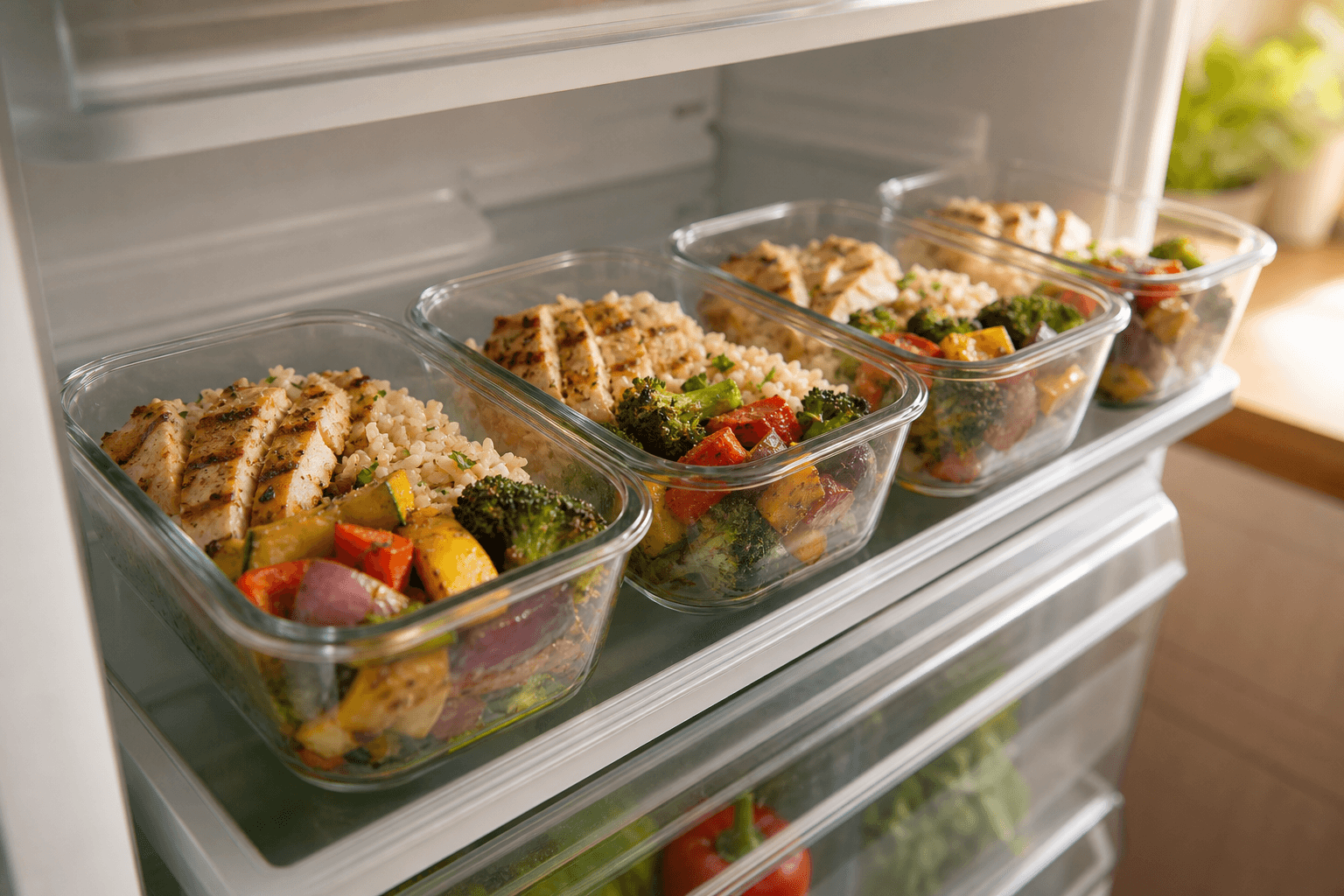
Cooked meal prep lasts 3 to 4 days in the refrigerator, according to USDA food safety guidance. That clock starts the moment you finish cooking, not the day you get around to eating the first container. Once you hit day 4, toss what is left, even if it still looks and smells okay, because some spoilage bacteria give no warning at all.
That short window catches a lot of people off guard, especially if you cook once for the whole week. Here is how long batch-cooked meals actually stay safe, how to tell when something has turned, and how to store containers so they last the full window instead of a shorter one.
How long does meal prep last in the fridge
The 3 to 4 day rule applies to nearly everything you would batch cook: chicken breast and rice, ground beef and pasta, egg muffins, roasted vegetables, soups, chili, grain bowls, and bean-based dishes. The USDA's Food Safety and Inspection Service groups all of these under "leftovers," and the guidance does not change based on how fancy or simple the dish is.
| Meal prep type | Refrigerator (40°F or below) | Freezer (best quality) | Storage notes |
|---|---|---|---|
| Cooked meat, poultry, or fish meals | 3 to 4 days | 2 to 3 months | Freezes and reheats well |
| Soups, stews, and chili | 3 to 4 days | 2 to 3 months | Reheat to a full boil |
| Rice, pasta, or grain bowls | 3 to 4 days | 2 to 3 months | Texture softens after thawing |
| Egg-based dishes (frittatas, egg muffins) | 3 to 4 days | 2 to 3 months | Reheat gently so eggs do not turn rubbery |
| Vegetable and bean-only dishes | 3 to 4 days | 2 to 3 months | Freezes well |
| Cream or dairy-based sauces | 3 to 4 days | 2 to 3 months | Sauce may separate, whisk while reheating |
If you cooked five days' worth of lunches on Sunday, the honest math is that day 5 is already outside the safe window. Most meal preppers solve this by freezing the back half of the batch on cooking day instead of leaving all of it in the fridge. For a broader look at storage windows across other foods, see our guide on how long food lasts.
How to tell if meal prep has gone bad
Trust your senses first. Sour or off smells, a slimy or tacky film on the surface, visible mold, or a noticeable color change are all signs to throw the container out right away.
What trips people up is this: some of the bacteria that cause food poisoning do not change how food looks, smells, or tastes at all. That is the whole reason the 3 to 4 day rule exists. A container of chicken and rice can smell completely normal on day 6 and still make you sick. When the sensory check and the time rule disagree, the time rule wins. When in doubt, throw it out.
How to store meal prep so it lasts
A few habits make the difference between meal prep that lasts the full 3 to 4 days and meal prep that turns early.
- Refrigerate cooked food within 2 hours of cooking, or within 1 hour if your kitchen is above 90°F. Bacteria multiply fastest in the hour or two right after cooking, so do not let a big pot sit out on the counter while it cools.
- Divide large batches into individual, shallow, airtight containers. A deep pot of soup or chili cools slowly in the middle even in the fridge, so splitting it up lets the food chill through fast instead of sitting in the danger zone.
- Keep your fridge at 40°F or below. A fridge thermometer is a cheap way to confirm this instead of guessing.
- Label every container with the cook date. After a few days, most containers of chicken and rice look identical, and a piece of tape with the date solves the guesswork. An app like Well Stockd can log the cook date for each container and flag it before day 4, which is one reason people use our app to track food expiration dates for batch cooking specifically.
- Reheat to 165°F, checking a few spots with a food thermometer since microwaves heat unevenly. Soups, sauces, and gravies should come to a full boil.
If your meal prep includes raw chicken you have not cooked yet, that ingredient has its own, shorter countdown before cooking. See our guide on how long raw chicken lasts in the fridge for that window, and our guide on how long cooked rice lasts in the fridge if rice bowls are part of your rotation, since rice carries its own separate spoilage risk from a bacterium that survives cooking.
Can you freeze meal prep?
Yes, and freezing is the easiest way to stretch a big cooking session past the 3 to 4 day fridge window. Frozen food stays safe to eat indefinitely as long as your freezer holds at 0°F, but quality drops the longer it sits. For the best taste and texture, use frozen meal prep within 2 to 3 months.
A few tips make frozen meal prep easier to use later. Pack meals in freezer-safe, airtight containers or bags and press out as much air as possible, then label each one with the contents and the date. Thaw in the refrigerator overnight rather than on the counter. You can also reheat frozen meals straight from frozen in a saucepan, oven, or microwave; it just takes longer to heat through. Another way to batch cook is freezer dump meals.
When in doubt
The USDA's standard advice applies directly to meal prep: when in doubt, throw it out. To keep track of what you prepped and when, see the best apps for meal prep guide. If a container has been in the fridge longer than 4 days, if you are not sure when it was cooked, or if anything about it seems off, do not taste it to check. The cost of tossing one container of rice and chicken is a lot lower than the cost of foodborne illness.
Cooked-dish math is the same as how long leftovers last in the fridge: 3 to 4 days, whatever the container.
Frequently asked questions
Can you eat meal prep after 5 days in the fridge? No. USDA guidance caps cooked leftovers, including meal prep, at 3 to 4 days in the refrigerator. Freeze any portions you will not eat within that window instead of pushing past day 4.
Does reheating meal prep to a high temperature make it safe again after 5 or 6 days? No. Reheating to 165°F kills many types of bacteria, but it does not undo the 3 to 4 day guideline or remove toxins that some bacteria produce as food sits too long. Reheating is not a reset button.
Does it matter if meal prep is vacuum sealed? Vacuum sealing does not extend the refrigerator window, so vacuum-sealed meal prep still needs to be eaten or frozen within 3 to 4 days. It can help preserve quality if you freeze the sealed portions.
Sources: USDA FSIS: Leftovers and Food Safety, FoodSafety.gov: FoodKeeper App, USDA: How long will cooked food stay safe in the refrigerator?
Track it in Well Stockd
Add what you have, see what you can cook tonight, and get a reminder before anything goes off.
