How long does opened pesto last in the fridge?
Opened pesto is good for about 3 days in the fridge, per USDA FoodKeeper. This post covers the full storage table, spoilage signs, and whether freezing it is worth it.
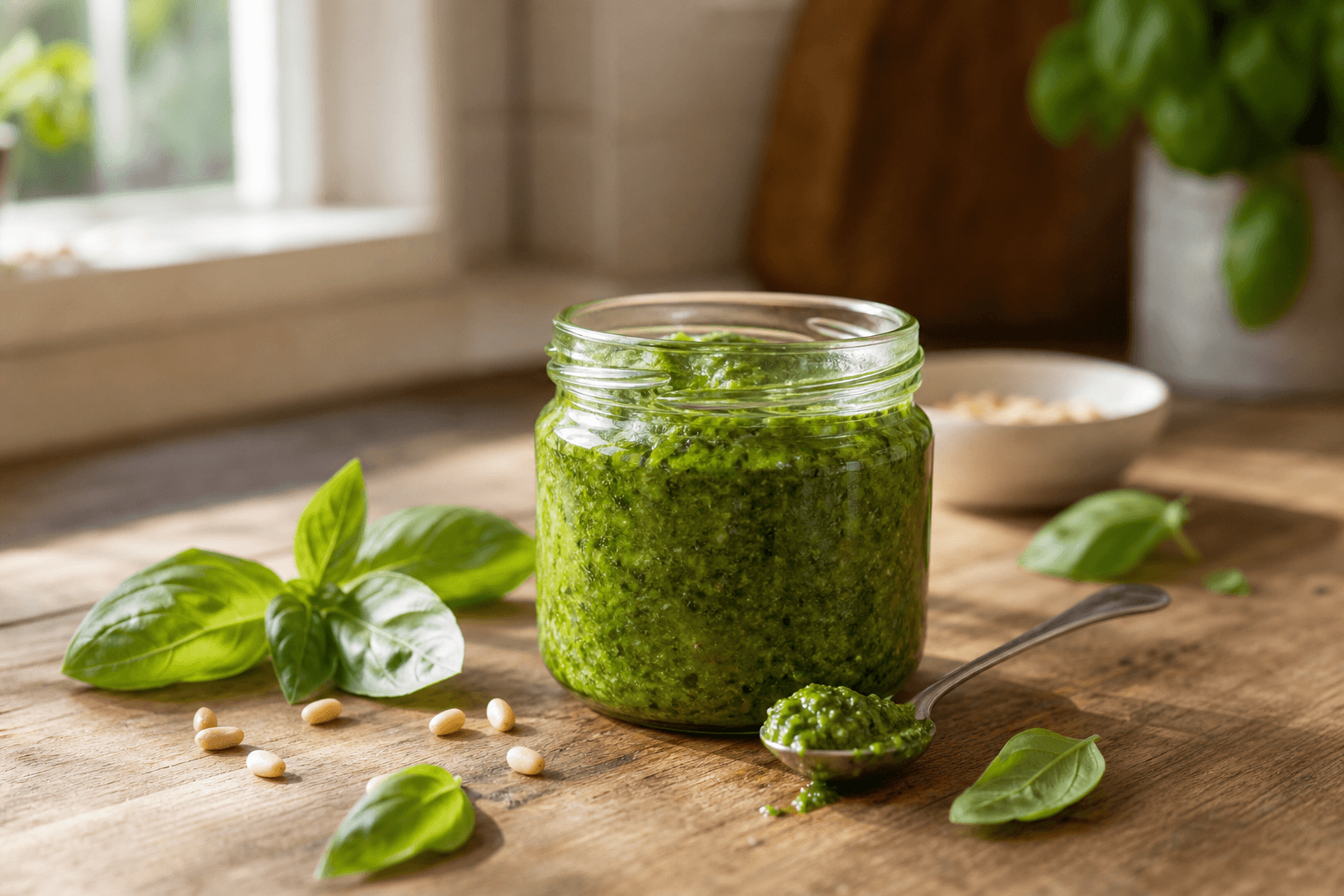
Opened pesto is good for about 3 days in the fridge, according to USDA FoodKeeper guidance, whether it came from a shelf-stable jar in the pasta aisle or a tub from the refrigerated case. Keep it in a sealed container at 40°F or below, and use a clean spoon every time you dip in.
That short window catches a lot of people off guard, since an unopened jar can sit in the pantry for months. Once you break the seal, though, pesto turns perishable fast, and it doesn't stay good for long.
How long does opened pesto last in the fridge?
The exact number depends on whether your pesto started out shelf-stable or was already refrigerated, but the rule after opening is the same either way.
| Pesto type | Unopened | After opening, in the fridge | In the freezer |
|---|---|---|---|
| Shelf-stable jarred pesto (pasta aisle) | About 6 months past purchase, in the pantry | About 3 days | About 1 month for best quality |
| Refrigerated pesto (deli or dairy case) | About 1 week in the fridge | About 3 days | About 1 month for best quality |
| Homemade pesto | Refrigerate right away, do not leave at room temperature | About 3 days | About 1 month for best quality |
Homemade pesto deserves extra caution. It's basically raw garlic suspended in oil, and that combination can support the growth of Clostridium botulinum, the bacteria behind botulism, if it sits out or lingers too long even in the fridge. The Food Safety and Inspection Service (FSIS) flags garlic-in-oil mixtures for exactly this reason. Refrigerate homemade pesto as soon as it cools. Treat the same 3 day window as a hard limit, not a suggestion, and freeze anything you won't use right away.
How to tell if opened pesto has gone bad
Trust your senses first, then trust the calendar. Signs that a jar has turned include:
- A sour, musty, or otherwise off smell as soon as you open the lid
- Fuzzy mold spots in any color, not just the white or green you'd expect
- A dull, grayish brown color throughout the jar, rather than just a thin brown film on top
- A slimy texture, or any fizzing or bubbling
- A flat or sour taste, off from the bright, nutty flavor you started with
Some spoilage, especially the bacteria that cause botulism, won't change how pesto looks, smells, or tastes at all. That's exactly why the 3 day rule matters more than a sniff test. If a jar has been open longer than that, the safest move is to let it go, even if it still seems fine.
How to store opened pesto so it lasts
A few habits stretch pesto's good days without pushing past what's safe:
- Refrigerate it within 2 hours of opening or making it, and within 1 hour if your kitchen is above 90°F. That's the same danger zone rule that applies to any perishable food.
- Keep it in an airtight container or its original jar with the lid tightened, on a shelf rather than the door, since the door runs warmer.
- Use a clean spoon each time. Double dipping with a spoon that touched other food introduces bacteria that shortens shelf life.
- A thin layer of olive oil pressed over the surface slows browning from air exposure. That's a quality trick, not a safety measure, and it doesn't extend the 3 day window.
If you're trying to keep track of when a jar was opened without relying on memory, an app like Well Stockd can log the date you opened it and nudge you before it's too late.
Can you freeze opened pesto?
Yes, and freezing is the best way to get more mileage out of a jar you can't finish in 3 days. Portion it into an airtight, freezer-safe container or ice cube trays, leave a little headspace for expansion, and freeze it flat or in small portions so you can thaw just what you need. For best quality, use frozen pesto within about a month. Food kept frozen at 0°F stays safe indefinitely, but flavor and color fade over time, so sooner is better.
Freezing doesn't reset a food safety clock that's already run out. If a jar has been open in the fridge for more than 3 days, freezing it doesn't give you a fresh start. It's still 3-day-old pesto, just frozen.
When in doubt
USDA's guidance on questionable food is simple: when in doubt, throw it out. Pesto is cheap and quick to make or replace, especially given the risk of foodborne illness. Oil-based mixtures with garlic can hide the kind of spoilage that makes you sick without any warning smell or taste, so this is one food where it pays to follow the calendar over your nose.
For a broader look at how long other everyday foods hold up, see our guide to how long food lasts in the fridge, including specifics like how long cooked rice keeps in the fridge and how long raw chicken stays safe in the fridge.
The other oil-packed jar in the door plays by the same rules — sun-dried tomatoes in oil.
Frequently asked questions
Does pesto need to be refrigerated after opening? Yes. Even shelf-stable pesto that was fine in the pantry unopened needs to go straight into the fridge once you break the seal, and should be used within about 3 days.
Can you eat pesto past the date on the jar? An unopened jar is often fine for a while past a best-by date, since that date is about quality, not safety. Once it's open, though, go by the 3 day rule regardless of what the printed date says.
Why did my pesto turn brown on top? That's usually oxidation from air exposure, not spoilage on its own. It's still worth checking for smell, mold, and texture, and it doesn't extend how long the jar stays good.
Sources: USDA FoodKeeper app, FoodSafety.gov, USDA FSIS on garlic in oil and botulism risk, USDA FSIS on how temperature affects food.