How to keep track of leftovers in the fridge
Label every leftover with its name and date, keep them on one shelf, and eat the oldest first. This guide covers the full method for tracking fridge leftovers, plus how long common ones actually last.
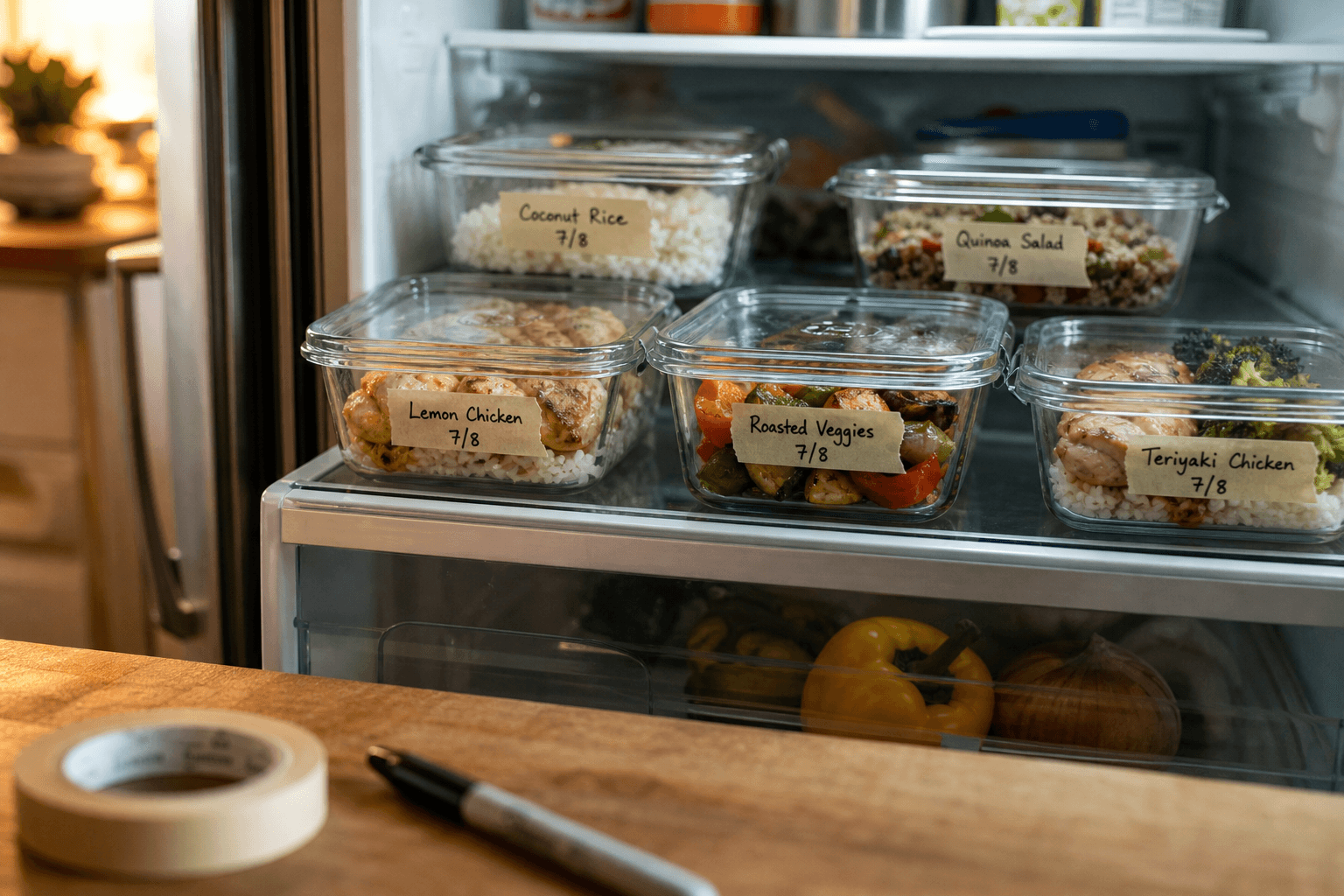
The fastest way to keep track of fridge leftovers is to label every container with the food name and date, keep them together on one shelf, and eat the oldest first. Most cooked leftovers stay safe in the fridge for 3 to 4 days, so a quick glance tells you what's next.
That sounds simple, and it is. The part people skip is the labeling and the shelf, which is exactly why leftovers end up forgotten behind the orange juice until they turn into a science experiment. The system below holds up even on a busy week.
How long do leftovers actually last in the fridge?
According to the USDA's Food Safety and Inspection Service, cooked leftovers should go into the fridge within 2 hours of cooking (1 hour if the room is above 90 degrees Fahrenheit), and your fridge itself needs to sit at 40 degrees Fahrenheit or below. Past that window, food sits in the "danger zone" where bacteria multiply fast, and refrigeration alone stops making up for lost time.
Once leftovers are properly chilled and covered, most of them follow the same rough timeline. A few categories run a little longer or shorter, so it helps to know the specifics.
| Leftover type | Fridge (40°F or below) | Freezer |
|---|---|---|
| Cooked meat, poultry, or fish | 3 to 4 days | 2 to 6 months |
| Soups and stews | 3 to 4 days | 2 to 3 months |
| Cooked pasta, rice, or grains | 3 to 4 days | 1 to 2 months |
| Cooked vegetables | 3 to 4 days | 3 to 4 months |
| Pizza | 3 to 4 days | 1 to 2 months |
| Deli-style salads (egg, chicken, tuna, ham, macaroni) | 3 to 5 days | not recommended |
| Hard-boiled eggs, in the shell | 1 week | not recommended |
When you are not sure how old something is, the old kitchen rule still holds: when in doubt, throw it out. Bacteria that cause food poisoning do not reliably change how food smells, looks, or tastes, so guessing by nose is not a real test.
Leftover tracking works best as part of a bigger habit rather than a one-off fix. If you already keep a kitchen inventory, stretching it to cover cooked leftovers is a small add-on, not a new system. The same first-in-first-out logic that keeps a pantry inventory from going stale applies just as well to last night's dinner.
What's the best system for labeling and tracking leftovers?
You do not need special equipment for this, just a routine you actually repeat. This version holds up on weeknights:
- Cool it fast. Split large batches of soup, chili, or casserole into shallow containers rather than one deep pot. Shallow food chills through in minutes instead of hours, which gets it out of the danger zone faster.
- Label before you close the lid. Write the food name and the date on painter's tape, a dry-erase label, or the lid itself. "Chicken 7/9" takes three seconds and saves you a guessing game on day four.
- Give leftovers one home. Pick a single shelf, ideally at eye level, and keep it just for leftovers. When everything is grouped in one spot, nothing gets pushed to the back and forgotten.
- Store them where you can see them. Clear glass or plastic containers beat opaque ones. If you can see the food without opening the lid, you are far more likely to grab it for lunch.
- Rotate old to the front. Each time you add something new, slide the older containers forward. That is first in, first out, and it is the single habit that does the most work here.
How do you make sure leftovers get eaten instead of tossed?
Tracking only matters if it changes what you do. A few habits make leftovers an easy grab instead of a guilty afterthought.
Set a standing "leftovers night," usually one to two nights a week, where the fridge shelf is the menu. Keep a running list, on a whiteboard, a sticky note, or an app, so you do not have to open the fridge and inventory it from memory every time you are hungry. And treat day three as a decision point: eat it, freeze it, or let it go, rather than letting it drift into day six by default.
If sticky notes and a fridge whiteboard keep slipping, that is normally a sign the tracking lives somewhere you do not look, not a personal failing. An app that logs the date automatically and nudges you before day four removes the guesswork. Well Stockd does exactly that: it flags leftovers that are about to age out, so they get eaten instead of quietly tossed. It is one of several tools we compare in our roundup of pantry inventory apps if you want to see how different options handle expiry tracking.
For the wider picture, everything in the fridge and not just last night's dinner, see our guide on how to keep track of food in your fridge.
Frequently asked questions
Can you tell if leftovers have gone bad just by smell or taste? Not reliably. Some of the bacteria responsible for food poisoning do not produce an obvious smell, off taste, or visible change. Go by the date on the label, not a sniff test, and when a container is past 3 to 4 days, toss it rather than taste it to check.
Is it okay to reheat the same leftovers more than once? It is safer to only reheat the portion you plan to eat right away rather than repeatedly warming and re-chilling the whole container. Each reheat cycle gives bacteria another pass through the danger zone, so split leftovers into meal-sized portions before you store them.
Should leftovers go in the freezer instead of the fridge? If you know you will not get to something within 3 to 4 days, freeze it on day one or two rather than waiting. Cooked meat, soup, and casseroles all freeze well and buy you months instead of days, and a labeled date matters just as much in the freezer as it does in the fridge.
Sources: USDA FSIS, Leftovers and Food Safety; FDA Refrigerator and Freezer Storage Chart.