How to decide what to cook with food you already have
A simple four-step method for turning a random fridge into tonight's dinner: use what's closest to spoiling first, then match your protein, starch, and vegetable to one flexible format.
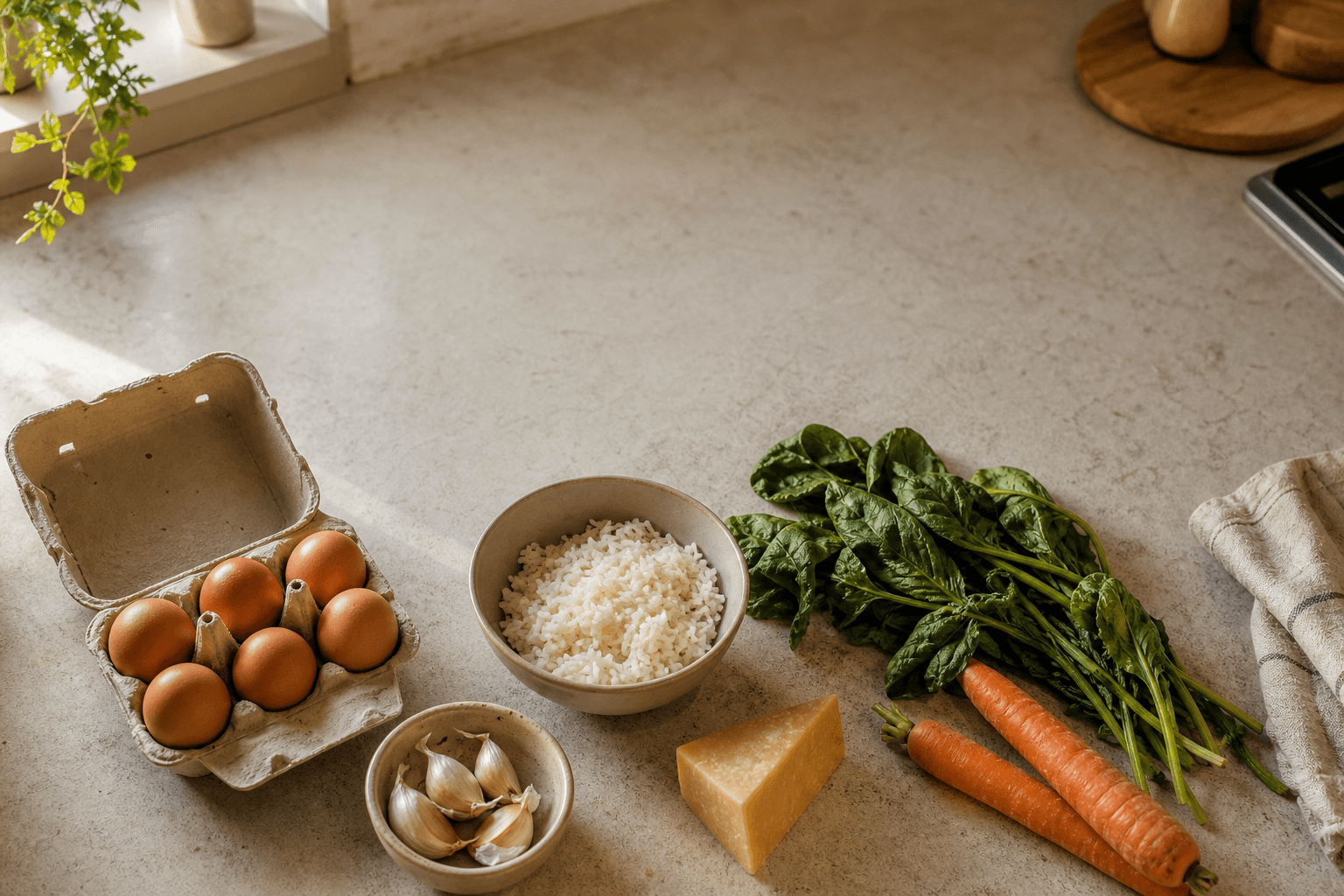
Start with what's about to spoil, then sort your remaining ingredients into three buckets, protein, starch, and vegetable, and match them to one flexible format like a stir-fry, soup, frittata, or grain bowl. That four-step method turns a random fridge into a meal in under five minutes and skips the recipe search entirely.
Why does deciding feel harder than cooking?
Open the fridge and you're not really choosing a recipe. You're making a decision, and open-ended decisions, "what should I cook," take longer to settle than narrow ones. That stall has a real cost. About a third of the food produced in the United States goes uneaten, according to the EPA. Every night you can't decide and order takeout instead, the food already in your fridge gets one day closer to the trash.
The fix is a smaller, repeatable set of questions that narrows the field fast.
What should you use first?
Before you think about flavor, do a two-minute triage. Walk your fridge and pantry and flag anything within a day or two of its edge, wilting greens, a half-used block of cheese, cooked rice from earlier in the week, meat you thawed but haven't cooked yet. Whatever you find becomes your must-use ingredient. Everything else is support.
Food safety matters here too. The USDA's Food Safety and Inspection Service says cooked leftovers need to go into the fridge within two hours of cooking, one hour if it's over 90 degrees out. Keep them at 40 degrees Fahrenheit or below, and they're good for three to four days before you need to toss them or freeze them. If something's past that window, it's headed for the trash, not the pan.
What do you have, sorted into four groups?
Once you know your must-use ingredient, group everything else into four rough buckets:
- Protein: eggs, canned beans, leftover meat, tofu, cheese
- Starch: rice, pasta, bread, tortillas, potatoes
- Vegetable or fruit: anything fresh, frozen, or slightly past its best
- Flavor: garlic, onion, an acid like lemon or vinegar, a sauce or spice you reach for often
You don't need one of each. Two out of four is enough to build a meal. Three gives you a full plate.
Which format fits what you found?
This is the step that saves you the most time. Instead of hunting for a specific recipe, pick a format built to absorb whatever you have on hand. A handful of formats do most of the work:
- Stir-fry: any protein, any vegetable, a starch on the side or mixed in
- Soup: leftover roast meat plus broth plus wilting vegetables
- Fried rice: day-old rice, an egg, and whatever vegetables need using
- Frittata or strata: eggs, cheese, and nearly anything else, including stale bread
- Pantry pasta: noodles, garlic, oil, and one vegetable or protein
- Grain bowl: a cooked grain, a protein, a vegetable, and a sauce
Match the format to your must-use ingredient, not the other way around. A wilting bunch of spinach points you toward a frittata or a soup, not a sandwich.
What's missing, and can you substitute it?
Almost no fridge has a perfect match for any format, and that's fine, because formats are forgiving. No broth for soup? Use water and a bouillon cube. No fresh garlic? Garlic powder works in a pinch. Out of rice for fried rice? Quinoa or couscous will hold up just as well. The goal is a good meal tonight, not a perfect one.
What can you make with common combinations?
Here are some real starting points, based on ingredients most people already have around on a random Tuesday.
| What's in your fridge or pantry | Best format | Ready in about |
|---|---|---|
| Rice, eggs, and vegetable scraps | Fried rice | 15 minutes |
| Leftover roast chicken, broth, wilting greens | Soup | 25 minutes |
| Stale bread, eggs, cheese | Frittata or strata | 30 minutes |
| Tortillas, canned beans, cheese | Quesadillas | 10 minutes |
| Odd vegetables, pasta, garlic | Pantry pasta | 20 minutes |
| Overripe fruit, yogurt, oats | Smoothie or baked oatmeal | 5 minutes |
| Canned tomatoes, onion, any protein | Skillet chili or stew | 30 minutes |
None of these require a grocery run. That's the point. Once you match a format to what's already open in your fridge, the cooking itself is the easy part.
How do you make this a habit instead of a one-time trick?
The method works best when you run it before you're hungry and frustrated, not during. A few habits help it stick:
- Do a two-minute fridge scan once or twice a week, not only when you're desperate
- Keep leftover proteins and grains visible, in clear containers, at eye level
- Note your must-use ingredient somewhere you'll see it before dinnertime
- Cook a bigger batch of a base ingredient like rice or roasted vegetables on purpose, so future you already has a head start
Waste comes down to habits more than kitchen size or fancy equipment. The households that waste the least food look before they shop, and they use what's already open before they open something new. For a broader walkthrough of this whole approach, our guide to what to cook with what you have covers the mindset shift in more depth.
Where can an app help?
The four-step method works with pen, paper, or nothing but memory. It gets faster once something else is tracking what's in your kitchen and when it expires. That's the gap Well Stockd fills: log what's in your fridge, pantry, and freezer once, and it flags what's closest to going bad and checks that against a catalog of recipes you can make right now, without another trip to the store. If typing your ingredients into a search bar sounds more your speed, you can tell it what's in your fridge and get recipes back instead of working through formats by hand, or look at an app that suggests recipes based on the ingredients you already have so step two happens on its own.
Frequently asked questions
What if I don't have a protein, starch, and vegetable all at once?
Cook with two out of three. A vegetable and a starch make a solid grain bowl or pasta dish on their own. A protein and a vegetable make a fine stir-fry or scramble. Wait until you have all three lined up and you'll end up waiting most nights.
Should I plan meals around what I have, or shop first and cook second?
Both, in that order. Check what needs using before you make a grocery list, then shop to fill the gaps in your format rather than to start over. It's also the fastest way to bring down a grocery bill.
Is it worth using a recipe finder instead of guessing?
If you're already comfortable with the format method above, you don't need one. But if you'd rather browse options built around your exact ingredients, a fridge-first recipe finder can shortcut steps two and three by matching your list against real recipes instead of general formats.
Sources: Leftovers and Food Safety, USDA Food Safety and Inspection Service, Preventing Wasted Food At Home, US EPA
Track it in Well Stockd
Add what you have, see what you can cook tonight, and get a reminder before anything goes off.
