Pantry dump dinner ideas: the 4-step method for using what you have
A pantry dump dinner is built from a base, a protein, whatever vegetables need using, and a sauce to tie it together. This covers the method, six formulas to try tonight, and how long those odds and ends are safe to cook with.
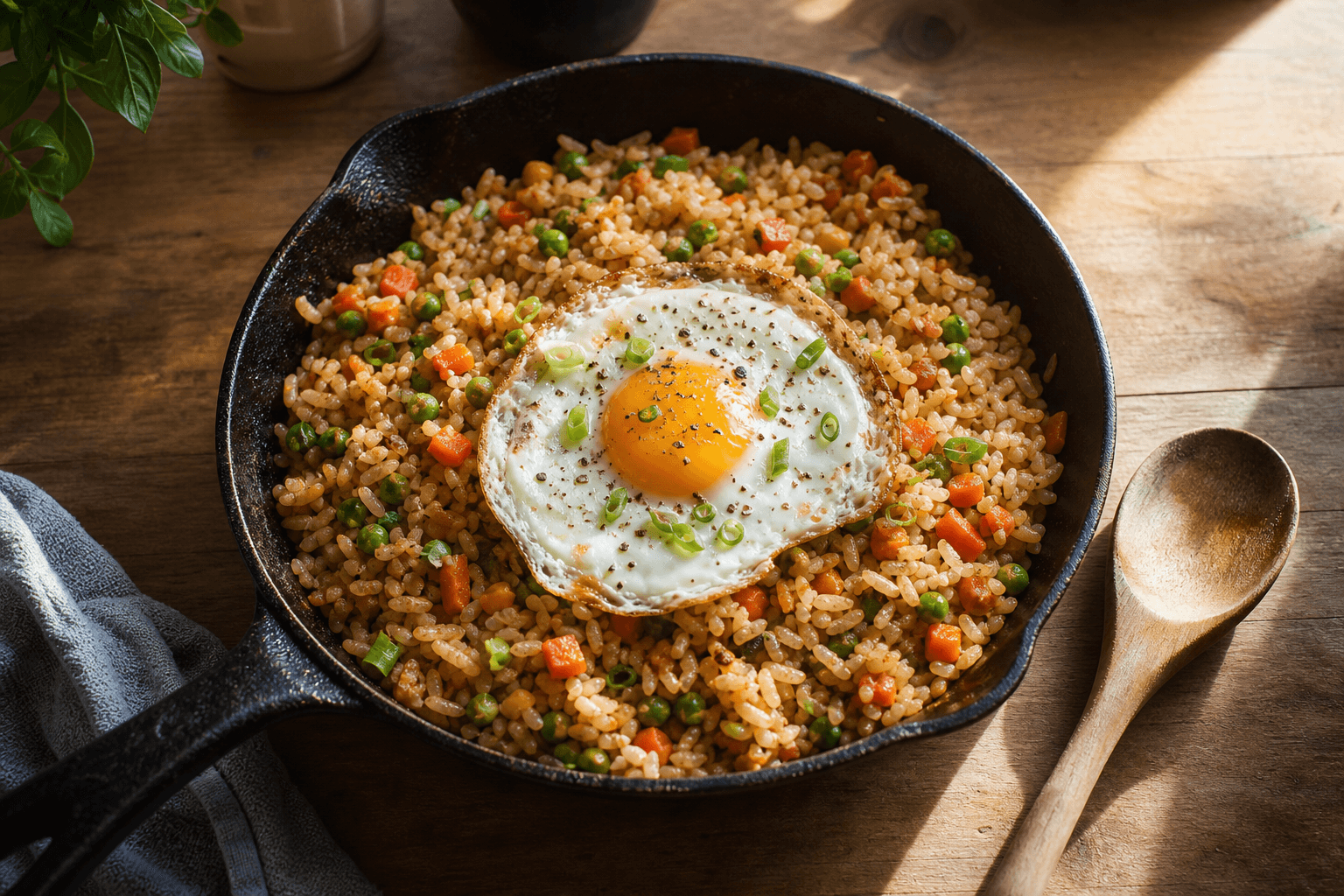
A pantry dump dinner works off one formula: pick a starchy base like rice, pasta, or tortillas, add whatever protein is on hand, dump in any vegetables that need using, then tie it together with a sauce, broth, or melted cheese. Most versions cook in one pot in under 30 minutes.
What exactly is a pantry dump dinner
A dump dinner is not a specific recipe. It is a way of cooking that starts with what you already own instead of a shopping list. You look at the half bag of rice, the two eggs, the jar of salsa with an inch left, and the wilting bell pepper, and you build dinner around them instead of driving to the store.
This style of cooking has always existed in home kitchens, but it has gotten more attention lately as grocery prices climb and more people try to cut down on food waste. The idea is simple: nearly any combination of a starch, a protein, a vegetable, and a sauce becomes a real meal if you cook it together in one pan.
What's the method for turning odds and ends into dinner
You do not need a recipe for this, just four moves.
- Pick your base. Rice, pasta, couscous, tortillas, bread, or even crackers all work. This is the part of the plate that soaks up flavor and makes the meal filling.
- Add your protein. Canned beans, a can of tuna, leftover shredded chicken, browned ground meat, tofu, or a couple of eggs. If it is already cooked, it just needs to get hot. If it is raw, cook it first and set it aside.
- Dump in the vegetables. Frozen mixed vegetables, the last handful of spinach, a soft tomato, carrot ends, or anything in the crisper that is a day or two from the compost bin. Frozen goes in straight from the bag. Fresh scraps get chopped small so they cook fast.
- Tie it together. A splash of broth, a spoonful of pasta sauce, soy sauce and sesame oil, or just butter, salt, and a handful of cheese. This step turns a pile of ingredients into a dish that tastes like it was planned.
Cook everything in one skillet, one pot, or one sheet pan, and you have dinner without a trip to the store.
Dump dinner formulas to try tonight
Use this as a starting point and swap in whatever you have.
| Base | Protein | Vegetables | Sauce or seasoning | What you get |
|---|---|---|---|---|
| Cooked rice | Canned beans or shredded chicken | Frozen mixed vegetables, wilting spinach | Salsa, cumin, lime | Skillet burrito bowl |
| Dry pasta | Canned tuna or leftover sausage | Canned tomatoes, olives, any greens | Olive oil, garlic, parmesan | One-pot pasta |
| Tortillas | Scrambled eggs or black beans | Bell pepper ends, onion | Hot sauce, shredded cheese | Breakfast-for-dinner tacos |
| Bread | Deli meat ends, cheese scraps | Sliced tomato, pickles | Mustard, butter | Loaded skillet grilled cheese |
| Day-old rice | Leftover cooked meat or tofu | Any crisp vegetable, one egg | Soy sauce, sesame oil, ginger | Fried rice |
| Broth on hand | Canned beans, leftover roast vegetables | Wilting greens, canned tomatoes | Bouillon, dried herbs | Kitchen-sink soup |
Each row is a full dinner for two to four people, and none of them require a special trip to the store.
What can I make with specific pantry odds and ends
Sometimes it helps to start from the ingredient instead of the formula. A few common situations and what to do with them.
- Half a bag of rice, one egg, and a bottle of soy sauce: fried rice. Cold, day-old rice works better than fresh, since it fries up drier and crisper.
- A nearly empty jar of pasta sauce and stale bread: toast the bread, spoon the sauce over it, top with cheese, and broil for two minutes for an open-faced pizza toast.
- Canned beans, a can of tomatoes, and any spice jar: a fast chili. Simmer 15 minutes and it tastes like it took longer.
- A few eggs and any vegetable scraps: a frittata. Whisk the eggs, stir in chopped bits, pour into a greased pan, and bake at 375°F for about 20 minutes. Almost anything works in one.
- Leftover roast chicken or turkey and a box of broth: shred the meat, add broth, canned beans, and whatever vegetables are left, and simmer into a soup.
- Frozen vegetables and a can of coconut milk or tomatoes: a quick curry over rice using curry powder or paste.
How long is it safe to cook with leftover bits and pieces
Dump dinners often use ingredients that have been sitting around for a few days, so it is worth knowing the actual limits. According to the USDA, cooked leftovers are safe in the refrigerator for 3 to 4 days, and safe in the freezer for 3 to 4 months for best quality, though frozen food stays safe to eat indefinitely if it has stayed frozen the whole time. Throw out any perishable food that has sat out at room temperature for more than 2 hours, or more than 1 hour above 90°F, rather than eating it. When you are building a dinner from what is already open in the fridge, that 3 to 4 day window is the one to check first.
Knowing exactly what is in the fridge and pantry, and how long it has been there, is the part that trips most people up. If you keep losing track of what needs to get used this week, an app that suggests recipes based on ingredients you have at home can do the matching for you, so the dump dinner method turns into an actual meal plan instead of a guessing game.
Frequently asked questions
Is a dump dinner the same thing as a casserole? Not quite. A casserole usually goes in the oven in a baking dish and bakes as one assembled unit. A dump dinner can be a casserole, but it can also be a skillet meal, a stovetop soup, or a sheet pan dinner. The common thread is using what you have rather than following a set recipe.
What if I do not have a sauce or seasoning on hand? Salt, oil or butter, and something acidic like lemon juice, vinegar, or a squeeze of hot sauce will carry most combinations. Even a bouillon cube dissolved in water works as a base sauce when the pantry is bare.
Can I combine frozen and fresh ingredients in the same pot? Yes. Add frozen vegetables early since they need more time to thaw and cook through, and stir in fresh or already-cooked ingredients toward the end so they do not overcook.
For more ideas on cooking around what you already own, see the cook with what you have hub, the guide to a what's in my fridge recipe finder, or the piece on how to tell me what's in my fridge and I'll give you recipe matches.
Sources: USDA FSIS, Leftovers and Food Safety; USDA FSIS, Freezing and Food Safety
Track it in Well Stockd
Add what you have, see what you can cook tonight, and get a reminder before anything goes off.
