How to help kids waste less school lunch
A practical, step-by-step method for cutting school lunch waste: audit what comes home, resize portions by age, and pack food your kid will eat before it goes in the trash.
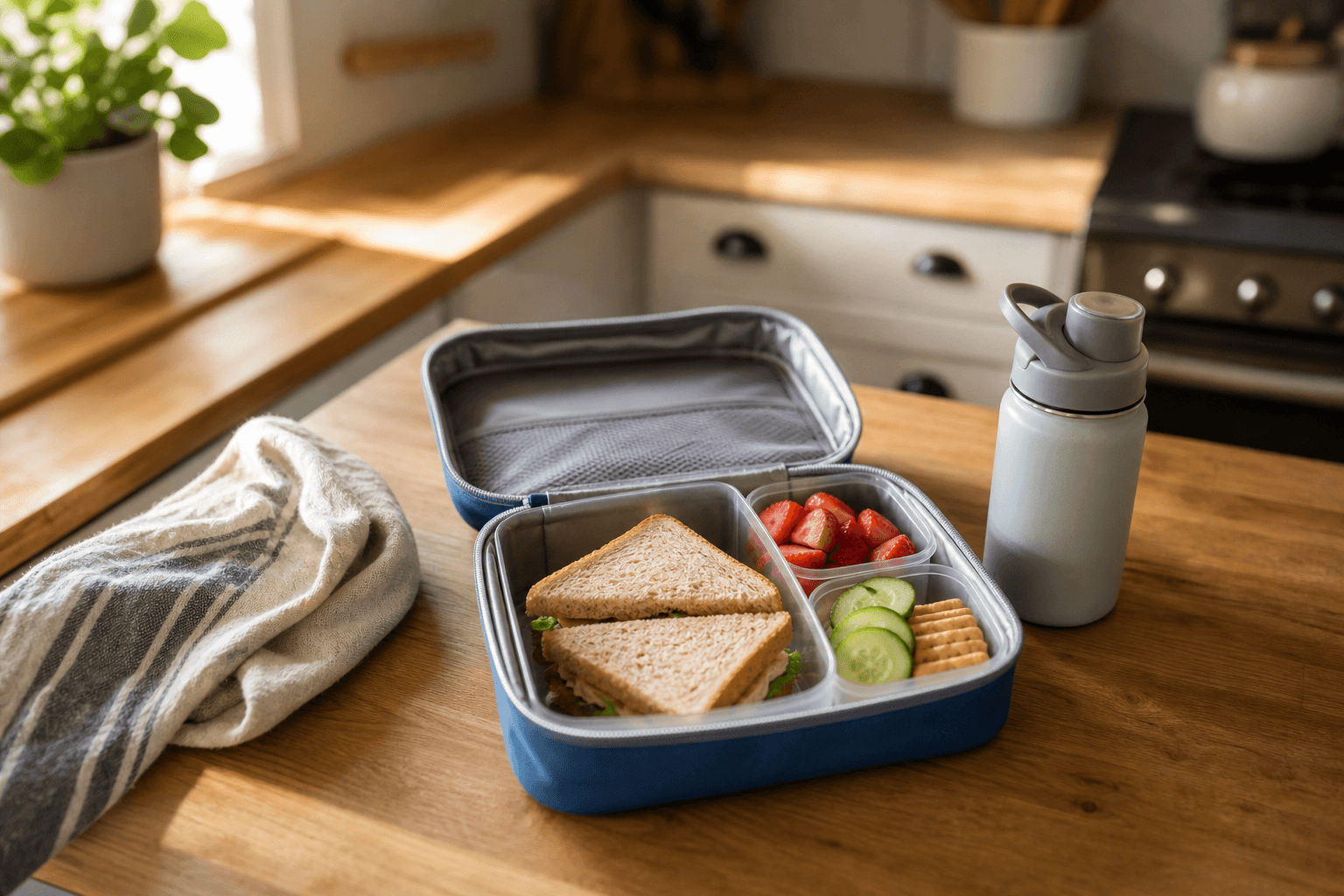
The fastest way to cut school lunch waste is a one week lunchbox audit: check what comes home uneaten every single day, then resize portions and swap out anything that returns untouched twice in a row. Pair that with letting your kid help pack their own lunch, and most of the waste disappears without a single argument at the counter.
Why kids waste so much of their lunch
Cafeteria and lunchbox waste is bigger than most parents realize. National research on school food waste puts plate waste somewhere between 27 and 53 percent of what gets served, and about three out of four students admit they sometimes or always throw away part of their lunch. Grains take the hardest hit in elementary school, with nearly 45 percent of servings going in the trash, while teenagers waste closer to 47 percent of theirs, mostly fresh fruit they never open the wrapper on.
None of that means your kid is being wasteful on purpose. Most of it comes down to three fixable things: portions that don't match appetite, not enough time to eat, and food that looked good in the store but isn't familiar or easy to eat fast.
A 5-step method to pack a lunch your kid will eat
- Run a one week audit. Don't change anything yet. Just look at the lunchbox every afternoon and note what's gone, what's half gone, and what never got touched.
- Resize the portions. If the same item comes back untouched two days running, you're packing too much of it, or your kid genuinely doesn't want it. Cut the amount before you cut the food entirely.
- Keep brand-new foods out of the lunchbox. Test anything unfamiliar at home dinner first. A packed lunch is the wrong place for a food your kid has never tasted, because there's no one there to coax them through it.
- Make it fast to eat. Once they're through the lunch line, a lot of kids are down to 10 minutes or less at the table. Pre-cut, pre-peeled, and pre-opened beats anything that takes work to get into.
- Hand over some control. Kids waste less of what they chose. Even picking between two pre-approved options at breakfast cuts down on the food that comes home ignored.
What's coming back in the lunchbox, and what it means
| What comes back | Likely reason | Try this instead |
|---|---|---|
| Whole apple or banana, untouched | Too big or too slow to eat in the time they have | Slice it and add a squeeze of lemon juice so it doesn't brown |
| Half a sandwich | Portion was sized for an adult, not a kid | Cut sandwiches into quarters so they can stop when they're full |
| Sealed bag of crackers or chips | They filled up on the main item first | Pack one starchy side instead of two, or rotate so it's not the same thing all week |
| Unopened milk or juice carton | They forgot it was there or ran out of time | Put it front and center, or send a reusable bottle they already like using |
| Cut vegetables, barely touched | Served plain to a kid who isn't used to eating veggies solo | Add a small dip like hummus or ranch, kids eat noticeably more with something to dunk |
| Entire main dish untouched | Unfamiliar recipe or a texture they didn't expect | Test any new dish at home dinner before it goes in the lunchbox |
| Water bottle still full | Lid or straw is hard to manage, or they simply forgot | Pick a bottle they can open one-handed and give one reminder at drop-off |
If produce keeps coming home bruised or half-eaten, the same principles apply as keeping fridge food from going to waste at home: first in, first out, and don't restock a snack until the last batch is gone.
How much to pack, by age
These are starting points, not rules. Watch what comes back for two weeks and adjust from there.
| Age group | Main dish | Fruit | Vegetable | Snack | Drink |
|---|---|---|---|---|---|
| Kindergarten to grade 2 | Half a sandwich or 3 to 4 ounces of protein | About half a cup, cut small | A few tablespoons with dip | One small item, not two | 8 ounces |
| Grades 3 to 5 | A full sandwich or 4 to 5 ounces of protein | Half a cup to a full cup | A quarter to half cup with dip | One to two small items | 8 to 12 ounces |
| Middle and high school | A full sandwich or wrap, or 5 to 6 ounces of protein | One cup | Half a cup with dip | Two items if they have practice or sports after | 12 to 16 ounces |
Buying snack packs in bulk only helps if your kid eats them before the box goes stale in the pantry. The same thinking behind not wasting groceries before they go bad applies just as much to the snack drawer as it does to the produce drawer. Buy less, more often, and only restock what's disappearing.
If your kid buys lunch at school instead
Packed lunches aren't the only source of waste. If your kid eats a school-provided meal, there are still things worth asking about. A share table is a designated spot where kids can return whole, unopened food they don't want, like a sealed milk carton or a whole piece of fruit, so another student can take it instead of it going in the trash. Districts that combine share tables with menu tweaks have cut cafeteria waste by up to 25 percent.
Timing matters too. Schools that schedule recess before lunch instead of after see a sharp drop in plate waste. One study found it fell from roughly 35 percent to 24 percent, largely because kids weren't rushing through their food to get outside. If your school hasn't tried that swap, it's worth raising with the PTA or cafeteria staff. Under a federal option called offer versus serve, older students can also turn down items on their tray instead of taking food they won't eat, which cuts waste without hurting nutrition.
Put the returned food to good use
Lunchbox waste is really just a smaller, faster version of the food waste that builds up everywhere else in a kitchen. The same habits that stop food waste at home work here too: buy close to what you'll use, track what's getting eaten instead of guessing, and let real patterns, not habit, decide the next grocery list.
In practice, a lunchbox audit is a small inventory system. If you're already trying to keep tabs on what's in the fridge and pantry so nothing goes bad before it gets used, a pantry inventory app built to cut food waste like Well Stockd can flag those uneaten apples or crackers before they expire, so you can work them into a snack or a recipe instead of tossing them once they've gone stale in the back of the pantry.
Frequently asked questions
How much food waste comes from school lunches? National estimates put cafeteria plate waste between 27 and 53 percent of what's served, and roughly three out of four students report throwing food away at lunch at least some of the time. Fresh fruit and grains are the most commonly wasted items.
Do share tables work? Yes, when schools set them up correctly. They let kids return whole, unopened food for another student to take instead of throwing it out, and districts running them alongside other changes have reported waste cut by up to a quarter.
Should I stop packing foods my kid doesn't finish? Not right away. Give it a smaller portion and one more try before dropping it for good, and figure out whether it's coming back because they don't like it or because they simply ran out of time to eat it. Those two problems need different fixes.
Sources: South Dakota State University Extension, Food Waste in Schools and Strategies to Reduce It, USDA, Food Loss and Waste in Schools, PubMed, Food waste is reduced when elementary-school children have recess before lunch