How to shop your pantry first (before you buy anything new)
A five-minute pantry check before every grocery trip stops you from buying food you already own. This walks through where to look first and how often to make it a habit.
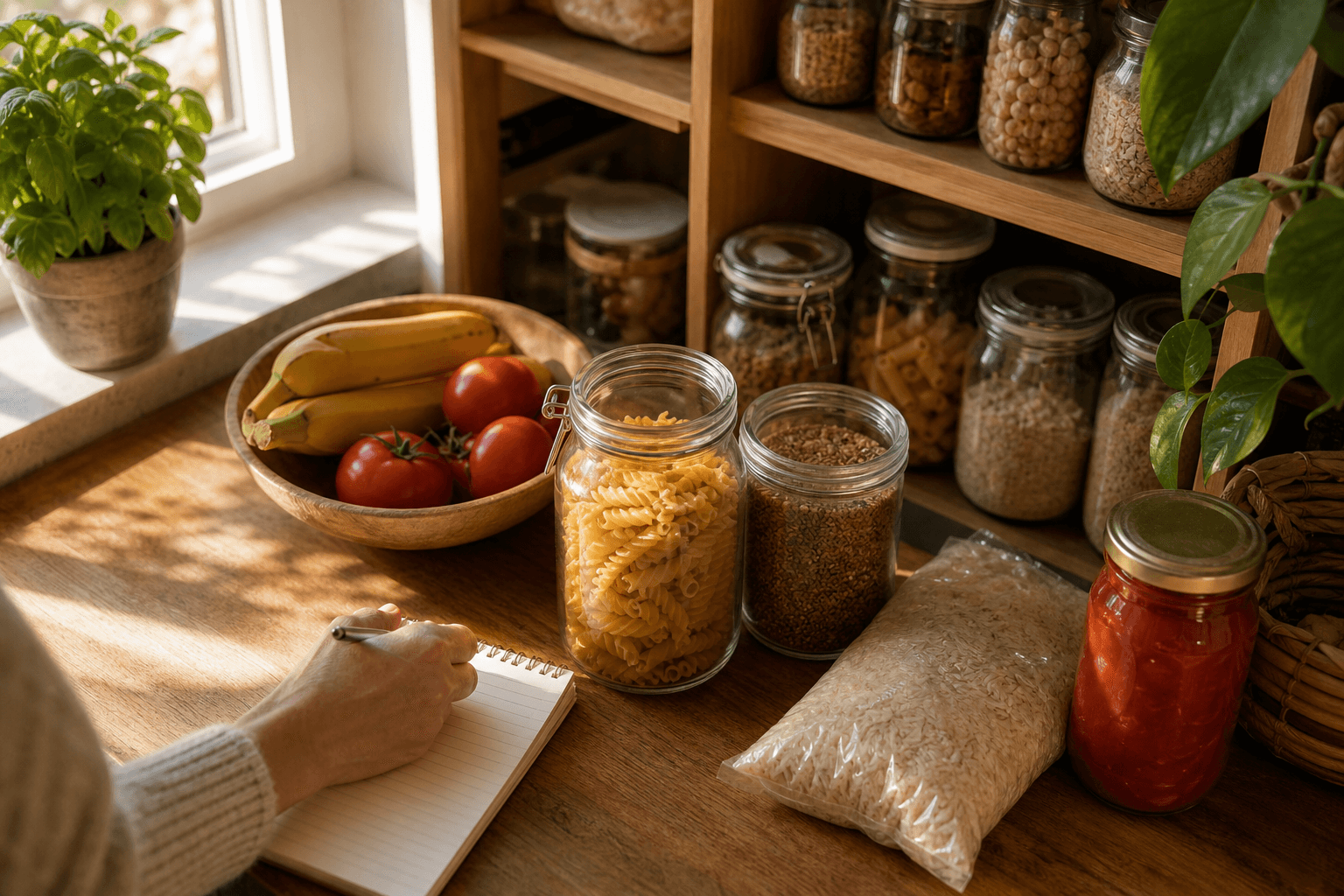
Shopping your pantry first means spending five minutes checking your fridge, freezer, and cupboards before you write a grocery list, then planning meals around what you already own. It's the fastest way to stop buying duplicates, and it chips away at the nearly $3,000 a year a family of four wastes on uneaten food.
That figure comes from a 2025 EPA report on the cost of food waste to American consumers, nearly double the older USDA estimate of $1,500 a year for a family of four. Most of the waste isn't dramatic. It's a second jar of peanut butter bought because you forgot the first one, a bag of salad that wilted behind a bigger bag of salad, or chicken thighs pushed to the back of the freezer and replaced at the store an hour later.
What does shopping your pantry first mean?
It's a simple habit: before you make a grocery list or head to the store, you look at what you already have and let it shape the plan. That flips the usual order. Instead of planning meals from a blank slate and buying every ingredient new, you start from your fridge, freezer, and cupboards and fill in only the gaps.
This is the same instinct behind cooking with what you have as a broader kitchen strategy. Pantry shopping is the specific habit that makes it possible: you can't cook from what you have if you don't know what you have.
How do you do a pantry shop, step by step?
Give yourself five minutes and work in this order:
- Open the fridge first. It holds whatever spoils fastest: dairy, cut produce, opened jars, last night's leftovers.
- Check the freezer next. Nothing in there is safe forever. Meat loses quality after a few months, and bags of vegetables get forgotten behind bigger items.
- Scan the pantry shelves. Look for opened bags, near-empty containers, and anything with a date that has already passed.
- Write it all down in one list, not three. A phone note, a sticky pad on the fridge, or an app all work. The point is a single running record, so you stop re-checking from memory every week.
- Build your meals around what needs to go first, then add only the ingredients you're missing to your shopping list.
That last step is where the savings show up. Say you've got half a bag of spinach, a nub of parmesan, and half a rotisserie chicken sitting in the fridge. That's tonight's dinner planned before you've spent a dollar.
Where should you check first, and why?
Not every part of the kitchen carries the same risk. Some spots hide forgotten food longer than others, and some spoil fast enough to deserve a first look every time.
| Zone | Check it first because | What you're usually hunting for |
|---|---|---|
| Fridge | Spoils fastest, shortest shelf life | Half-used dairy, cut produce, leftovers, opened condiments |
| Freezer | Easy to forget, but not endless | Meat past its best window, frozen vegetables, bread |
| Pantry and cupboards | Longest shelf life, easiest to double buy | Opened grains, canned goods, spices, baking staples |
| Countertop or fruit bowl | Ripens on its own timeline | Bananas, tomatoes, avocados near peak |
This order follows a version of FIFO, first in first out, the same stock rotation rule grocery stores and restaurant kitchens use to move older stock before it spoils. At home it just means using the older jar of salsa before you open the new one.
How often should you shop your pantry?
Once a week, right before you plan meals and write your grocery list, is enough for most households. It only takes five minutes once you know where things sit. Some people add a faster, two-minute version mid-week too: a quick look at the fridge before deciding what's for dinner, the same idea behind a fridge-first recipe finder that starts from what's already open rather than a recipe you found online.
Bulk shoppers and larger families benefit even more from this habit, since a bigger pantry just means more places for duplicates to hide.
Where does an app fit into pantry shopping?
The habit itself doesn't need any tool. A notepad works fine. The part people give up on is the tracking: remembering what's in the back of the freezer three weeks later, or remembering you already have a jar of cumin before you buy a second one. That's the piece Well Stockd is built for. You log what's in your fridge, freezer, and pantry once, and it keeps track of what's close to expiring, suggests recipes based on the ingredients you already have, and builds your shopping list from whatever those recipes are missing, not from a list written out of memory.
It's the same idea as asking what's in your fridge and getting a recipe back, just kept current automatically instead of redone by hand every week.
Frequently asked questions
Is shopping your pantry first the same as meal planning?
Not quite. Pantry shopping is the input, meal planning is the output. You check what's on hand first, then build the week's meals around it, instead of planning a full week of meals from scratch and buying every ingredient new.
What if I genuinely don't know what's in my freezer?
That's normal. Freezers are where food goes to be forgotten. Do one thorough pantry shop, write everything down as you find it, and label anything you repackage with the date. After that first pass, keeping the list current takes far less time.
Does this still help if I shop in bulk?
Yes, more than most. Bulk shopping means more inventory sitting in more places, which is exactly where duplicate purchases sneak in. A five-minute check before each trip catches them before they turn into a second five-pound bag of rice.
Sources:
Track it in Well Stockd
Add what you have, see what you can cook tonight, and get a reminder before anything goes off.
