How to stop wasting food at home
Most food waste comes down to three fixable habits: not seeing what you already have, buying more than you need, and letting food that's about to turn get buried in the fridge. This guide covers the full system, with links to every article that can help you fix it.
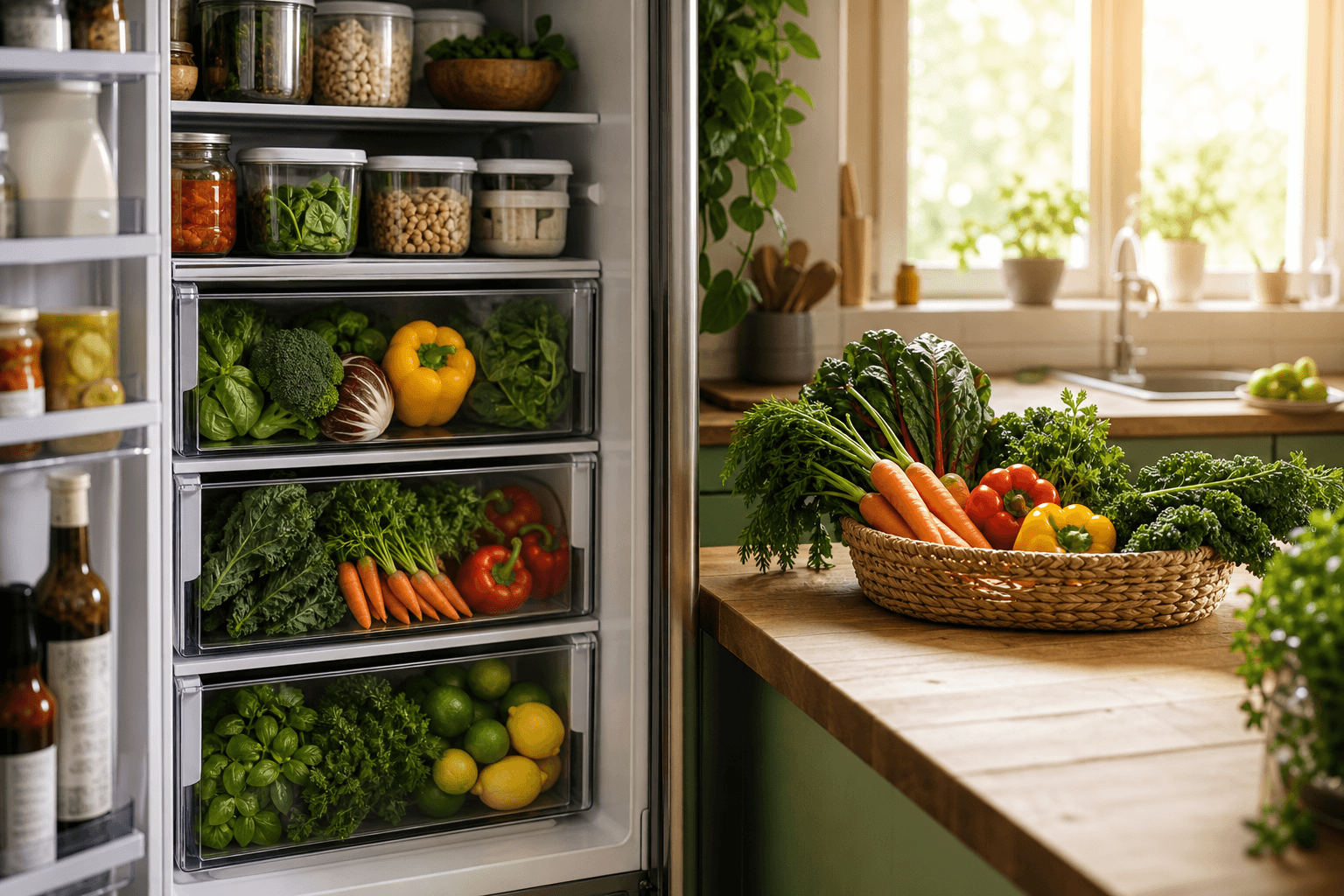
Most food waste comes down to three fixable habits: not knowing what you already have, buying more than you'll use, and letting food that's about to turn get buried in the back of the fridge. Fix those three things with an organized fridge, a short weekly plan, and an eat-me-first system, and the waste drops fast, along with your grocery bill.
The short version
- See what you have before you shop. Most waste starts with forgotten food, not bad food.
- Shop from a list built off your fridge and pantry, not habit or hunger.
- Plan a few meals each week around what's closest to expiring.
- Keep a flexible recipe or two on hand for odds and ends and wilting produce.
- Give kids a role in choosing and portioning food so less comes back uneaten.
- Track what you throw away for two weeks. The pattern tells you where to focus.
Where does your food waste problem start?
| If this sounds like you | Start here | Fastest fix |
|---|---|---|
| Food goes bad in the back of the fridge | How to stop throwing away food from the fridge | Set up an eat-me-first bin |
| Groceries wilt before you get to them | How to stop wasting groceries before they go bad | Shop from what's already on hand |
| You don't have a weekly plan | Does meal planning reduce food waste | Plan two or three meals around what's expiring |
| Vegetables are already going soft | What to do with wilting vegetables before they spoil | Revive in ice water or cook into something forgiving |
| You're cooking for one and buying too much | Cooking for one without wasting food | Buy smaller and freeze in single portions |
| Kids won't finish what's packed or served | How to reduce food waste at home with kids | Let them help choose and portion |
| Ground beef or freezer meat is close to done | How to use ground beef before it goes bad | Cook it into a freezer-friendly batch |
Why do we waste so much food and money without noticing?
Waste sneaks up on you because it happens in small amounts, a wilted bag of spinach here, a forgotten leftover container there, rather than all at once. Add it up over a year and the numbers get hard to ignore: government estimates put the cost to a family of four anywhere from around $1,500 to nearly $3,000 a year in food that's bought and never eaten. For the full breakdown of where that money goes, see how much money does a family of four waste on food and food waste in America statistics 2026.
What's the fastest way to see everything you have?
You can't use food you've forgotten about, so the first fix is visibility. Set up your fridge so nothing hides behind something else, and give near-expiring items their own spot instead of letting them drift to the back. Start with how to organize your fridge to prevent food waste and an eat-me-first bin for your fridge, then use how to stop throwing away food from the fridge to close the remaining gaps.
How do you keep groceries from going bad before you use them?
A lot of waste happens because you buy groceries on autopilot instead of checking what's already at home. Before you shop, check the fridge and pantry, and buy to fill real gaps rather than restock out of habit. How to stop wasting groceries before they go bad walks through the shopping-side fixes, and a printable food waste log sheet is a simple way to see which items you keep tossing so you can stop buying more than you need.
Does meal planning cut down on waste?
Yes, and it's one of the most effective habits on this list, because a plan turns "what should we eat" into "what do we already have to use up." Does meal planning reduce food waste covers the evidence, and plan meals around food about to expire shows how to build the week's menu backward from your fridge instead of forward from a recipe you found online.
What should you cook when food is about to expire?
Having a short list of flexible recipes on hand means expiring food becomes dinner instead of trash. Recipes to use up food before it goes bad and what to make with vegetables about to go bad are good starting points for produce. If it's meat that's on the clock, how to use ground beef before it goes bad and how to salvage freezer-burned meat cover the two most common culprits.
How do you save vegetables that are already wilting?
Wilting doesn't always mean spoiled. You can revive a lot of produce, or use it in something else, before it has to go in the bin. What to do with wilting vegetables before they spoil and how to revive wilted vegetables in ice water cover the rescue methods, and what to do with vegetable scraps instead of throwing them away shows how to use the parts you'd normally toss.
How do you waste less food when you're cooking for one?
Smaller households often waste more food per person, simply because most packaging and recipes are built for four. Cooking for one without wasting food covers portioning, freezing, and shopping strategies sized to a single person or couple.
How do you get the whole family, including kids, to waste less?
Food waste habits are easier to build as a household than to enforce alone, and kids waste less when they've had a hand in choosing or portioning their own food. How to reduce food waste at home with kids covers kitchen-wide habits, and how to help kids waste less school lunch focuses on the lunches that come home half-eaten.
Can an app help you waste less food?
A log sheet or a sticky note on the fridge works fine if you're consistent, but most people aren't, which is exactly where a running list of what's in your kitchen helps. Well Stockd tracks your fridge, freezer, and pantry by expiry date, flags what needs eating first, and matches it against thousands of recipes so you know what to cook before food turns. If you want to see how a dedicated app compares to a whiteboard or a notes app, the best pantry inventory app to reduce food waste breaks down what to look for.
Related guides
- How to stop throwing away food from the fridge
- How to stop wasting groceries before they go bad
- Plan meals around food about to expire
- Cooking for one without wasting food
- Recipes to use up food before it goes bad
- What to make with vegetables about to go bad
- What to do with wilting vegetables before they spoil
- Eat-me-first bin for fridge
- How to organize your fridge to prevent food waste
- Printable food waste log sheet
- How to reduce food waste at home with kids
- How to help kids waste less school lunch
- How to revive wilted vegetables in ice water
- What to do with vegetable scraps instead of throwing them away
- How to use ground beef before it goes bad
- How much money does a family of four waste on food
- Food waste in America statistics 2026
- Does meal planning reduce food waste
- How to salvage freezer-burned meat
Frequently asked questions
Do I need to change everything at once to stop wasting food? No. Pick one habit, usually an eat-me-first bin or a weekly plan built around what's expiring, and run it for two weeks before adding another. Trying to overhaul shopping, storage, and cooking all at once is why most food waste fixes don't stick.
What's the single most effective habit for reducing food waste? Knowing what you have before you shop or cook. Nearly every fix on this page, whether it's organizing the fridge, planning meals, or keeping a waste log, exists to answer one question: what's in my kitchen right now, and what needs to be eaten first.
Is food waste really costing my family that much money? For most households, yes. Government estimates put the annual cost for a family of four between roughly $1,500 and $3,000, depending on how it's measured. See food waste in America statistics 2026 for the full numbers.
Sources: USDA, Food Loss and Waste, EPA, Estimating the Cost of Food Waste to American Consumers