How to stop buying the same groceries every week
Buying the same 10 groceries every week is a habit loop, not a creativity problem. A simple rotation method, a sample four-week dinner plan, and a quick look in your kitchen before you shop are enough to break it.
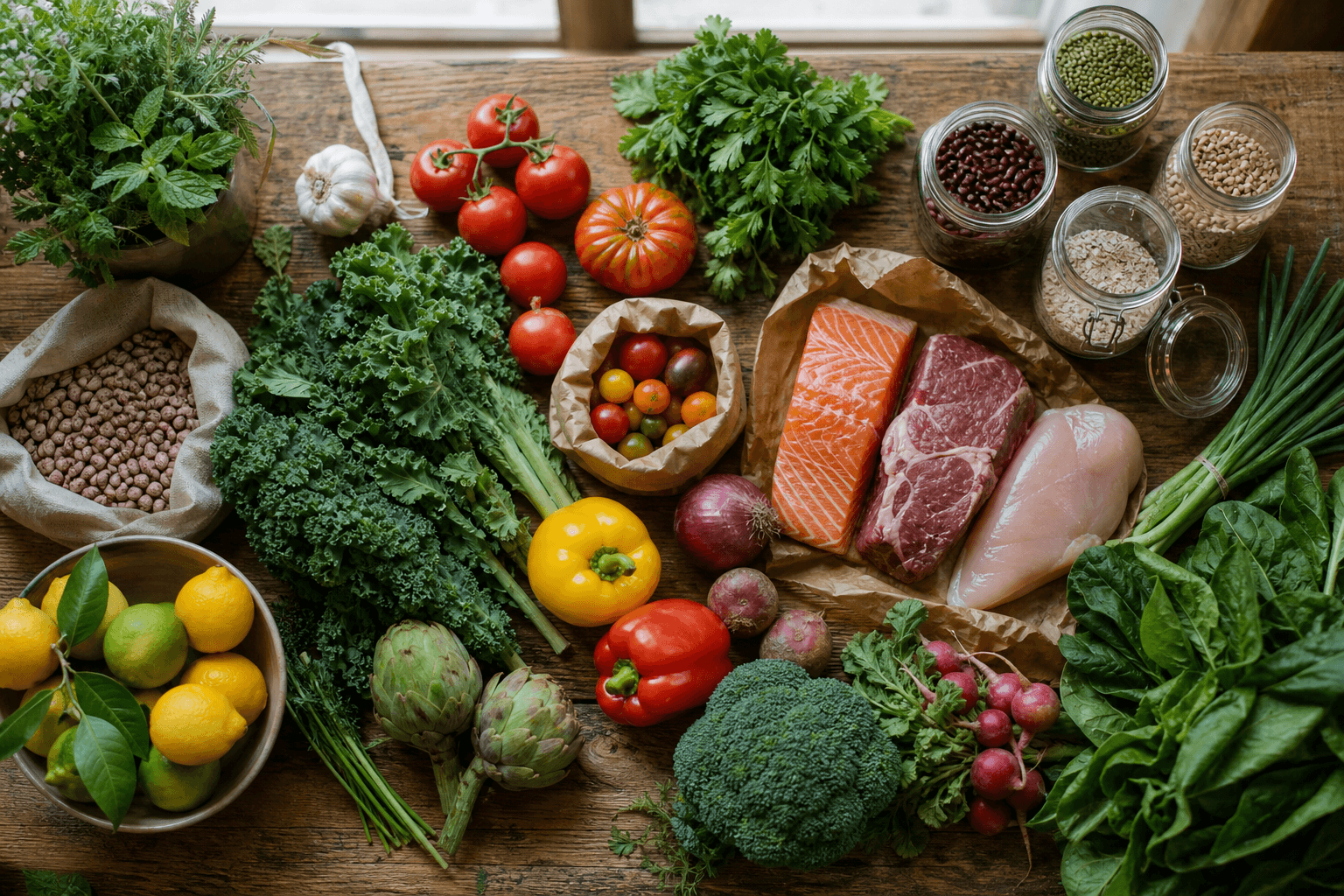
Stop buying the same groceries every week by building a rotating list of 15 to 20 "greatest hits" recipes across a few proteins and cuisines, checking your fridge and pantry before you write a list, and committing to one new recipe every week so your cart changes from one trip to the next instead of staying on autopilot.
Why do you keep buying the same groceries every week?
It comes down to a habit loop, not a lack of imagination. Once a shopping routine gets established, your brain hands the job over to autopilot: you see the cereal aisle, you grab the same box, you move on. The cue is an empty shelf at home, the routine is reaching for the familiar brand, and the reward is the small relief of knowing dinner is handled without having to think about it.
That autopilot gets stronger the more tired or busy you are. Decision fatigue pushes people toward whatever took zero thought last time, which is exactly why the same ground beef, the same bagged salad, and the same jar of pasta sauce keep landing in the cart. Add in shrinking trip frequency (many households now shop around six times a month instead of eight, filling bigger baskets each time), and there's even less room mid-trip to pause and reconsider.
None of that is a character flaw. It just means breaking the pattern takes a system, not willpower.
How do you break a grocery rut without overhauling your whole routine?
You don't need to reinvent your kitchen. Six small, repeatable changes cover most of it:
- Audit two months of receipts or cart history and circle the ten or so items that show up almost every week. This is your baseline, not a judgment.
- Build a rotation list of 15 to 20 recipes, pulling from a few different cuisines and at least three proteins, plus a couple of meatless nights, so the list has built-in variety instead of relying on you to invent something new every Sunday. The meal planning for beginners template is a fast way to get a starter list on paper.
- Check what you already have before you shop. Ten minutes looking through the fridge, freezer, and pantry before you write a list will turn up half-used jars and forgotten bags that can replace something you were about to buy again anyway.
- Add exactly one new recipe a week, not five. That's small enough to happen every time, and it guarantees at least one new ingredient shows up in your cart on every trip.
- Assign loose themes to nights instead of specific meals. "Meatless Monday" or "sheet-pan Tuesday" gives you structure without locking you into the exact same dish every time. If you've never tried this kind of loose framework, weekly meal planning for beginners walks through it in more detail.
- Rotate proteins and cuisines on purpose, not by memory. A simple checklist, chicken, beef, pork, fish, beans, no more than twice a week for any one of them, keeps you from defaulting to whatever's easiest to picture on the spot.
If you want the fuller framework this builds on, the guide to meal planning for the week covers the planning side end to end.
What does a simple rotation look like in practice?
This sample four-week dinner rotation is built around themes rather than fixed recipes, so you can swap in whatever's fresh or on sale that week without breaking the structure.
| Night | Week 1 theme | Week 2 theme | Week 3 theme | Week 4 theme |
|---|---|---|---|---|
| Monday | Meatless (beans or eggs) | Meatless (tofu or lentils) | Meatless (grain bowl) | Meatless (soup) |
| Tuesday | Sheet-pan chicken | Sheet-pan fish | Sheet-pan pork | Sheet-pan shrimp |
| Wednesday | Pasta, new sauce | Stir-fry | Tacos | Curry |
| Thursday | Slow-cooker or leftovers | Slow-cooker or leftovers | Slow-cooker or leftovers | Slow-cooker or leftovers |
| Friday | Pizza or homemade takeout | New recipe (the one new dish) | Grill night | Breakfast for dinner |
| Weekend | Batch-cook for the week ahead | Batch-cook for the week ahead | Batch-cook for the week ahead | Batch-cook for the week ahead |
Notice that the structure repeats but the meal doesn't. Same shape every week, different food filling it in.
Can tracking what's already in your kitchen help you shop differently?
Yes, and it's often the missing piece. Most repeat-buying happens because people plan meals from memory instead of from what's sitting in the fridge, so the list ends up recreating last week's list by default. An app that keeps a running inventory of your fridge, freezer, and pantry does the opposite: it shows you which recipes you can already make with what's on hand, flags what's about to expire, and adds to your shopping list only what you genuinely need to buy.
That's the idea behind Well Stockd's meal planning app with pantry inventory, which matches your stock against thousands of recipes so the suggestions shift with what's actually in your kitchen that week. It won't force variety on you, but it makes the easy choice a little different than usual, and that's most of the battle.
Frequently asked questions
Is it bad to eat the same meals every week? Not inherently. Repetition is only a problem if it narrows your nutrients (same three vegetables, same single protein) or if it's quietly driving up your grocery bill through convenience buys you'd skip if you paused to think. A rotation of 15 to 20 meals gives you the low-effort benefit of routine without the nutritional or financial downsides of a six-meal loop.
How many recipes should be in a normal rotation? Most households find 15 to 20 is the sweet spot. Fewer than that starts to feel monotonous fast, and much more than 30 gets hard to keep track of or shop for. Fifteen to twenty gives you roughly a month before anything repeats, which is why the sample rotation above runs four weeks.
Will buying different groceries save money? Often, yes. The average American family of four loses around 1,500 dollars a year to food that gets bought and never eaten, and a lot of that comes from grabbing the same staples out of habit even when last week's are still in the fridge. Checking your kitchen before you shop and rotating what you buy tends to cut down on that kind of overlap.
Sources: USDA Food Loss and Waste, Move For Hunger, Food Waste Facts