How to tell if eggs are still good
Fresh eggs keep 3 to 5 weeks in the fridge, per USDA. The float test shows age, not safety. Know the smell and color signs of a bad egg, and how to store eggs so they last.
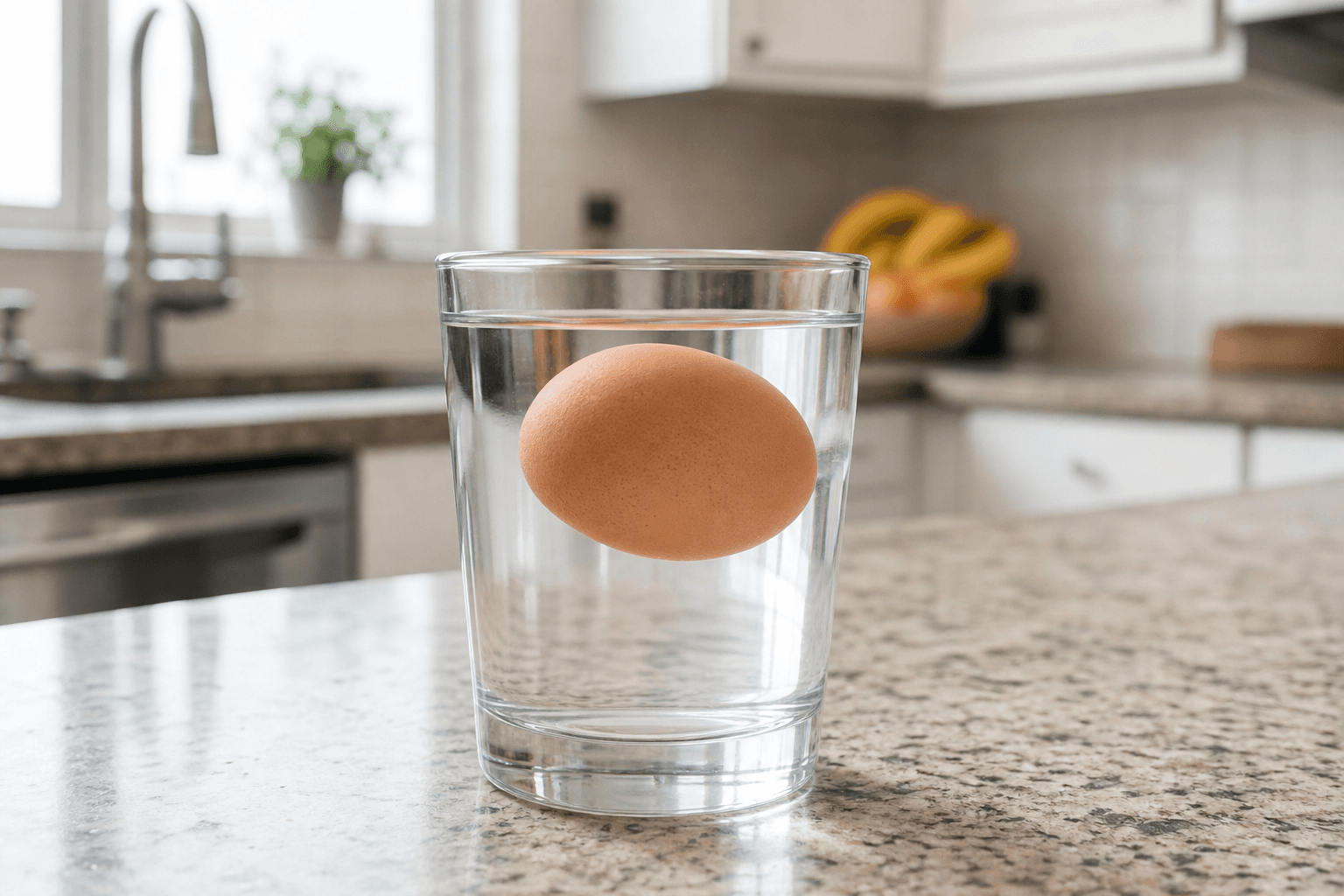
Fresh eggs in the shell keep for 3 to 5 weeks in the refrigerator at 40°F or below, per USDA guidance, well past the date stamped on the carton. The float test tells you how old an egg is, not whether it is safe to eat. If one floats, crack it into a bowl and smell it before you cook with it.
The distance between old and unsafe is what makes eggs tricky. An egg can be six weeks old and perfectly fine, and another can look flawless while carrying Salmonella. Two things keep you on the right side of that line: a storage window you can count on, and your nose once the shell is open.
Check the date before you test
Store-bought eggs are dated at packing and stay good for weeks past that stamp when they are kept cold. The USDA and FoodSafety.gov give these windows.
| Egg, by state | Refrigerator (40°F) | Freezer (0°F) | Room temperature |
|---|---|---|---|
| Fresh eggs in the shell | 3 to 5 weeks | Do not freeze in the shell | Up to 2 hours |
| Raw egg whites or yolks (out of shell) | 2 to 4 days | Up to 12 months | Up to 2 hours |
| Beaten raw whole eggs (out of shell) | 2 to 4 days | Up to 12 months | Up to 2 hours |
| Hard-cooked eggs (in or out of shell) | 1 week | Do not freeze | Up to 2 hours |
The 3 to 5 week clock starts the day you buy the eggs, not the pack date, so you have a comfortable margin. Temperature swings do the damage. A refrigerated egg left on the counter can sweat, and that surface moisture helps bacteria work through the shell. Keep eggs out no longer than 2 hours, or 1 hour if the room is above 90°F.
This page is one of many in our guide to how long food lasts.
Dates on the carton are quality marks, not safety deadlines — how long eggs stay good after the expiration date covers the exact windows.
How to tell if an egg has gone bad
Crack the egg into a bowl, not straight into the pan, and use your senses.
- Smell is the clearest signal. A fresh egg smells like almost nothing. A spoiled one hits you with a sharp, sulfur or rotten odor the moment the shell breaks. Trust it and toss it.
- Look at the white and yolk. A cloudy white means the egg is very fresh, since that haze is dissolved carbon dioxide. A thin, watery white just means age and is fine to cook. But a pink, green, or iridescent tint in the white or yolk points to bacterial spoilage, so throw those out.
- Check the shell. A slimy film or a powdery, chalky coating on the outside can signal bacteria or mold. Rinsing it off will not fix the problem. Throw it out.
The smell test has a blind spot. Salmonella does not change how an egg looks, smells, or tastes, so an egg can pass every check your senses can make and still make you sick. This is why the storage clock beats your nose: once eggs have sat in the fridge past about five weeks, throw them out even if they seem fine. Cooking eggs until the yolk and white are firm, or heating egg dishes to 160°F, handles the rest.
What about the float test?
Fill a bowl with cold water and lower the egg in. A very fresh egg sinks and lies flat on its side. An older egg stands up on one end. An egg that floats has a large air cell, which grows as moisture and gas leave through the shell over time.
So a floating egg is old, and that is all the test proves. It is a freshness gauge, not a safety test, and the USDA notes that a floating egg can still be safe to use. Crack it, smell it, and check the color. If it passes and it is inside the storage window, cook it. If it is well past five weeks or smells off, skip it.
How to store eggs so they last
- Keep them in the coldest part of the fridge, on an interior shelf, not the door. The door swings warm every time you open it, and the FDA says that can shorten freshness.
- Leave them in the original carton. It shields the eggs from picking up strong fridge odors and keeps the pack date in front of you.
- Do not wash store-bought eggs. US eggs are already washed and given a light protective coating, and adding water can push bacteria through the pores.
- Store them pointed end down, the way they come, to keep the air cell and yolk stable.
Refrigerate eggs at 40°F or below the whole time. The same cold-chain habit that keeps raw chicken safe in the fridge is what protects eggs.
Once cooked, the clock changes completely — see how long hard-boiled eggs last in the fridge.
Can you freeze eggs?
Yes, but never in the shell. The contents expand as they freeze and crack it. Beat whole eggs and freeze them for up to 12 months at 0°F. Raw whites freeze the same way. Raw yolks do best with a pinch of salt or sugar beaten in, which keeps them from turning gummy. Skip hard-cooked eggs: the whites go rubbery and weep.
We walk through the exact steps, containers, and thaw times in our guide to freezing eggs.
When in doubt
Do not gamble with food safety. If an egg is past its storage window, smells wrong, or shows any pink or green tint, throw it out. The USDA's own rule of thumb is "when in doubt, throw it out," and one egg is a cheap loss next to a night of food poisoning. Salmonella is invisible, so cook eggs until the yolk and white are firm, and heat egg dishes like quiche or casseroles to 160°F.
Let your kitchen track the date for you
Most of the time the smell test is easy. The part people forget is the date they bought the carton. Well Stockd lets you log a carton once and see at a glance which foods are near the end of their window, so eggs get used while they are good instead of forgotten at the back of the door. It also shows which of the 3,800+ recipes you can make with what is on hand, an easy way to turn a nearly expired dozen into dinner. For more, see egg dinner ideas.
Frequently asked questions
Are eggs still good after the sell-by or expiration date? Usually, yes. A sell-by date is about quality, not safety, and refrigerated eggs are typically fine for 3 to 5 weeks from purchase, which often lands after the printed date. For the full breakdown, see how long eggs are good after the expiration date.
Does a floating egg mean it is bad? No. Floating only means the egg is old and its air cell has grown. It could still be safe. Crack it, smell it, and look for any off color before you decide.
Can you get sick from an egg that looks and smells fine? Yes. Salmonella does not change an egg's smell, taste, or appearance. That is why you follow the storage clock and cook eggs until firm, or to 160°F for egg dishes, rather than relying on your senses alone.
Sources: USDA Food Safety and Inspection Service, Shell Eggs from Farm to Table; FoodSafety.gov Cold Food Storage Chart; USDA AskUSDA, egg storage and handling; FDA, What You Need to Know About Egg Safety.
Quick planning number: see the Eggs fridge shelf-life reference.
Track it in Well Stockd
Add what you have, see what you can cook tonight, and get a reminder before anything goes off.
