How long is milk good after opening?
Opened milk keeps about 7 days in the fridge, according to the USDA, as long as you hold it at 40°F or below. The clock starts when you open the carton, not on the sell-by date.
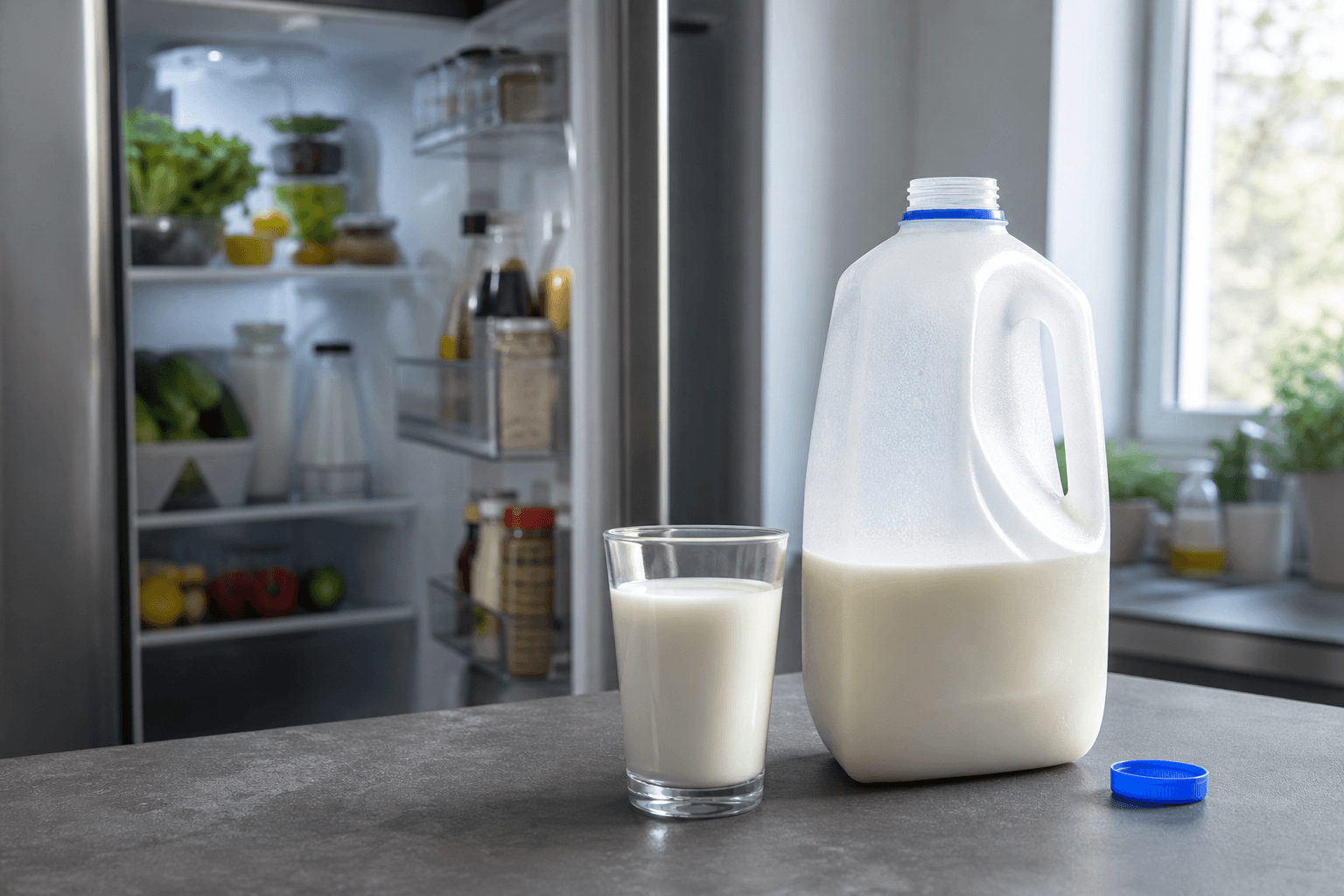
Opened milk stays good for about 7 days in the fridge, according to the USDA, as long as you keep it at 40°F or below. That clock starts the moment you open the carton, not on the sell-by date printed on the front.
The printed date is mostly a guide for the store, not a safety deadline for you. What matters more is how cold your fridge runs and how long the milk has been open. This page is part of our larger guide to how long food lasts.
How long does milk last after opening?
Once you open it and keep it cold, most cow's milk is good for about 7 days. Buttermilk lasts a bit longer, because its natural acidity slows bacteria down. The table below has the USDA numbers for opened dairy.
| State | Refrigerator (40°F or below) | Freezer (0°F) | Room temperature |
|---|---|---|---|
| Opened milk (whole, 2%, 1%, skim) | About 7 days | About 3 months | Toss after 2 hours (1 hour above 90°F) |
| Opened buttermilk | About 2 weeks | About 3 months | Toss after 2 hours (1 hour above 90°F) |
| Opened shelf-stable milk | 5 to 7 days (7 to 10 days if ultra-pasteurized), follow the package | About 3 months | Toss after 2 hours (1 hour above 90°F) |
A couple of notes on that chart. Shelf-stable milk can sit unopened in your pantry for months and ultra-pasteurized milk keeps 1 to 3 months unopened in the fridge, but once it's open and in the fridge, treat it like regular milk and follow the package. Unopened milk you never got around to using often stays fine for a few days past the printed date, as long as it's been cold the whole time. The 7-day rule is about opened milk specifically.
How to tell if milk has gone bad
Trust your nose and your eyes first. Spoiled milk usually gives itself away: a sour or off smell, a lumpy or curdled texture, a thick or slimy pour, or a yellowish tint. If you notice any of that, pour it out.
Smell and sight only get you so far, though. Some of the bacteria that make you sick don't change how milk smells, looks, or tastes, so milk can be past its safe window and still seem normal. That's why the time rule beats the sniff test. If your milk has been open for more than about 7 days, throw it out even if it smells fine. This matters most with raw or unpasteurized milk: the FDA warns it can carry harmful bacteria, so skip it entirely.
How to store milk so it lasts
The main thing is keeping milk cold and away from temperature swings. Keep your fridge at 40°F or below and store milk on an interior shelf toward the back, where the temperature holds steadiest.
The door is the warmest spot in the fridge, because it gets a blast of room air every time you open it. Milk kept there spoils faster, so save that space for condiments. Reseal the carton tightly after each pour, keep milk in its original opaque container to block light, and never pour leftover milk from a glass back into the jug, since that reintroduces bacteria to the whole batch. Putting milk away promptly instead of letting it warm on the counter buys you extra days, too.
Butter is the counter-question exception: how long can butter sit out of the fridge.
Can you freeze milk?
Yes. Milk freezes safely for about 3 months at 0°F. Pour a little out first so it has room to expand, then freeze it flat or upright with the cap sealed. Thawed milk often looks grainy or separated, so shake it well and use it in cooking, baking, or smoothies rather than a cold glass. Thaw it in the fridge, not on the counter. Juice cartons can go in the freezer too, so see can you freeze orange juice.
We walk through the exact steps, containers, and thaw times in our guide to freezing milk.
When in doubt, throw it out
The USDA calls 40°F to 140°F the danger zone: the range where bacteria multiply fastest. Any perishable food, milk included, that sits in that range for more than 2 hours (or 1 hour above 90°F) needs to go, even if it looks and smells fine. Don't taste milk to decide whether it's still good. Tasting spoiled milk won't always make you sick, but it's not worth the gamble. If you're unsure, get rid of it.
Cultured dairy runs on different rules — how long yogurt is good after the expiration date explains why it outlasts milk.
Keep track of your milk without the guesswork
The hardest part of the 7-day rule is remembering when you opened the carton. That's where a little tracking helps. Well Stockd lets you log the milk in your fridge and flags it as the use-by window gets close, so you drink it in time instead of finding a science experiment behind the leftovers. If you go through a lot of dairy, an app that tracks your food expiration dates keeps every open date in one place and can point you to recipes that use up milk before it turns.
Frequently asked questions
How long is milk good after opening if it's already past the printed date? Go by the open date, not the label. Once a carton is opened and kept at 40°F or below, plan on about 7 days regardless of what the sell-by date said. A sell-by date that's passed doesn't automatically mean the milk is bad, and a date still weeks out doesn't extend an opened carton past that week.
Can you drink milk that smells okay after 10 days open? Better not to. Harmful bacteria don't always change the smell or taste, so milk can be unsafe while still seeming normal. Past about 7 days open, the USDA time rule is the safer call, so pour it out.
Does milk last longer in a glass bottle than a plastic jug? The container matters less than the temperature. Milk keeps longest on an interior fridge shelf at 40°F or below in any sealed, opaque container. Light and warmth shorten its life, so the coldest, darkest spot wins.
For more fridge staples with sneaky expiration windows, see how long eggs are good after the expiration date and how long rotisserie chicken is good in the fridge.
Sources: USDA Food Safety and Inspection Service (Ask USDA, dairy storage), the USDA FoodKeeper app, USDA FSIS Danger Zone (40°F to 140°F), and FoodSafety.gov.
Quick planning number: see the Milk fridge shelf-life reference.
Track it in Well Stockd
Add what you have, see what you can cook tonight, and get a reminder before anything goes off.
