Leftover-friendly meal ideas for the week
Cook once, eat five different ways: a simple remix method for turning a week of leftovers into meals that don't repeat, plus how long leftovers really stay safe in the fridge.
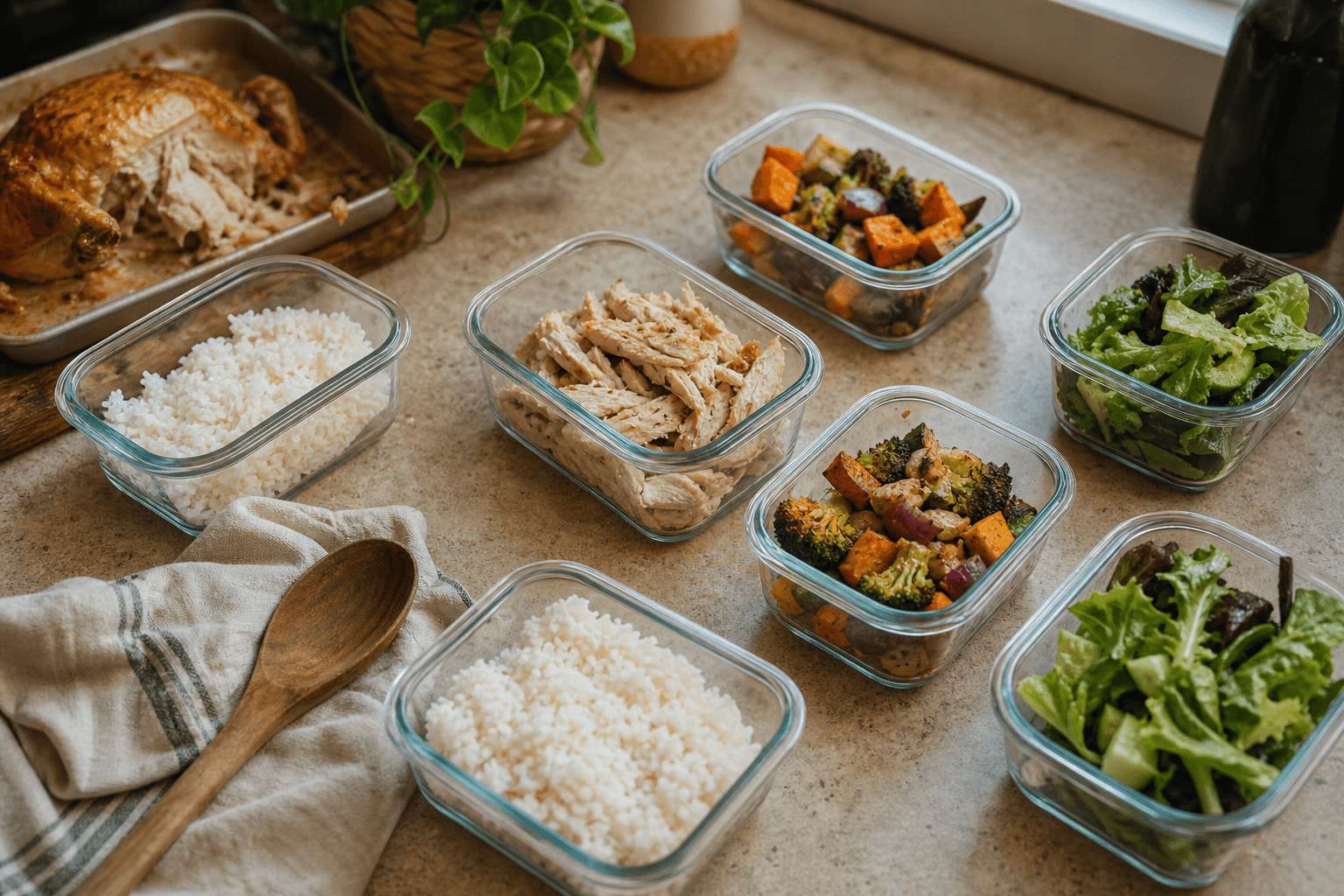
The easiest way to eat well from a week of leftovers is to cook two or three flexible proteins in one big batch, then send each one in a different direction every night: tacos, a grain bowl, soup, a sandwich, so nothing repeats and nothing sits past four days. Nothing gets pushed to the back of the fridge and forgotten, either.
How do you plan a week around leftovers?
Building a leftover-friendly week takes a little more thought than doubling a recipe, but it's not complicated. Here's a method that holds up over a real week:
- Pick two or three flexible proteins for the week, like a roast chicken, a pot of chili, or a batch of beans. All three reheat well and take on new flavors easily. Cook a bigger batch than one meal needs.
- Make a neutral starch base, such as rice, pasta, or roasted potatoes, that doesn't commit you to one cuisine. The same bowl of rice can sit under a stir-fry Monday and inside a burrito Wednesday.
- Roast a full tray of vegetables instead of a single portion. Vegetables hold up for a few days, and one tray covers three or four meals.
- Assign each protein to three different formats before the week starts and write it down. "Chicken: roast dinner, tacos, soup" is a plan. "We'll figure it out" is how food ends up in the trash.
- Cool and store food fast. Split large batches into shallow containers so they chill quickly, and get everything into the fridge within two hours of cooking, one hour if it's been sitting out somewhere hot, like a patio in summer.
- Reheat to 165 degrees Fahrenheit, checked with a food thermometer if you have one, and bring soups, stews, and sauces to a full boil. That's the real line between a safe reheated dinner and a risky one, not how the food looks or smells.
For the full framework this fits into, see our guide to how to meal plan for the week. If you're just getting started with planning in general, weekly meal planning for beginners covers the basics, and the meal planning template for beginners gives you a printable version to fill in your own remix plan.
What does one roast chicken turn into all week?
It's easier to copy once you see the method applied to one ingredient. Here's what one Sunday roast chicken can do for a whole week without repeating itself.
| Day | What you do with it | Meal |
|---|---|---|
| Monday | Roast a whole chicken and a tray of vegetables | Chicken and vegetables straight from the oven |
| Tuesday | Shred half the leftover chicken | Chicken tacos with a quick slaw |
| Wednesday | Toss chicken with leftover rice and a fried egg | Chicken fried rice |
| Thursday | Simmer the carcass with the last scraps of vegetables | Quick chicken and vegetable soup |
| Friday | Mix the last of the chicken with mayo and celery | Chicken salad sandwiches |
The same pattern works with a pork shoulder, a pot of black beans, or a tray of roasted sweet potatoes. Cook once, then let the format change every night. For a pork example, see leftover pulled pork ideas.
What are more leftover-friendly meal ideas by protein?
Ground beef, turkey, or sausage keeps well folded into a quick pasta sauce or shepherd's pie. It also stuffs quesadillas and peppers, or turns into fried rice with whatever vegetables are left in the drawer. If ground chicken is what you have, see dinners built on ground chicken.
Beans and lentils mash and pan-fry into bean cakes, or blend into a soup with broth and a splash of leftover sauce. Cold, tossed into a grain bowl with a squeeze of lime, they barely taste like leftovers.
Roasted vegetables go into a frittata or scrambled eggs, blend with broth into a fast soup, or get chopped into a pasta salad.
Rice fries up with an egg and whatever protein is left. Cold pasta tossed with olive oil, vinegar, and chopped vegetables makes a pasta salad, and leftover potatoes crisp back up in a hot pan for home fries.
How long are leftovers safe to eat?
According to the USDA Food Safety and Inspection Service, cooked food needs to go into the fridge within two hours of cooking, or within one hour if it's been sitting somewhere warmer than 90 degrees Fahrenheit. From there, the safe window is consistent across most leftovers.
| Leftover type | Fridge (40°F or below) | Freezer | Good way to use it up |
|---|---|---|---|
| Roasted or grilled meat | 3 to 4 days | 3 to 4 months | Tacos, sandwiches, or a grain bowl |
| Soups, stews, and chili | 3 to 4 days | 3 to 4 months | Reheat to a full boil, or thin into a sauce |
| Cooked rice, pasta, and grains | 3 to 4 days | 3 to 4 months | Fried rice, pasta salad, or a bowl base |
| Roasted vegetables | 3 to 4 days | 3 to 4 months | Eggs, a grain bowl, or blended into soup |
| Beans and legumes | 3 to 4 days | 3 to 4 months | Bean cakes, dips, or stirred into soup |
Those numbers hold regardless of how the food looks or smells. Bacteria that cause food poisoning generally don't change the taste, smell, or appearance of food, so a container that's been in the fridge for five or six days is safer in the trash than on a plate. If you know you won't get to something in time, freeze it before the clock runs out.
Keeping track of which container hit day four is usually the harder part, not the cooking. That's the exact gap a pantry inventory app like Well Stockd is built to close: log what you cooked and when, and it can flag a leftover as it nears that window and suggest a recipe that uses it up before it goes to waste, so the plan you made Monday actually survives to Friday.
Frequently asked questions
How many days in a row can you eat the same leftovers? The USDA puts the safe refrigerator window at 3 to 4 days from the day the food was cooked, not from the day you first ate it. After that, bacteria can grow to unsafe levels even if the food still looks and smells fine. Eat it, freeze it, or toss it before day five.
Can you freeze leftovers to make them last longer? Yes. Frozen leftovers stay safe for 3 to 4 months. Freezing pauses the clock rather than resetting it, so portion food into meal-sized containers before it freezes solid, and label each one with the date so nothing gets lost at the back of the freezer.
What is the fastest way to make leftovers taste different? Change the format, not the ingredient. The same shredded chicken tastes like a different meal in a tortilla than it does over rice, and a new sauce, salsa one night, gravy the next, does most of the work without extra cooking.
Sources:
Track it in Well Stockd
Add what you have, see what you can cook tonight, and get a reminder before anything goes off.
