How to plan meals around leftovers
Cook one anchor meal on purpose, then map two remix meals from the extras. Here's the step-by-step method, a sample five-night plan, and how long leftovers stay safe to eat.
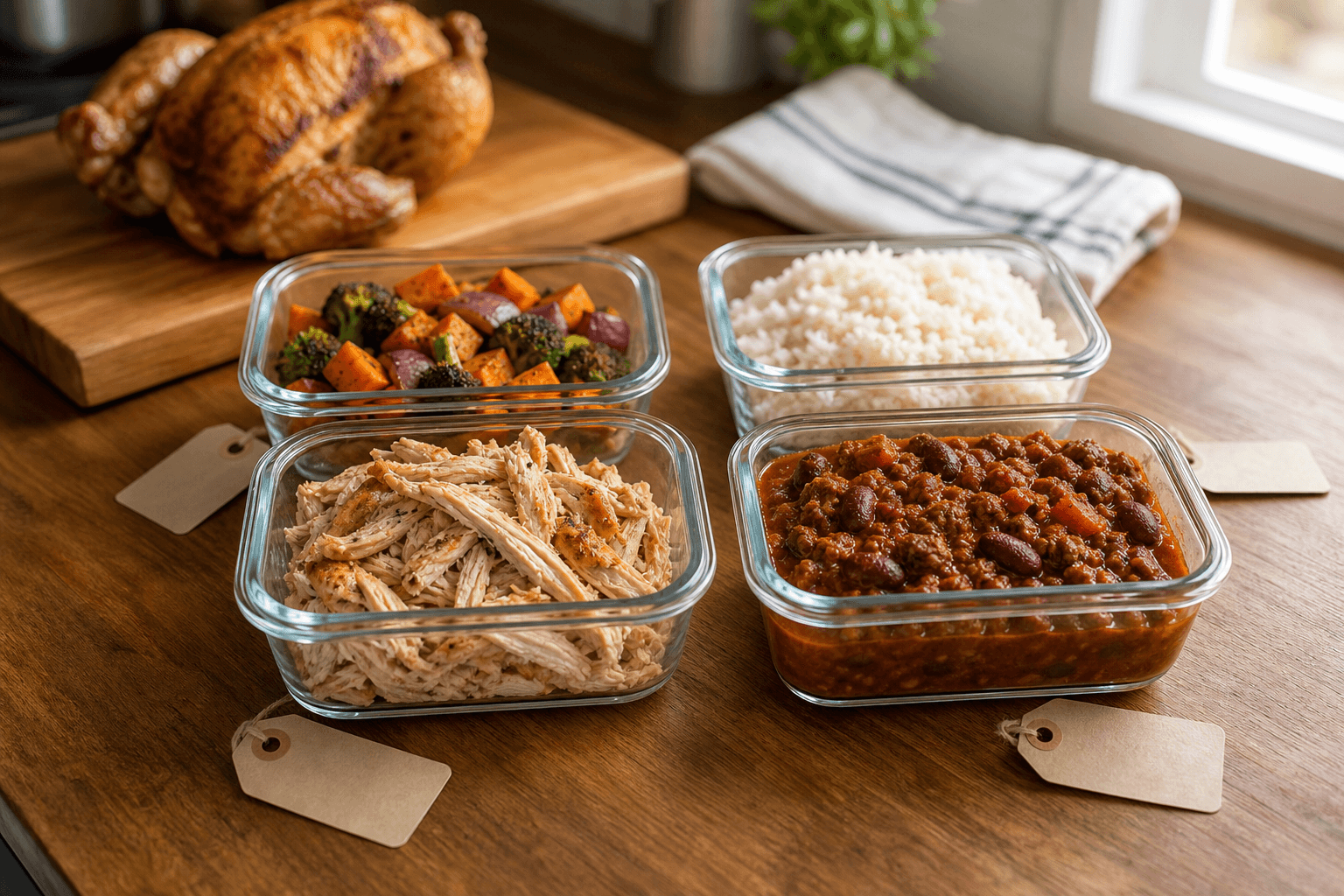
How to plan meals around leftovers
Plan meals around leftovers by cooking one anchor meal that makes extra on purpose, then mapping two remix meals in the next few days that turn those extras into something new. Refrigerate within two hours, eat within three to four days, and freeze what you won't use by then.
That's the whole method in one paragraph. The rest of this guide breaks it into steps you can run on a Sunday, shows which meals are worth building around, and answers the safety questions that come up once food has been sitting in the fridge for a day or two.
What does planning meals around leftovers mean?
Planning around leftovers is more than eating the same thing again tomorrow. It means deciding, before you cook, that a meal will feed you twice, in two different forms. You cook a big batch of something on purpose, portion off what you'll eat that night, and set the rest aside with a specific next meal already in mind.
It's really just a version of cooking with what you already have, except the ingredients are already cooked. If you like the idea of building meals from your fridge instead of a fresh grocery run every night, this pairs naturally with a broader approach to cooking with what you have.
How do I build a week of meals around leftovers, step by step?
- Pick one or two anchor meals for the week. An anchor meal is something that produces good extra volume and holds up in the fridge: a roast chicken, a pot of chili, a tray of baked pasta, a big pot of rice or beans.
- Cook more than you need on purpose. Roast two chickens instead of one, or double the rice. The extra cost is small; the payoff is a whole extra meal with almost no added prep.
- Decide the remix before you cook the anchor. Instead of staring into the fridge in three days wondering what to do with cold chicken, decide now: Tuesday's chicken becomes Thursday's chicken tacos. That one decision removes almost all the "what do I even do with this" friction later.
- Portion and label the food as soon as the meal is done. Split leftovers into container sizes that match what you'll reheat, not one giant tub. Write the contents and the date on the lid.
- Put the remix meal on the calendar like any other dinner. If it isn't written down, it competes with takeout on a tired weeknight and usually loses.
- Freeze anything you won't reach in three to four days. Do this the night you cook, not the night before it would have gone bad.
Which meals make the best leftovers to build a plan around?
Some dishes get better with a day of rest; others fall apart. Soups, stews, braises, grains, and roasted vegetables tend to hold their texture and even deepen in flavor. Anything with a delicate crust, like fried food or a dressed salad, is better eaten fresh. Here's a starting list of anchor meals and where they can go next.
| Anchor meal (cook once) | Make extra of | Remix idea, day 2 | Remix idea, day 3 or 4 |
|---|---|---|---|
| Roast chicken | Whole bird, plus pan drippings | Chicken tacos or quesadillas | Chicken and rice soup using the carcass for stock |
| Pot roast or braised beef | Meat and braising liquid | Beef and noodle bowl with the liquid as broth | Shredded beef sandwiches with quick slaw |
| Big pot of chili or beans | Chili or plain cooked beans | Chili-stuffed baked potatoes | Bean and rice burritos |
| Roasted vegetables | A full sheet pan | Frittata or fried rice with chopped vegetables | Grain bowl with a new dressing |
| Baked pasta or lasagna | A full pan | Reheated as is, with a fresh side salad | Pasta cut into cubes and pan-fried for a crispy skillet dinner |
| Rice or other grains | A large pot, unseasoned | Fried rice with whatever vegetables and egg are on hand | Stuffed peppers or a grain bowl |
How long can I safely hold onto leftovers before the remix meal?
This is the part that determines whether your plan works, because a remix meal only helps if the leftovers are still good to eat when you get to it.
Refrigerate leftovers within two hours of cooking, since bacteria grow fastest between 40 and 140 degrees Fahrenheit. Once in the fridge, most cooked leftovers are good for three to four days. If your remix meal is more than four days out, freeze the portion for that meal instead of leaving it in the fridge and hoping. Frozen leftovers stay safe for three to four months, though quality is best within the first month or two. When you reheat, bring leftovers to an internal temperature of 165 degrees Fahrenheit.
A practical rule that makes this easy to plan around: if a remix meal is happening within three days, it can live in the fridge. If it's happening later than that, freeze it the same night you cook the anchor meal, then thaw it the day before. For ideas, see meals that freeze and reheat well.
What if my family doesn't want to eat the same thing twice?
Changing the format matters more than changing the seasoning. Cold roast chicken and hot chicken tacos don't read as "the same meal" to most people, even though the protein is identical. A few reliable ways to disguise a repeat:
- Swap the cuisine. Leftover roasted vegetables become a Mediterranean grain bowl one night and fried rice the next.
- Change the temperature and texture. A cold braised beef becomes a hot, crisped filling for tacos or a sandwich.
- Fold leftovers into something with a different shape entirely, like a frittata, soup, or stuffed baked potato, so the original meal is no longer recognizable on the plate.
- Add one new fresh element, like a slaw, a quick pickle, or a bright sauce. The meal tastes new even though the main ingredient is the same.
Can an app help with leftover planning?
The hard part of this method is remembering what you have, how old it is, and matching it to a recipe on a tired weeknight. That's basically the same problem as figuring out what to cook with whatever is in your fridge, just applied to cooked food instead of raw ingredients.
This is where logging leftovers in an inventory app instead of a mental note earns its keep. Well Stockd lets you add leftovers to your fridge with a quantity and a date, so it can flag when a remix meal needs to happen before something goes bad. Its recipe matching works the same way whether you're asking what to make with what is already in your fridge from raw groceries or from two cups of leftover rice. If you want a fuller look at how that matching works, see this guide to an app that suggests recipes based on the ingredients you already have.
A sample five-night plan built around two anchors
Here's what one week looks like when you apply the method to two anchor meals instead of cooking five separate dinners from scratch.
| Night | Meal | Where it comes from |
|---|---|---|
| Monday | Roast chicken with a sheet pan of vegetables | New cook, anchor meal 1 |
| Tuesday | Chicken tacos using the leftover chicken | Remix of Monday |
| Wednesday | Big pot of chili | New cook, anchor meal 2 |
| Thursday | Chicken and rice soup, made with the carcass and any remaining chicken | Remix of Monday, frozen or fridge stock |
| Friday | Chili-stuffed baked potatoes | Remix of Wednesday |
Two cooking sessions cover five dinners, and nothing sits in the fridge past day three or four.
Frequently asked questions
How many days ahead should I plan leftover meals? Plan your remix meal for no later than three to four days after you cook the anchor meal, since that's the outer edge of safe fridge storage for most cooked food. If your week is busier than that, freeze the portion instead.
Is it safe to freeze leftovers you've already reheated once? Yes, as long as you reheat them to 165 degrees Fahrenheit, then cool and refreeze them promptly. Texture and flavor hold up a little better if you freeze a portion right after the original cooking instead of after a reheat, though.
What is the two-hour rule for leftovers? Get cooked food into the fridge within two hours of cooking, or within one hour if the room is above 90 degrees Fahrenheit. Bacteria multiply fastest in that window, before things cool down.
Sources: Leftovers and Food Safety, USDA Food Safety and Inspection Service
Track it in Well Stockd
Add what you have, see what you can cook tonight, and get a reminder before anything goes off.
