Meal prep ingredients instead of full meals: a method that actually sticks
Skip the five identical lunch containers. Prepping components like grains, roasted vegetables, and a protein means more variety, less waste, and dinner that's ready in minutes.
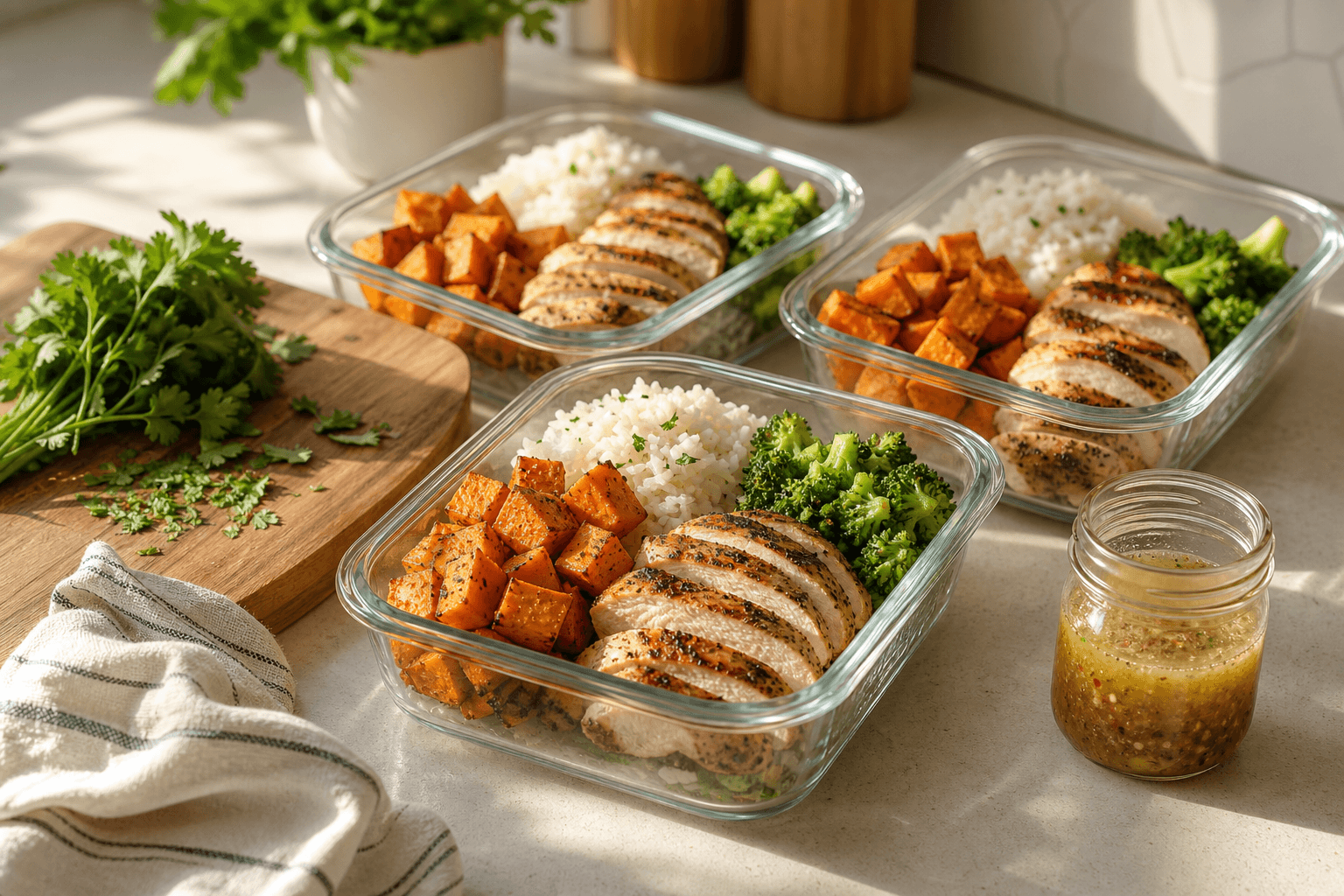
Meal prepping ingredients instead of full meals means spending 60 to 90 minutes cooking a handful of flexible components (a grain, a protein, roasted vegetables, a sauce, some washed greens) instead of assembling five identical lunches. You mix and match them into different meals all week, so nothing gets boring and less food goes to waste.
Full-meal prep sounds efficient until day four, when the fourth identical container of chicken and broccoli shows up and you order takeout instead. Ingredient prep solves that problem by front-loading the cooking, not the decision-making. You still decide what to eat each night, but the hard part (chopping, cooking, cleanup) is already done.
What does it mean to meal prep ingredients instead of full meals?
Full-meal prep is batch-cooking a finished dish, say, five containers of turkey chili, so lunch is a five-second reheat. Ingredient prep is different: you cook the building blocks separately and combine them fresh each time you eat. One batch of roasted sweet potatoes might end up in a grain bowl on Monday, a breakfast hash on Wednesday, and a soup on Friday.
The trade-off is honest. Ingredient prep takes a few more minutes at mealtime than popping open a finished container, but it buys you variety, and variety is usually what makes a meal prep habit stick past week two.
Why prep ingredients instead of full meals?
A few reasons this method tends to outlast full-meal prep for most home cooks.
- You won't get bored. The same roasted chicken can go into a salad, a wrap, a bowl, or a quesadilla, and five identical containers of one dish rarely survive a full week.
- One overcooked batch doesn't sink the whole week. If a full prepped meal goes wrong, you're stuck eating it or tossing it five times over. A single off ingredient is easier to work around.
- It matches how people eat. Plans change: someone gets invited to dinner, a kid refuses what's on the table, or you're just not in the mood for what you cooked Sunday. Loose components adapt. Finished meals don't.
- Less ends up in the trash. Prepped components that don't get used in one recipe usually still fit into another, while a finished dish that sits untouched for a week is just gone.
- The cook session is faster. Roasting two trays of vegetables and a pot of rice at once takes less real hands-on time than assembling, seasoning, and portioning five complete dishes.
If you're still deciding whether to plan by the meal or by the ingredient at all, the guide to meal planning for the week walks through both approaches and how to combine them.
How to meal prep ingredients: a step-by-step method
- Pick three or four meals loosely, not exactly. Instead of locking in Tuesday's dinner, decide on themes: a grain bowl night, a taco night, a stir-fry night. That keeps your shopping list focused without boxing you in.
- Shop for shared ingredients. Look for one protein, one starch, and two or three vegetables that work across all your planned meals. Buying the same rotisserie chicken or block of tofu for three different dinners cuts both cost and prep time.
- Cook your base components in one session. Roast a sheet pan of vegetables, cook a pot of rice or quinoa, and grill or bake your protein while the oven and stovetop are already going. Batching the cooking, not the assembly, is the whole point.
- Prep the raw components too. Wash and chop anything you'll eat raw: greens for salads, cucumbers for snacking, herbs for garnish. Store them separately from anything wet so they stay crisp.
- Make one or two sauces. A vinaigrette, a peanut sauce, or a simple marinade turns plain prepped components into a meal that doesn't taste like leftovers. This is usually the step people skip and the one that makes the biggest difference.
- Store everything visibly, and label it clearly. Clear containers at eye level in the fridge get used. Opaque containers shoved in the back get forgotten, and forgotten food is wasted food.
What ingredients are worth prepping ahead?
Not everything holds up well once cooked or cut. Here's a starting list of components that stay useful across several different meals.
| Component | How to prep it | Meals it works in |
|---|---|---|
| Grain (rice, quinoa, farro) | Cook a large pot, cool, portion into containers | Bowls, stir-fries, soups, stuffed peppers |
| Roasted vegetables (sweet potato, broccoli, peppers) | Toss with oil and salt, roast on sheet pans | Bowls, tacos, frittatas, pasta |
| Cooked protein (chicken, ground turkey, beans) | Bake, poach, or simmer in bulk, then shred or slice | Salads, wraps, grain bowls, soup |
| Washed and chopped greens | Wash, dry thoroughly, store with a paper towel | Salads, sandwiches, quick sautes |
| Raw sturdy vegetables (carrots, celery, peppers) | Wash and cut into sticks or strips | Snacking, lunchboxes, quick stir-fries |
| Sauce or dressing | Whisk together and store in a jar | Bowls, salads, marinades, dips |
| Hard-boiled eggs | Boil a batch, keep unpeeled until use | Salads, snacks, breakfast |
How long do prepped ingredients last?
This is the part people get wrong most often. It's also where prepping components has a real edge over prepping finished meals: components stored separately tend to hold their texture and flavor longer than the same ingredients mixed into a finished dish.
| Prepped ingredient | Fridge life (40°F or below) | Freezer life (best quality) |
|---|---|---|
| Raw ground meat or poultry | 1 to 2 days | 2 to 4 months |
| Cut raw vegetables (sturdy types) | 3 to 4 days | Best blanched first |
| Cooked grains (rice, quinoa, pasta) | 3 to 4 days | 1 to 2 months |
| Roasted or cooked vegetables | 3 to 4 days | 2 to 3 months |
| Cooked chicken, beef, or other protein | 3 to 4 days | 2 to 3 months |
| Homemade sauce or dressing | 3 to 4 days for sauce, about 1 week for dressing | 2 to 3 months (dairy-based dressings freeze poorly) |
A couple of notes worth keeping in mind. Carrots, celery, and radishes last closer to 5 days if you store them submerged in water, as long as you change the water daily. And anything cooked should go into the fridge within 2 hours of coming off the heat, or within 1 hour if the kitchen is especially warm.
Because most of these windows sit in the same 3 to 4 day range, it helps to know what you have on hand before it slips past that window. Logging prepped components as you make them, the way you'd log any other fridge or freezer item, is the difference between using that container of roasted vegetables on day three and finding it forgotten on day eight. That's the exact gap a pantry inventory app is built to close: it tracks what you have, flags what's about to expire, and shows you which recipes you can make with the components already prepped.
What if you still want some meals fully prepped?
Ingredient prep and full-meal prep aren't opposites, and most people end up somewhere in between. For apps that support prep day, see the best meal prep app guide. A reasonable split for a lot of households is prepping components for most of the week and prepping two or three grab-and-go meals for the busiest days, like a school-morning breakfast or a lunch you know you'll eat at your desk without a kitchen nearby. If you're new to building a weekly rhythm around either approach, the beginner's guide to weekly meal planning and the meal planning template for beginners both cover how to structure that balance without overcommitting your Sunday.
Frequently asked questions
Is meal prepping ingredients cheaper than meal prepping full meals? Usually, yes. Buying one protein and a few vegetables that repeat across three or four meals tends to cost less than buying separate ingredient sets for five distinct finished dishes, and less food gets thrown out when a plan changes mid-week.
How much time does ingredient prep save? Most people spend 60 to 90 minutes on a Sunday prep session and cut weeknight cooking down to 10 to 15 minutes of assembly. The time savings come from doing the chopping, roasting, and cooking once instead of five separate times.
Can I mix ingredient prep with buying pre-cut vegetables or a rotisserie chicken? Yes. Ingredient prep is about cooking in components, not about doing every step yourself. A store rotisserie chicken or a bag of pre-washed greens fits into this method just as well as something you prepped from scratch.
Sources: FoodSafety.gov Cold Food Storage Chart, FSIS: Leftovers and Food Safety, ask.usda.gov: How should I store cut fruit and vegetables?, ask.usda.gov: How long will cooked food stay safe in the refrigerator?
Track it in Well Stockd
Add what you have, see what you can cook tonight, and get a reminder before anything goes off.
