Meal prep that doesn't taste like leftovers
Meal prep doesn't have to taste like the same reheated bowl by Wednesday. The building blocks method turns one Sunday cooking session into a five-day flavor plan, using USDA storage rules to keep everything safe and good to eat by Friday.
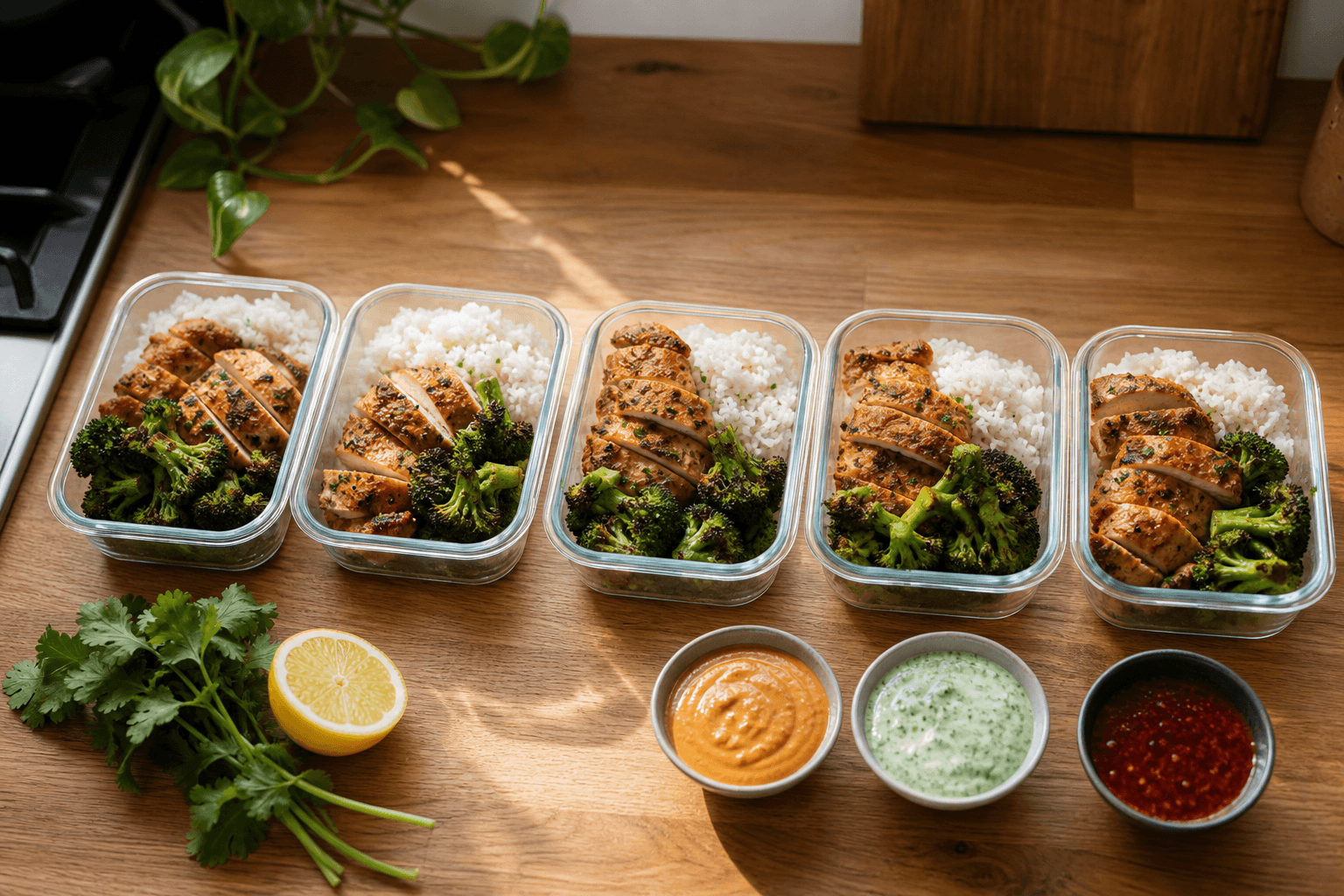
The fix is simple: stop prepping five identical meals and start prepping five components instead. Cook proteins, grains, and vegetables separately, keep sauces apart until serving, and rebuild each one with a new sauce or spice blend at mealtime. Four components, three sauces, five dinners that don't taste like each other.
Why does meal prep start tasting like leftovers by Wednesday?
Most meal prep fails for one of two reasons. Either you assemble everything into identical containers on Sunday, so the sauce soaks into the rice and the vegetables go soft, or the same protein gets the same seasoning five days running, so day three tastes exactly like day one. Add a microwave that dries out the chicken while it steams the broccoli into mush, and by Wednesday the whole week feels like eating the same meal on repeat.
None of that is really a leftovers problem. It's an assembly problem. Cooked food doesn't have to taste tired if you change how you store it and how you finish it right before eating.
The building blocks method, step by step
Prep components, not finished meals, then rebuild a new combination each time you eat.
- Cook the parts separately. Roast or grill one or two proteins, cook a grain or starch, and roast or steam a batch of vegetables. Keep each one in its own container instead of combining them into a finished dish.
- Slightly undercook the vegetables, but cook proteins all the way to their safe minimum internal temperature, such as 165 degrees Fahrenheit for chicken. Pull vegetables a touch early. They finish cooking when you reheat them, so a slight undercook now means they won't turn dry or mushy later in the week.
- Make two or three sauces or spice blends in the same session. A lemon herb yogurt sauce, a peanut ginger sauce, and a smoky chili sauce can turn one batch of chicken and rice into three completely different dinners.
- Keep crunch and greens separate. Store anything raw or crisp, like lettuce, cucumber, or nuts, in its own container and add it right before you eat.
- Rebuild the meal instead of just reheating it. Each night, warm the base components, then finish with a fresh sauce, a squeeze of citrus, a handful of herbs, or a different starch. That five minutes of finishing is what breaks the leftovers feeling.
If you're used to browsing what to cook with what you have on nights when the fridge looks bare, this is the same instinct pointed at food you already cooked. You're cooking a new dish from parts you already made, not eating the same finished plate twice.
How do you store the components so nothing gets soggy?
A few habits keep this from turning into a soggy mess.
- Store sauce, protein, grain, and vegetables in their own airtight containers, so nothing sits in liquid it never needed to touch.
- Tuck a dry paper towel in with any leafy vegetable. It pulls off excess moisture and keeps things from wilting by day three.
- Keep sauces in small jars. A half-cup mason jar or a snap-lid deli container works well, and it's easy to shake before using.
- Let hot food cool on the counter for ten to fifteen minutes before you seal it. Trapped steam is what turns rice gummy and vegetables limp.
One batch, five different-tasting dinners
Here's what that looks like from a single Sunday cooking session: one roasted chicken, one pot of rice, and one tray of roasted vegetables, rebuilt five different ways.
| Day | Base | Sauce or seasoning | What makes it feel new |
|---|---|---|---|
| Monday | Chicken, rice, broccoli | Lemon herb yogurt sauce | Fresh dill and a squeeze of lemon at the end |
| Tuesday | Chicken, rice, broccoli | Peanut ginger sauce | Chopped scallion and a spoon of chili crisp |
| Wednesday | Chicken, rice, broccoli | Smoky chipotle crema | Warm corn tortilla instead of a bowl |
| Thursday | Chicken, rice, broccoli | Curry coconut sauce | Toasted coconut flakes and cilantro |
| Friday | Chicken, rice, broccoli | Chimichurri | Fried egg on top, served open faced |
The same three ingredients sit underneath every single day, but the five dinners taste nothing alike, let alone like reheated Sunday chicken.
How do you reheat meal prep without drying it out?
Reheating is where most prepped food loses its texture, and the fix is almost always moisture. Add a splash of water or broth before microwaving grains and proteins, cover the container so steam stays trapped, and stir halfway through for even heating. Rice and pasta hold up better with a lid and a minute of rest after heating than with one long blast on high.
Soups, stews, and anything with a built-in sauce reheat the most reliably because the liquid protects the food from drying out. According to the USDA, reheated leftovers should reach an internal temperature of 165 degrees Fahrenheit, and sauces, soups, and gravies should come to a full boil. A food thermometer takes the guesswork out of it, especially for thick grain bowls where the center can lag behind the edges.
How long does meal prep stay safe to eat?
Food safety, not taste, is the real limit on how far ahead you can prep. The USDA recommends refrigerating cooked food within two hours of cooking, eating refrigerated leftovers within three to four days, and freezing anything you won't get to in that window for three to four months. If a component has been sitting in the fridge since Sunday and it's now day five, the answer isn't a bold new sauce. It is the trash.
That's also the argument for freezing extra portions on prep day instead of cramming all five days of food into the fridge at once. If you track prep day with an app, see the best meal prep app options. Pull one container from the freezer the night before you need it, and it thaws with none of the late-week staleness that makes prepped food taste tired in the first place.
If you have prepped components sitting in the fridge and aren't sure what to build with them tonight, that's exactly the gap an app that suggests recipes based on the ingredients you have at home is meant to close. Well Stockd looks at what's in your fridge, including a container of already cooked chicken and rice, and points you toward a few different dinners instead of the same bowl on repeat.
Frequently asked questions
Is it safe to meal prep for an entire week at once?
Cooking everything on Sunday is fine, but eating all of it straight from the fridge by Friday pushes right up against the USDA's three-to-four-day window. Freeze Thursday and Friday's portions on prep day and thaw them the night before, instead of leaving five days of food in the refrigerator at once.
Do sauces make meal prep soggy?
Only if you add them too early. Store sauce separately from the base and pour it on right before eating, and it adds moisture and flavor instead of turning rice or noodles mushy over several days.
What's the fastest way to fix meal prep that already tastes boring?
Change the sauce, not the ingredients. A new sauce, a different herb, or a switch from a bowl to a wrap or tortilla can make the same cooked chicken and rice taste like a different meal without any extra cooking.
If you're staring at your fridge trying to figure out what those prepped components could become tonight, a fridge recipe finder or a quick check of what's actually in your fridge can turn leftover components into a meal that doesn't feel like one.
Sources: USDA FSIS, Leftovers and Food Safety, USDA, How do I reheat leftovers safely?, USDA, How long can you keep leftovers in the refrigerator?
Track it in Well Stockd
Add what you have, see what you can cook tonight, and get a reminder before anything goes off.
