How to Meal Plan for Two Weeks and Grocery Shop Once
Shop once every two weeks by sorting groceries into fresh, hardy, and freezer lanes, then batch-cook two or three proteins you remix into fourteen different dinners.
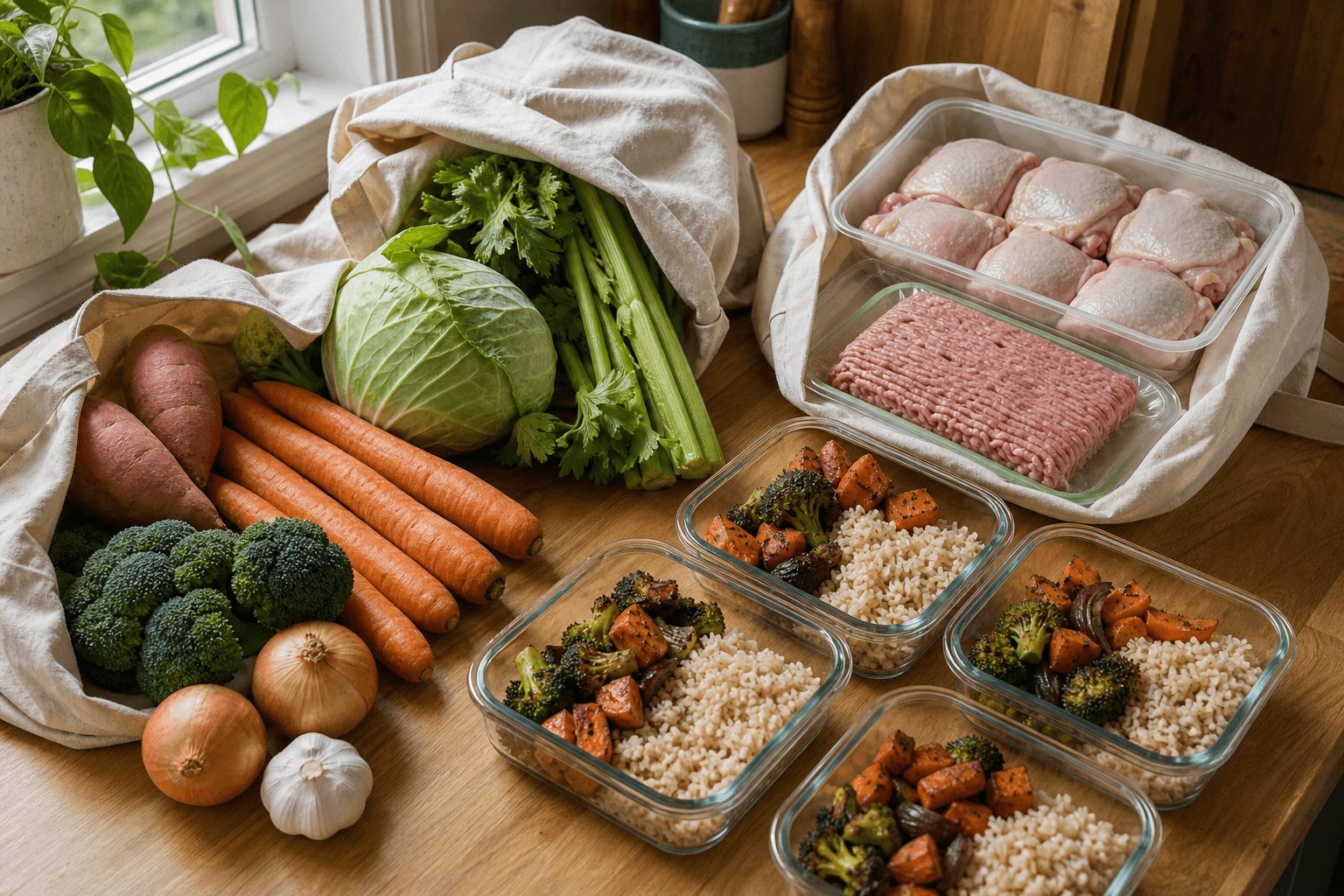
Shop once every two weeks by splitting your list into three lanes: fresh food you eat in the first four to five days, hardy produce that holds two weeks in the crisper, and proteins or bread you freeze the day you get home. Rotate two or three batch-cooked bases into different meals so one shopping trip covers fourteen dinners.
Once you shop this way a couple of times, it stops feeling like a math problem and starts feeling like the way you always should have done it. The method is below, plus a sample list you can copy.
Why plan two weeks instead of one
A weekly plan solves "what's for dinner tonight." A two-week plan solves the bigger, more annoying problem: too many trips to the store. If you're used to running out to grab one more thing every few days, stretching your plan to fourteen days cuts your shopping trips in half and forces you to use what's already in your kitchen before it goes bad.
The tradeoff is that a two-week plan has to account for spoilage in a way a weekly one doesn't. Fresh spinach won't make it to day twelve. Ground beef needs to go in the freezer within two days of buying it or get cooked right away. The method below builds around those limits instead of ignoring them, so this works even if you're new to planning at all. If you want the simpler, one-week version of this same approach first, our guide to meal planning for the week walks through it step by step.
The method: four steps to one grocery trip
- Pick two or three proteins and two starches. Chicken thighs, ground turkey, and a can-forward protein like beans cover most weeknight meals. Pair them with rice and a hardy pasta. You're not planning fourteen separate recipes. You're planning four or five base components that get remixed with different vegetables, sauces, and seasonings across the two weeks.
- Sort your grocery list by shelf life before you shop. Split it into three groups: fresh items you'll eat in days one through five, hardy produce that lasts closer to two weeks, and anything you're buying specifically to freeze. This one step is what makes a two-week trip work, because it tells you what to cook first and what can wait.
- Cook once, eat twice (or three times). Batch-cook your proteins and grains on day one or two, then portion them into different meals through the two weeks: the same roasted chicken becomes tacos on day three and a grain bowl on day nine. This is the trick that keeps a two-week plan from feeling repetitive without doubling your cooking time.
- Freeze the day you shop, not the day before it goes bad. Split raw ground meat and half of any large poultry pack into freezer bags the moment you unpack groceries. Ground beef only holds about two days safely in the fridge before it needs to be cooked or frozen, so this step can't wait until later in the week.
What keeps for two weeks (and what doesn't)
Some groceries are built for a two-week plan. Others aren't, and pretending otherwise is the number one reason people give up on longer shopping cycles.
| Food | Fresh, eat by day 4-5 | Freeze on shopping day for week 2 |
|---|---|---|
| Ground beef or turkey | Cook or freeze within 2 days | Freeze half the package immediately; thaw in the fridge over 24 hours |
| Chicken breasts or thighs | Cook within 1-2 days if kept fresh | Freeze the portion you won't cook this week |
| Leafy greens (spinach, lettuce) | Best used in the first week | Doesn't hold up frozen and fresh; plan these for week 1 only |
| Carrots, cabbage, celery, beets | Keeps up to 2 weeks in the crisper drawer | Doesn't need freezing, holds fine on its own |
| Bread and tortillas | Eat fresh in week 1 | Freeze the rest; toast or reheat straight from frozen |
| Milk | Good for about 7 days once opened | Not freezer friendly for drinking milk |
| Berries | Eat within 2-3 days | Freeze extra for smoothies or oatmeal |
The short version: build your first week around what won't keep, and build your second week around your freezer and the hardy vegetables sitting quietly in the crisper.
A sample two-week dinner rotation
This is what "cook once, remix twice" looks like across fourteen dinners, using just four base components.
| Component | Week 1 use | Week 2 use |
|---|---|---|
| Roasted chicken thighs | Sheet-pan chicken and carrots | Chicken tacos with cabbage slaw |
| Cooked ground turkey | Turkey chili | Turkey and rice stuffed peppers |
| Big-batch rice | Rice bowls with roasted veg | Fried rice with frozen peas and egg |
| Roasted root vegetables | Side dish with any protein | Blended into a soup with broth |
Fill the remaining nights with a bean-based meal, a pasta night, and a "clean out the fridge" dinner near the end of week two, and you have a full rotation without shopping again.
Keeping track of what's already in the house
Two weeks in, most people don't struggle with the cooking. They struggle with remembering what's already sitting in the freezer by day ten. If you're logging what you buy and what you already have, Well Stockd can help here in a small but genuinely useful way: it tracks your pantry, fridge, and freezer inventory with expiry dates, so you can see at a glance what's about to turn and what's still good for week two. It will also surface recipes you can already make from what's on hand, instead of adding items to a list you don't need.
Frequently asked questions
Can you really grocery shop only once every two weeks? Yes, for most households, as long as you plan around shelf life instead of ignoring it. The trick is buying fresh, fast-spoiling items in amounts you'll eat in the first week, and leaning on the freezer and hardy produce for week two.
What if I run out of fresh vegetables before day fourteen? Lean on your freezer stock (frozen peas, corn, and spinach hold their nutrition well) and hardy fresh vegetables like carrots and cabbage, which naturally hold for the full two weeks in the crisper. If the head is too big to finish, see can you freeze cabbage.
Do I need a big freezer to pull this off? No. A standard fridge-freezer combo is enough if you're only freezing one or two proteins plus bread, rather than trying to freeze two full weeks of meals at once. If you're new to structuring the plan itself, our beginner meal planning template is a good starting point, and this weekly planning guide for beginners breaks the basics down further.
Sources: