Pantry Staples to Keep on Hand: The Complete List
Twenty-five to thirty items across five categories cover almost every weeknight meal. Here's the full pantry staples list, how long each one lasts, and a simple method for building a version that fits how you cook.
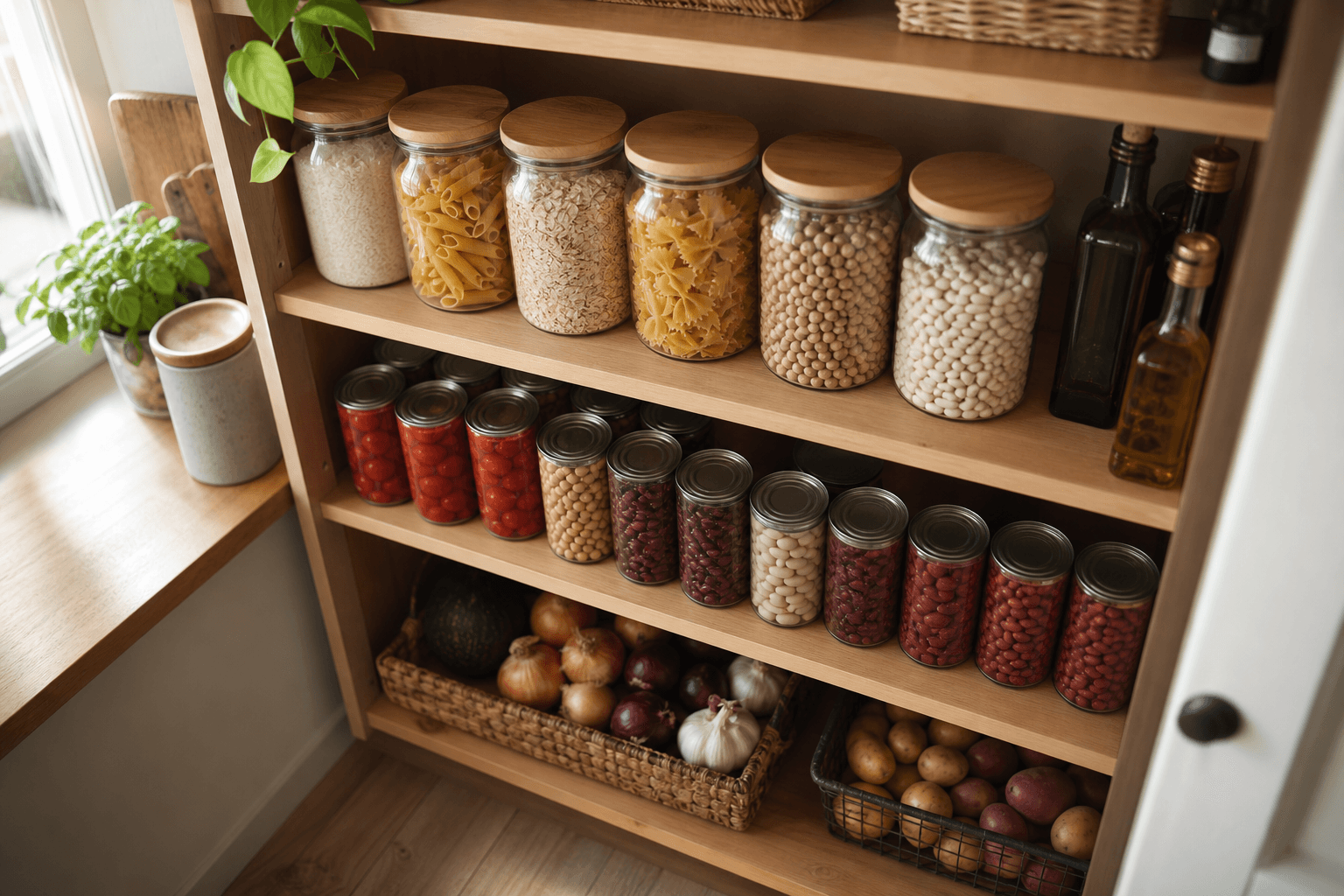
Keep about 25 to 30 items on hand across five groups: grains and pasta, canned beans and vegetables, oils and vinegars, baking basics, and a core spice rack. Buy versatile items you'll use in multiple meals, store them properly, and restock only what you run out of.
What counts as a pantry staple?
A pantry staple is any shelf-stable ingredient you reach for often enough that running out of it derails a meal. Rice, dried pasta, canned tomatoes, olive oil, and salt all qualify. A jar of specialty curry paste you used once doesn't, no matter how good it tasted.
The test is simple. If you'd buy it again within a month of finishing it, it's a staple. If it sat in the back of the cabinet for a year, it's an extra, and your everyday list shouldn't be built around it.
What should be on your pantry staples list?
Most well-stocked pantries break down into five groups. You don't need every item in every group, but covering each one means you can almost always cobble together a real meal from what's already on the shelf.
Grains, pasta, and starches
- White rice
- Dried pasta, one long shape and one short shape
- Rolled oats
- A whole grain like quinoa or couscous
- All-purpose flour
Canned and jarred proteins and vegetables
- Canned beans (black, chickpea, kidney)
- Canned diced tomatoes and tomato paste
- Canned tuna or chicken
- Canned corn and canned green beans
- Low-sodium broth or stock
Oils, vinegars, and condiments
- Olive oil for cooking and finishing
- A neutral oil like vegetable or canola
- White vinegar and one flavored vinegar (apple cider or red wine)
- Soy sauce
- Mustard and mayonnaise
Baking basics
- Granulated sugar and brown sugar
- Baking soda and baking powder
- Cornstarch
- Honey or maple syrup
Spices and aromatics
- Kosher salt and black pepper
- Garlic powder and onion powder
- Chili flakes or paprika
- Dried oregano, basil, or an Italian blend
- Bay leaves
That's roughly 25 to 30 items, and it covers the large majority of weeknight cooking without ever feeling like a stockpile.
How do you build a pantry staples list step by step?
- List your five most-cooked meals. Look at the five to ten dishes your household makes in a normal week, then write down every shelf-stable ingredient they share. That shared list is your real staples list, not a generic one copied from somewhere else.
- Cover all five categories. Even if you only pick two or three items per group, make sure grains, canned goods, oils, baking basics, and spices are all represented, so you're never one missing category away from a stalled dinner.
- Choose versatile over single-use. A can of diced tomatoes works in soup, pasta sauce, and chili. A jar of a single-recipe sauce works in exactly one dish. When two items compete for shelf space, the more versatile one wins.
- Buy the size you'll use before quality drops. Whole spices and oils lose flavor long before they become unsafe, so a smaller container you finish within a few months usually beats a bulk size that sits half-used for a year.
- Track what's open and what's running low. Once the list exists, the ongoing job is knowing what you have left of each item, which is where most pantries quietly fall apart. Our guide on how to keep track of pantry inventory walks through a system that works without spreadsheets.
How long do pantry staples last?
Most staples are safe to eat well past their printed date; the date is usually about peak quality, not safety. Here's roughly how long common staples hold up when stored properly in a cool, dry spot away from the stove.
| Staple | Unopened shelf life | Storage tip |
|---|---|---|
| White rice | About 2 years | Airtight container, below 85°F |
| Brown rice | 6 to 12 months | Fridge or freezer extends it, since the oil in the bran turns rancid faster |
| Dried pasta | About 2 years unopened, 1 year once opened | Reseal tightly after opening |
| Dried beans | 1 to 2 years for best texture | Older beans are still safe, just slower to cook |
| Canned beans and vegetables | 2 to 5 years | Skip any can that is bulging, rusted, or leaking |
| Canned tomatoes | 12 to 18 months | Higher acidity shortens shelf life versus low-acid vegetables |
| Canned tuna or chicken | 3 to 5 years | Check for dents along the seam before using |
| All-purpose flour | 6 to 8 months at room temperature | Freeze for up to a year if you bake infrequently |
| Olive oil | 18 to 24 months unopened | Store away from light and heat; use within a few months once opened |
| Honey | Indefinite, best quality around 2 years | Crystallized honey is still safe, just warm it gently to re-liquify |
How do you organize pantry staples so you'll use them?
A list only helps if you can see what it represents. Group like with like on the shelf (grains together, canned goods together, baking together) so you notice gaps at a glance instead of during a recipe. Put newer purchases behind older ones so nothing gets pushed to the back and forgotten.
This staples list is really the shelf-stable half of a bigger system. The pantry, plus your fridge and freezer, make up what most people mean by a full kitchen inventory, and treating all three as one connected list is what makes meal planning easier. Our guide on how to keep a kitchen inventory covers building that fuller system once your staples are locked in. If you haven't settled on a routine for the perishable side yet, see how to keep track of food in your fridge for a matching approach.
If keeping a mental tally of what's open, half-used, or close to its date feels like guesswork, that's usually where staples lists break down, not at the shopping stage. A pantry inventory app like Well Stockd logs each item as you use it and flags what's running low, so the list above stays something you check against instead of a sheet of paper you photograph once and forget. See our full rundown of the best pantry inventory app options if you want to compare how that kind of tracking works.
Frequently asked questions
Do canned goods really last forever? Not literally, but close for low-acid foods. Canned beans, corn, and other low-acid vegetables typically stay safe for 2 to 5 years, and undamaged cans often remain fine in quality terms well past that window. High-acid canned foods like tomatoes have a shorter window, closer to 12 to 18 months, because the acidity gradually affects the can lining over time. Always skip a can that's bulging, leaking, or badly dented, regardless of the date.
What's the difference between a pantry staple and a pantry extra? A staple is something you use across several different meals and would repurchase within a month of running out, like rice, olive oil, or canned tomatoes. An extra is a specialty item tied to one recipe, like a spice blend you bought for a dish you made once. Staples deserve permanent shelf space; extras are fine to buy as needed instead of stockpiling.
How many pantry staples does a beginner need? Around 20 to 25 items covers most weeknight cooking: one grain, one pasta, two or three canned beans or vegetables, a cooking oil, a vinegar, basic baking items, and six to eight core spices. You can build outward from there as you learn which cuisines and meals you cook most.
Sources: USDA FSIS: Shelf-Stable Food Safety, Ask USDA: How long can you keep canned goods?, UGA Family and Consumer Sciences: Best by vs. sell by dates