How to Build a Pantry Inventory Tracker With Expiration Dates
A pantry inventory tracker with expiration dates only works if you build the rotation habit first. This guide covers the six-step setup, a shelf-life table for common pantry staples, and what sell-by, best-by, and use-by dates mean.
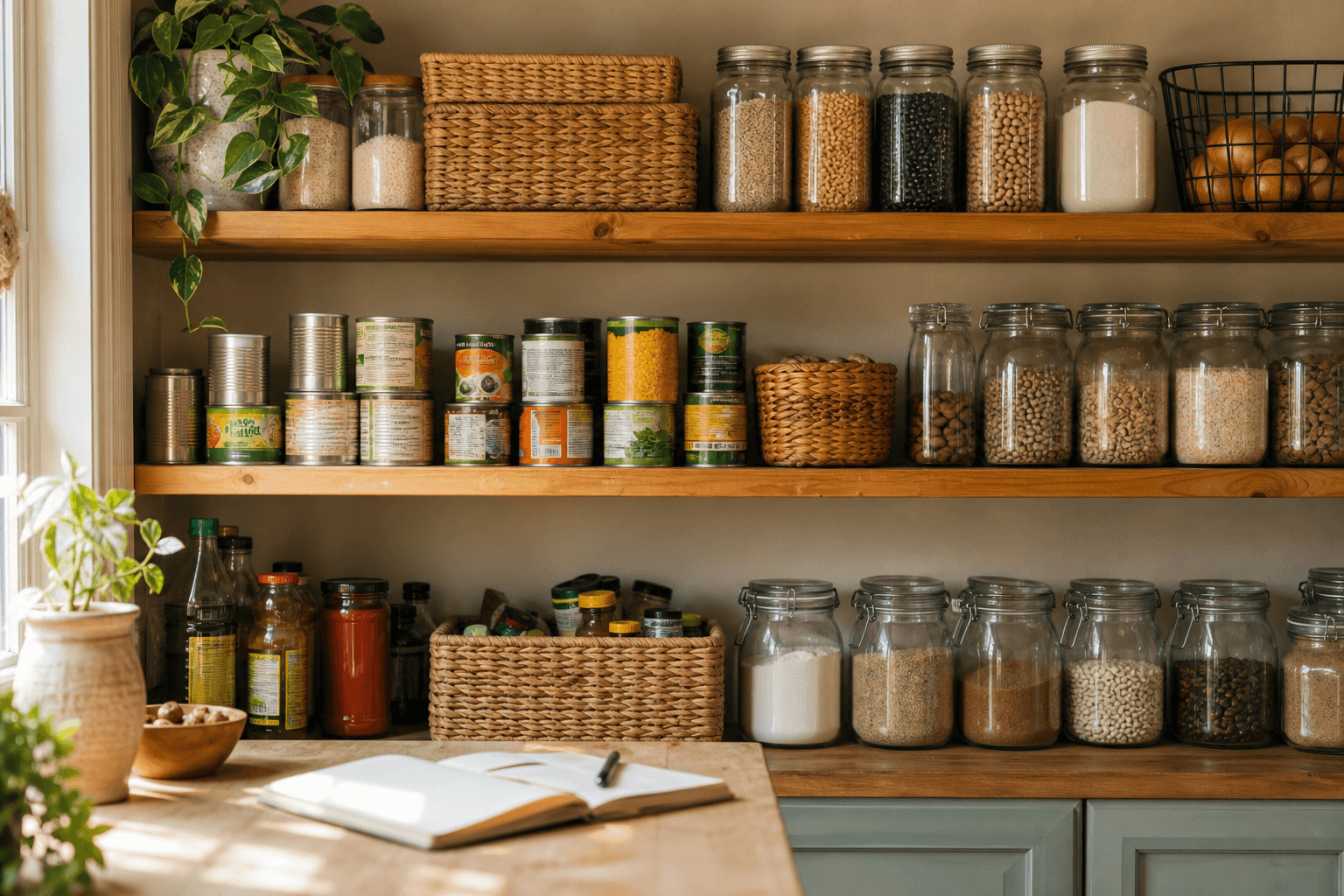
The fastest way to build a pantry inventory tracker with expiration dates is simple: do a one-time audit, then build a rotation habit. Write down what you own and its best-by date. Then always shelve new groceries behind the old ones, so you use up the oldest stock first. That one habit, first in first out, does more to cut pantry waste than any label maker or app on its own.
Once the habit is in place, the tracker itself can be as simple as a notebook or as automated as an app that flags dates for you. What matters is that the system gets updated every time food comes in or goes out, not how fancy it looks.
What is a pantry inventory tracker with expiration dates?
A pantry inventory tracker with expiration dates is a running list, on paper, in a spreadsheet, or in an app, that records what food you have on hand and when each item should be used by. It is different from a grocery list, which only tracks what you need to buy. A good tracker answers two questions at a glance: what do I already own, and what is closest to going bad?
If you have never kept any kind of running list before, start with our broader guide on how to keep a kitchen inventory, which covers the fridge, freezer, and pantry together. This article focuses specifically on the pantry piece and the dates printed on shelf-stable food.
How do you set up a pantry inventory tracker with expiration dates?
You do not need special equipment to start. Six steps get most kitchens from cluttered shelves to a working system in an afternoon.
- Empty one shelf at a time and sort. Pull everything off, group items by category (canned goods, grains, baking, spices, snacks), and toss anything already spoiled or clearly past its prime.
- Write down what is left, with a date. For each item, note the name, quantity, and the best-by or use-by date printed on the package. If a date has worn off, estimate from your purchase habits and mark your own check-by date instead.
- Pick one place to track it. A notebook taped inside the pantry door, a shared spreadsheet, or an app all work. The tool matters far less than whether you keep using it.
- Shelve with the oldest items in front. This is the first-in-first-out method, often shortened to FIFO: newest purchases go to the back, oldest dates stay where you will see them first.
- Update the log at just two moments. Right after a grocery trip, add what came in. Right before you cook, subtract what you used. Trying to log every mid-week snack is how trackers get abandoned.
- Do a five-minute check before every shopping trip. Scan for anything nearing its date, build a meal around it, and only then add to your list.
How long does pantry food last?
Unopened, shelf-stable food stored in a cool, dry spot below about 85 degrees Fahrenheit stays safe far longer than most people assume, but quality still fades over time. Use this table as a general starting point, then check the can or package for signs of trouble.
| Pantry food | Typical best-quality range (unopened, cool dry storage) | Signs it is time to toss |
|---|---|---|
| Canned vegetables, beans, soup, meat (low acid) | 2 to 5 years | Rust, dents, bulging lid, leaking |
| Canned tomatoes, fruit, pickles (high acid) | 12 to 18 months | Bulging or rust, off smell when opened |
| White rice | 4 to 5 years | Musty smell, visible pests |
| Brown rice | 6 to 8 months (freeze for longer) | Rancid or bitter smell |
| Dry pasta | 1 to 2 years | Discoloration, small pests |
| All-purpose flour | 6 to 12 months | Rancid smell, clumping from moisture |
| Whole wheat flour | 1 to 3 months (fridge or freezer extends this) | Rancid or sour smell |
| Dried beans and lentils | 2 to 3 years for best texture | Very hard, will not soften when cooked |
| Ground spices | 2 to 3 years | Little to no aroma when rubbed between fingers |
| Whole spices | 3 to 4 years | Little to no aroma |
| Cooking oil, unopened | 1 to 2 years | Rancid, sour smell |
| Peanut butter, opened | 2 to 3 months | Separation that will not remix, off smell |
| Breakfast cereal, opened | 2 to 3 months | Stale taste, visible pests |
These ranges are for quality, not safety. Canned goods in particular can remain safe well past these windows if the can itself shows no rust, dents, or bulging. Perishables in the fridge and freezer follow a different set of rules entirely. Our guide on how to keep track of food in your fridge walks through those separately.
What do sell-by, best-by, and use-by dates mean?
None of the three common date labels are federally regulated food safety dates, with the exception of infant formula. A sell-by date is aimed at the store: it tells staff how long to display the item, not you. A best-by or best-if-used-by date marks when flavor and texture are at their peak, not when the food becomes unsafe. A use-by date is the last date recommended for peak quality, and again, it is a quality marker rather than a safety cutoff for most foods.
That distinction matters more than it sounds like. Confusion over these labels is a major driver of household food waste, since a best-by or use-by date reads to most people like a safety cutoff when it usually is not. A pantry item past its best-by date is often still fine to eat. Judge it by smell, texture, and appearance, not just the printed date.
Paper, spreadsheet, or app: which pantry tracker works?
Each method has a real tradeoff. The right one depends on how much friction you're willing to put up with.
A paper log costs nothing and never needs charging, but nobody updates it from the grocery store parking lot, and it cannot remind you about anything on its own. A spreadsheet adds sorting and search, which helps once your pantry passes a few dozen items, but you still have to remember to open it. An app can log items as you scan a receipt or a barcode, sort automatically by date, and send a nudge before something expires, at the cost of needing your phone in hand while you put groceries away.
For a closer look at how these three approaches compare in practice, see our guide on how to keep track of pantry inventory. If you would rather skip the manual date math, an app can do the tracking for you. Our roundup of the best pantry inventory app options, including Well Stockd, covers apps that track dates automatically and flag what is closest to going bad, so the rotation habit happens without you needing to remember it.
Frequently asked questions
Do I need to log every single pantry item, even salt and sugar? No. Salt, sugar, honey, and vinegar are effectively shelf-stable indefinitely and rarely need tracking. Focus your tracker on items that change over time: grains, flours, oils, canned goods, and anything opened.
What is the FIFO method and why does it matter for pantry organization? FIFO stands for first in, first out. It means shelving newer purchases behind existing stock so the oldest items get used first. It matters because it turns date tracking into a physical habit: you naturally reach for the item in front instead of having to remember to check a date separately.
How often should I update my pantry inventory tracker? Two check-ins a week is enough for most households: once right after a grocery trip to add new items, and a quick five-minute scan before your next shopping trip to catch anything close to its date. Trying to log every meal in real time is the most common reason trackers get abandoned.
Sources: