How to keep track of pantry inventory (a system that sticks)
Write down what you have, group it by category, and rotate old stock to the front. That's the core system: full steps below, plus a shelf-life table for common staples.
The most reliable way to track pantry inventory is to write down what you have, group it by category, and keep the oldest items in front. Update the list every time you shop or cook. First-in-first-out rotation cuts more waste than any set of matching containers.
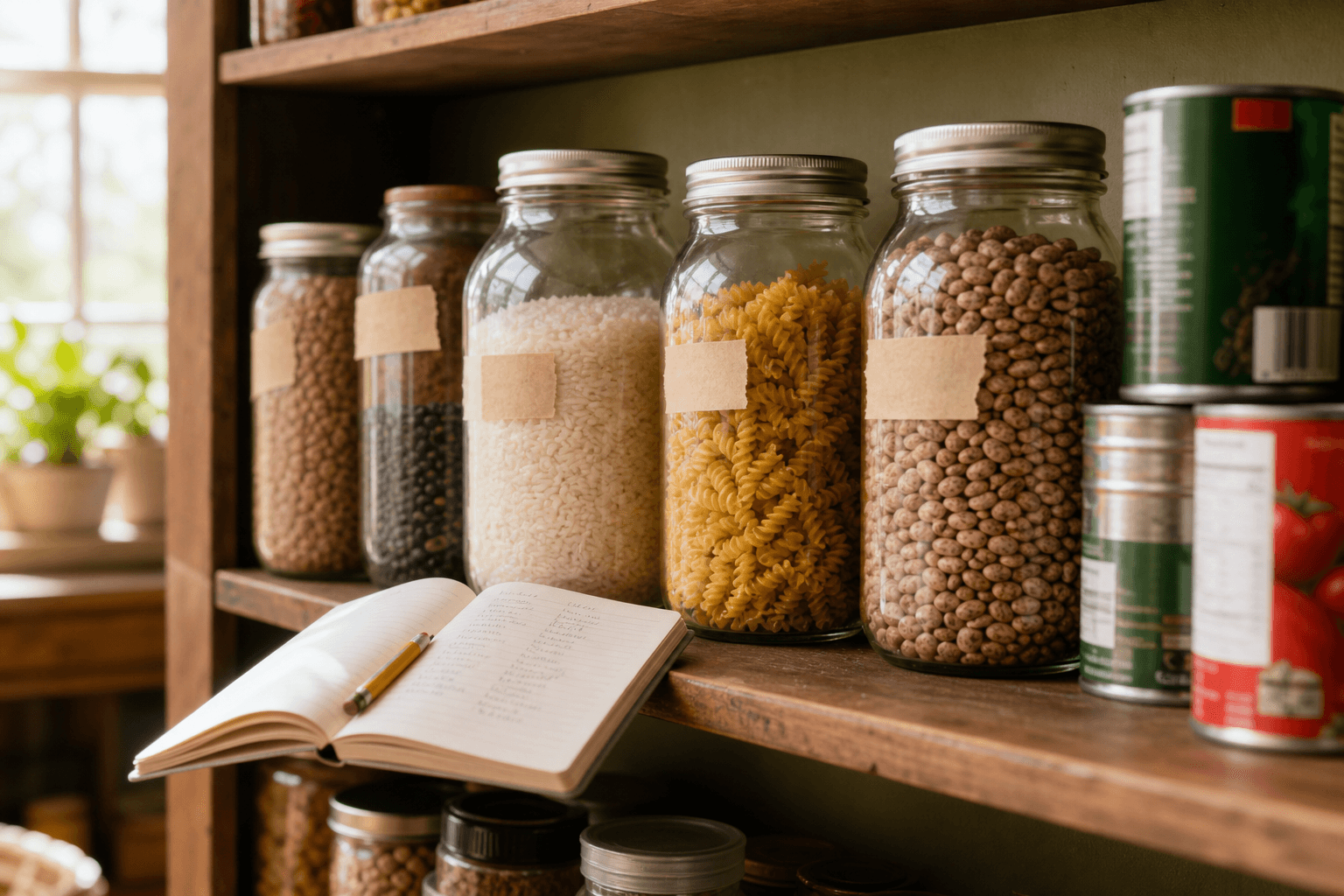
Why does pantry inventory get out of control so fast?
Most pantries fail quietly. A can of beans slides behind the cereal boxes, a second bag of flour lands on the shelf because nobody remembered the first one, and a jar of spice sits so long it loses its punch before anyone opens it. None of that happens because someone is careless. You simply can't manage what you can't see.
The cost adds up. Uneaten food runs a typical family of four roughly $1,500 a year, and pantries take their share of the blame along with the fridge. A simple first-in-first-out system is one of the most effective ways to bring that number down, mostly by ending duplicate purchases and rescuing food before it goes stale. That's what tracking pantry inventory buys you: money you stop throwing away, with a tidier cabinet along for the ride.
If you want the bigger picture, this pantry method is one piece of a full kitchen inventory system that covers the fridge, freezer, and pantry together.
How do you build a pantry inventory system that sticks?
Skip the elaborate spreadsheet. A system only works if it takes less time to maintain than the waste it prevents. This is the version that holds up over months, not just the first tidy Saturday.
- Pull everything out and group like with like. Grains and pasta, canned goods, baking supplies, oils and vinegars, spices, snacks. Seeing duplicates side by side is the fastest way to spot what you already own too much of.
- Check dates as you sort, and be honest about what's done. Rancid oil smells sharp or like crayon. Dented or bulging cans go straight in the trash, not the shelf. Spices past two or three years have usually lost most of their flavor even if they're technically safe to eat.
- Write down what stays, by category, with a rough quantity. You don't need exact counts, just enough to know at a glance whether you're low on rice or have three unopened jars of the same sauce.
- Label anything you open with the date. Best-by dates measure unopened quality. Wondering about an old bag of snacks? See can you eat expired chips. Once a bag or jar is open, the clock resets, and a date written on painter's tape solves more mystery-food problems than any container.
- Rotate with first-in-first-out. When new groceries come in, move the older stock to the front of the shelf and put the new items behind it. New back, old front, every time you put groceries away.
- Pick one place for the list and use only that one. A notebook taped inside the cabinet door works. A running note on your phone works. What fails is keeping the list in three places at once, because then none of them are trustworthy.
- Update it at two moments only: right after you put groceries away, and right after cooking empties or nearly empties something. Anything more frequent turns into a chore you eventually skip.
How long do common pantry staples last?
Shelf life depends on moisture, packaging, and whether the container has been opened, so treat these as general ranges rather than hard cutoffs. When in doubt, trust your nose and eyes over the date on the label.
| Pantry staple | Unopened, pantry-stored | After opening |
|---|---|---|
| White rice | Up to 2 years | About 1 year in an airtight container |
| Brown rice | Up to 1 year | 6 months at room temperature, longer refrigerated |
| Dry pasta | Up to 2 years | Up to 1 year if resealed airtight |
| All-purpose flour | About 1 year | 6 to 8 months, sealed and away from heat |
| Whole wheat flour | 3 to 6 months, best kept refrigerated | 1 to 3 months at room temperature |
| Granulated sugar | Indefinite | Indefinite, as long as it stays dry |
| Canned vegetables | 2 to 5 years | 3 to 4 days refrigerated once opened |
| Canned tomatoes, sauce, and fruit | 12 to 18 months | 5 to 7 days refrigerated once opened, 3 to 5 days for sauce |
| Cooking oil | 6 to 12 months in a cool, dark spot | 1 to 5 months once opened |
| Ground spices | 2 to 3 years for safety, flavor fades around 6 months | Same, judge by smell and color |
How often should you update the list?
Twice a week is more than plenty. Update it right after unpacking groceries, since that's when you already have every item in your hand, and again during a five-minute pass before you cook something that draws heavily from the pantry. Save the deeper check, pulling everything forward and tossing what has gone stale, for once a month. Anything more frequent than that turns tracking into its own chore, and the whole point is to keep the system lighter than the waste it prevents.
Does pantry tracking cover the whole kitchen?
Not on its own. A pantry list handles shelf-stable food, but the fridge moves faster and needs its own habit, which is why it's worth pairing this with a system for keeping track of food in your fridge. Leftovers are the other blind spot: they get pushed to the back and forgotten in a way raw pantry ingredients rarely do, so a separate routine for tracking leftovers in the fridge closes that gap.
Is there an easier way than a notebook or spreadsheet?
For a lot of households, yes. A paper list works fine until the household gets busy, someone forgets to update it, or nobody can find the notebook. A pantry inventory app can carry the load instead: you log items once, it tracks quantities and dates automatically, and it can tell you what you can cook tonight from what's already on the shelf. If you're weighing whether it's worth the switch, this roundup of the best pantry inventory apps compares the options, including Well Stockd, built around exactly this problem: knowing what you have before you buy more of it.
Frequently asked questions
Do I need to track every single item in my pantry?
No. Focus on staples you buy repeatedly and anything with a real spoilage risk, like oils, flours, and opened spices. Salt, vinegar, and other near-indefinite items barely need tracking beyond knowing you have some.
What's the cheapest way to label pantry items?
Painter's tape and a marker. Write the date you opened the item, and for anything you decanted into a new container, the type of food too, so you're not guessing at a mystery white powder six months from now.
How is pantry inventory different from tracking fridge inventory?
Pantry items move slowly and mostly need date checks and rotation. Fridge items move fast and need more frequent review, since spoilage there happens in days, not months. Most households do better treating them as two related but separate habits.
Sources: USDA food storage chart guidance, Ohio State University Extension, pantry food storage, Michigan State University Extension, the FIFO system