How to keep track of food in your fridge
A simple, low-effort system for knowing what's in your fridge before it goes bad: temperature zones, date labels, and a five-minute weekly scan, plus a running list to catch what those habits miss.
Keep track of fridge food with three habits: label everything with the date it went in, sort food into zones instead of piling it in wherever it fits, and scan the shelves front to back once a week. A short running list catches what those habits miss.
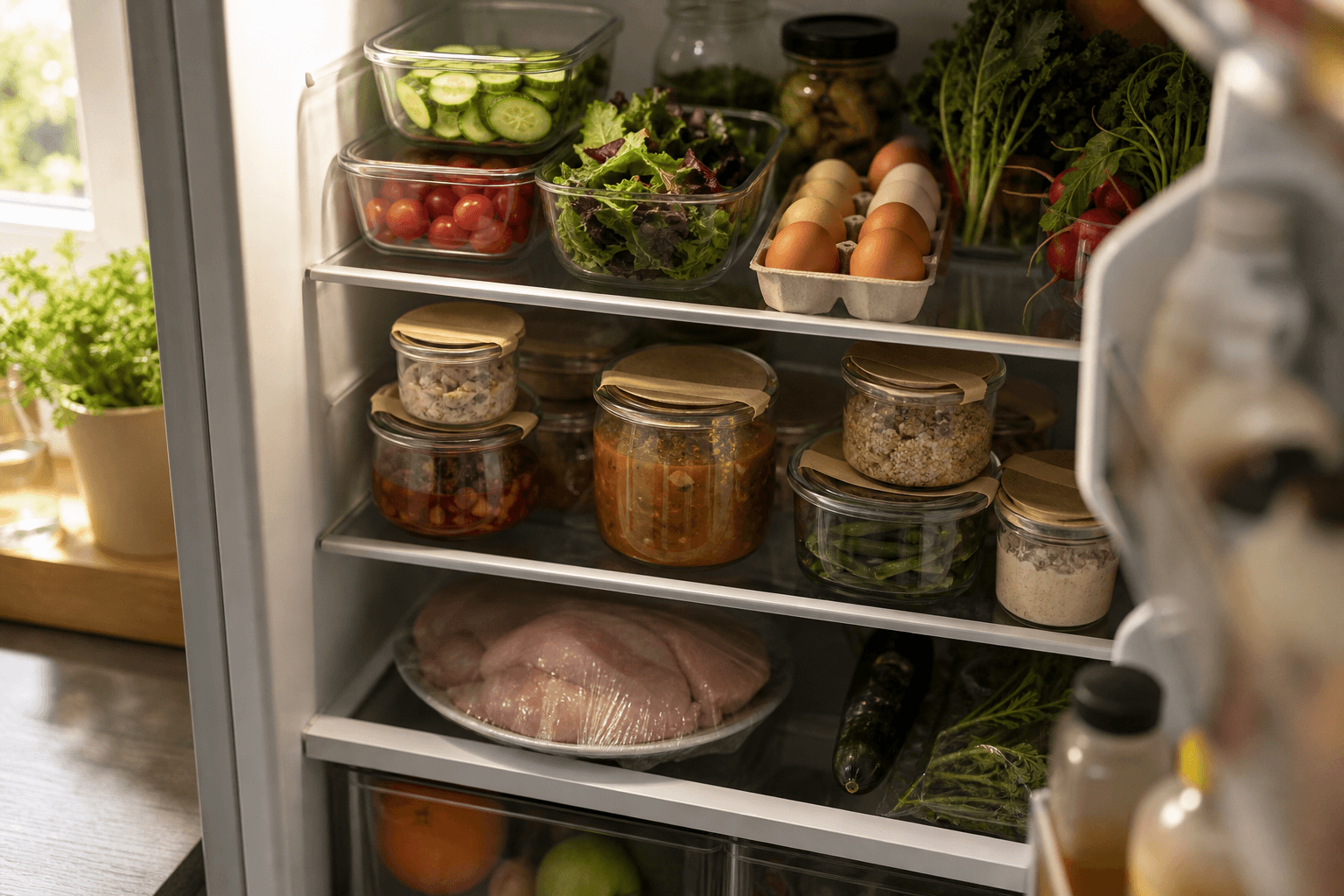
What's the fastest way to keep track of food in your fridge?
Most fridges aren't disorganized. They just have no system, so the same three things keep happening: leftovers vanish behind the milk, produce turns to mush in the crisper, and someone buys a second jar of pickles because the first one is hiding on the door. A system fixes all three at once. It doesn't need to be fancy. It needs three parts working together: zones so you always know roughly where something lives, dates so you know how old it is at a glance, and a quick weekly look so nothing sits long enough to become a mystery.
This is really the fridge half of a bigger habit. If you also want a system for the shelf-stable side of your kitchen, the kitchen inventory guide covers the full setup, fridge, freezer, and pantry together.
How do you build a system for tracking what's in the fridge?
Set it up once and the maintenance takes minutes a week.
- Empty and group before you organize. Pull everything out, wipe the shelves, and sort what's left into rough categories: dairy, proteins, produce, leftovers, condiments. You'll find the expired mustard and the mystery container at this stage, not later.
- Assign a zone to each category. Give raw meat the bottom shelf, dairy and eggs the middle, and ready-to-eat leftovers the top, where they're least likely to drip on anything else. The table below covers the reasoning.
- Label anything without a clear expiration date. A strip of painter's tape and a marker works fine. Write what it is and the date it went in, not the date you plan to eat it.
- Put new food behind old food. This is the FIFO habit, first in, first out, borrowed straight from restaurant kitchens. Older items stay in front where you'll see them instead of getting pushed to the back.
- Do a two-minute scan before you shop. Look shelf by shelf, front to back, and note what needs using up this week. This single step prevents most duplicate purchases and most of the produce that dies in the crisper.
Which fridge zone should each type of food live in?
Refrigerators aren't one uniform temperature. The door swings open dozens of times a day and runs several degrees warmer than the back of a shelf, and that difference should decide what goes where.
| Zone | Best for | Why |
|---|---|---|
| Top shelf | Leftovers, deli meat, ready-to-eat items | Already cooked or ready to eat, so it doesn't need the coldest spot, and nothing sits above it to drip down onto other food |
| Middle shelves | Milk, eggs, yogurt, cheese | Consistent temperature suits dairy |
| Bottom shelf | Raw meat, poultry, seafood | Coldest shelf, and any drips fall onto the floor of the fridge, not onto other food |
| Crisper drawers | Fruits and vegetables | Higher humidity setting slows wilting |
| Door bins | Condiments, dressings, juice, jam | Warmest zone in the fridge, fine for items that do not spoil easily |
The overall fridge should read 40°F or below throughout, checked with an appliance thermometer if your fridge doesn't have a built-in one, according to the USDA Food Safety and Inspection Service. Below that temperature, bacteria that cause spoilage and illness grow much more slowly.
How do you label food so it doesn't get lost in the back?
Labels only work if they're quick enough that you'll keep doing it. Painter's tape and a marker beats anything more elaborate, because you'll still be using it in month three. Write the date something went in, not a guess about when it expires, since USDA guidance for most leftovers already gives you the shelf life once you know the start date. For opened jars and containers, write "opened" plus the date on the lid itself rather than the box, since the box usually gets tossed. If you cook in batches, a piece of tape on the container with the dish name and date saves you from unwrapping four identical foil packets to find the chili.
Leftovers deserve their own small system, since they're the food most likely to get forgotten behind a bigger container. The guide to tracking leftovers in the fridge goes into container choices and how long different dishes last.
Does writing things down cut down on food waste?
It does, and the effect is bigger than it sounds. The average American wastes roughly 325 pounds of food a year, which adds up to close to $1,500 annually for a family of four, and a large share of that is food that simply got lost in a crowded fridge before anyone remembered it existed. Zones and labels fix the visibility problem. A running list fixes the memory problem, because it gives you one place to check instead of opening the fridge and hoping something jogs your memory.
For a lot of people a sticky note on the fridge door works for a week and then quietly stops. That's the gap an app like Well Stockd is built to close: you log what comes in, it tracks expiration dates for you, and it flags what needs eating soon instead of relying on you to remember to check. It's not required for the system above to work. It just removes the one step people tend to drop first.
If your fridge and pantry blend together, the same zone-and-label approach carries over. The pantry inventory guide walks through it for shelf-stable food specifically.
Frequently asked questions
How often should I check what's in my fridge?
Once a week is enough for most households, ideally right before you make a grocery list. A daily glance when you grab something takes seconds and catches anything that slipped through the weekly check.
Do I need to write down every single item?
No. Focus on things that spoil fast, like leftovers, opened dairy, and raw meat. Condiments and other long-lasting door items don't need tracking the same way.
What's the difference between a use-by date and the date I write on the label?
The printed date is the manufacturer's estimate for unopened, properly stored food. The date you write on the label marks when you opened it or cooked it, which is what determines how much time you have left.
Sources: