Shelf-stable meals you can make without fresh ingredients
You don't need fresh ingredients to make a real dinner tonight. This is the three-step method for turning canned beans, dried pasta, and jarred sauce into a meal, plus ten combos and a pantry shelf-life chart to keep on hand.
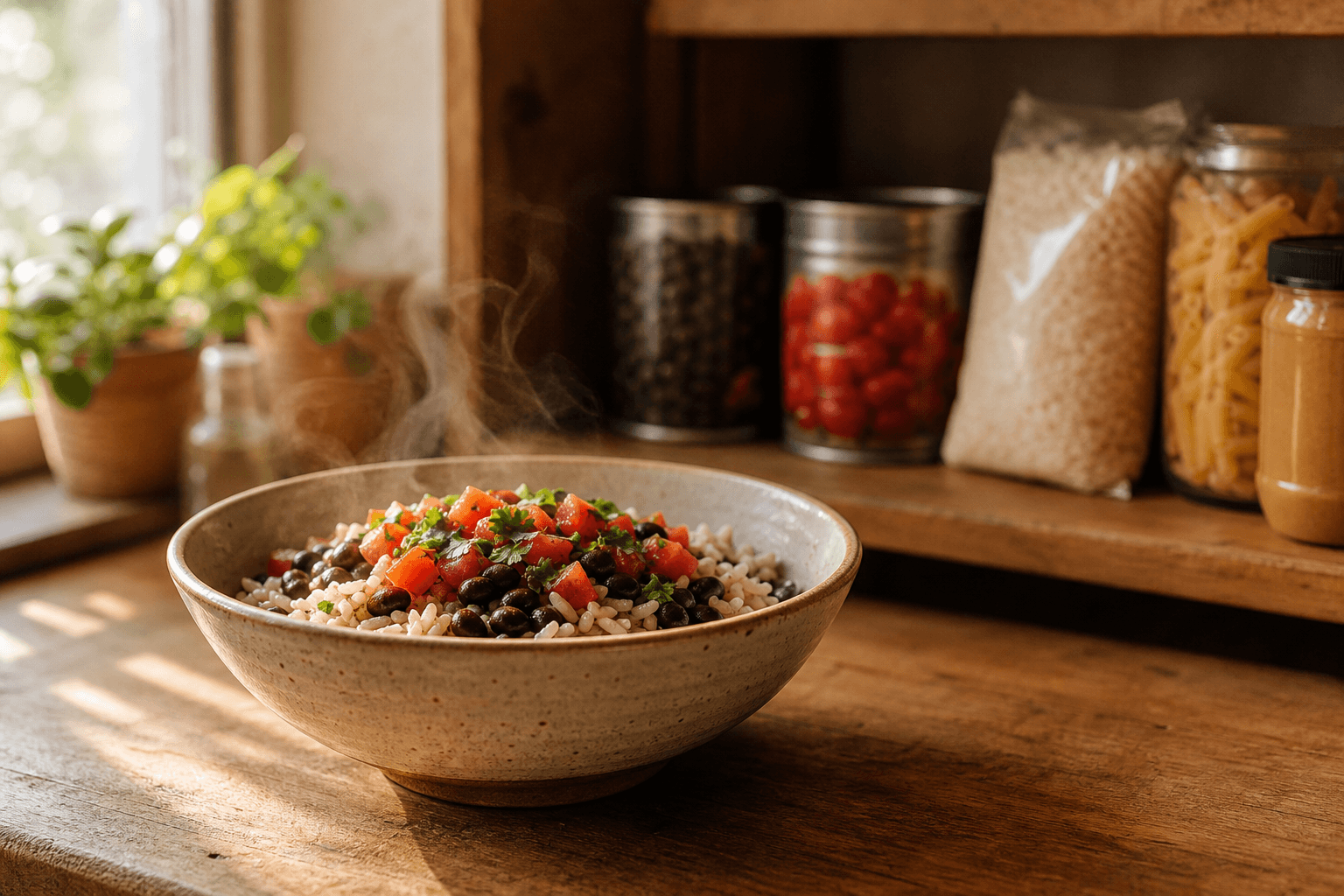
A shelf-stable meal comes from three pantry categories: a protein like canned beans or tuna, a starch like rice or pasta, and a flavor base like canned tomatoes or broth. Pick one from each, season, and heat, and dinner's ready in under 30 minutes without a trip to the store.
That's the whole trick. Once it clicks, you stop feeling stuck when the produce drawer is empty. What follows is the method broken into steps, a chart on how long pantry staples last, ten combos worth trying tonight, and answers to the questions people ask most about cooking from the pantry.
What makes a meal "shelf stable"?
Shelf stable means the food is safe to store at room temperature, unopened, without refrigeration or freezing. That covers canned goods, dried pasta and grains, jarred sauces, shelf-stable broth cartons, peanut butter, oats, crackers, and vacuum-sealed pouches. It doesn't cover anything that needs the fridge once you bring it home, even if the package looks similar, like fresh-pressed juice or refrigerated tortillas.
Building meals this way is a subset of a bigger habit: cooking with what you have instead of shopping for a specific recipe first. The pantry version is just the most forgiving starting point, because nothing in it is racing a clock the way fresh produce is.
How do you build a shelf-stable meal in three steps?
You don't need a recipe to start. You need three decisions.
- Choose a protein anchor. Canned or dried beans, lentils, chickpeas, canned tuna, salmon, or chicken, and peanut butter all work, and this is the part of the plate that keeps you full.
- Choose a starch. Rice, dried pasta, couscous, quinoa, or even crackers give the meal shape and bulk.
- Choose a flavor base and seasonings. Canned tomatoes, coconut milk, broth, salsa, or a jarred sauce carry the dish, and dried herbs, bouillon, garlic powder, soy sauce, vinegar, and hot sauce do the rest.
Combine the three, warm everything in one pot or skillet, and taste as you go. If it needs more salt, acid, or heat, that's normal. Canned and dried food is usually milder than fresh, so season with a slightly heavier hand than you would with a fresh-ingredient recipe.
How long do pantry staples last?
The USDA Food Safety and Inspection Service notes that most canned foods don't carry a required expiration date, and any "best by" date on the label is a quality marker, not a safety cutoff. Packs of noodles raise the same question: can you eat expired ramen. Low-acid canned foods keep the longest; high-acid canned foods keep for less time. Skip any can that's bulging, leaking, rusted, or deeply dented, since that can signal spoilage even before the date on the label matters.
| Pantry staple | Typical unopened shelf life | Best used for |
|---|---|---|
| Canned beans, corn, peas (low acid) | 2 to 5 years | Protein base for bowls, soups, salads |
| Canned tomatoes, tomato soup (high acid) | 12 to 18 months | Pasta sauce, chili, soup base |
| Canned tuna, salmon, chicken | 2 to 5 years | Fast protein, no cooking required |
| Dried pasta | About 2 years, often fine longer | Base for any sauce or beans |
| White rice | About 2 years | Bowls, fried rice, pilafs |
| Dried beans and lentils | 1 to 2 years for beans, about 1 year for lentils, for best texture | Soups and stews with soak or simmer time |
| Rolled oats | About 1 year | Breakfast, or a savory porridge base |
| Peanut butter | About 1 year unopened | Protein-rich sauces and noodles |
Use this as a general guide, not a hard rule, and always trust your senses. If a can looks or smells off when you open it, don't taste it to check.
What are 10 shelf-stable meal combos to try tonight?
Once you have a few staples on hand, these combinations cover most nights without a grocery run.
| Meal | What goes in it | Ready in |
|---|---|---|
| Rice and beans bowl | Rice, black beans, salsa, cumin | 15 minutes |
| Tuna pasta | Pasta, canned tuna, olive oil, garlic powder, chili flakes | 15 minutes |
| Chickpea coconut curry | Chickpeas, canned coconut milk, curry powder, rice | 20 minutes |
| Pantry chili | Kidney beans, diced tomatoes, corn, chili powder | 25 minutes |
| White bean and tomato soup | Cannellini beans, broth, canned tomatoes, dried herbs | 20 minutes |
| Peanut noodles | Pasta, peanut butter, soy sauce, rice vinegar | 15 minutes |
| Salmon rice bowl | Canned salmon, rice, soy sauce, sesame oil | 15 minutes |
| Lentil soup | Dried lentils, broth, canned tomatoes, cumin | 30 minutes |
| Skillet fried rice | Cooked rice, canned peas and carrots, soy sauce | 10 minutes |
| Pasta e fagioli | Pasta, white beans, canned tomatoes, broth, Italian herbs | 25 minutes |
Any of these also work as a starting point for a fridge clean-out. If you happen to have a wilting vegetable or a heel of cheese sitting around, toss it in too. For a sweet pantry option, see what to make with condensed milk.
How do you keep track of what pantry staples you have?
The hardest part of shelf-stable cooking is rarely the cooking. It's remembering what's already in the cabinet, so you end up buying a fourth can of chickpeas instead of the broth you need. That's the same problem people run into with the fridge, which is why a what's-in-my-fridge recipe finder is useful there too, and the same logic applies to canned and dried goods.
Well Stockd, the app behind this blog, logs your pantry alongside your fridge and freezer, then matches what you have against a recipe catalog so you can see what's realistically cookable tonight. If you'd rather have a match come to you than build one from a chart, our piece on an app that suggests recipes based on ingredients you have walks through how that works, and the same idea powers our answer to tell me what's in my fridge and I'll give you a recipe. Neither replaces knowing the three-step method above, but both help on nights when the cabinet's full and you still don't know what to cook.
Frequently asked questions
Can shelf-stable meals be healthy? Yes. Canned beans, lentils, tomatoes, and fish are close to their fresh counterparts nutritionally, and canned vegetables are often picked and canned within hours, which can preserve nutrients as well as produce that traveled days to reach your store. Watch the sodium in canned soups and beans, and rinse canned beans if you want to cut it down.
Do canned foods lose nutrients the longer they sit? Some vitamin loss happens over time, particularly with vitamin C and some B vitamins, but the drop is gradual and the food stays safe well past the point where quality starts to fade. Minerals, fiber, and protein hold up well.
What's the difference between shelf stable and nonperishable? The terms are mostly used the same way. Nonperishable leans toward food that won't spoil under normal storage, while shelf stable more precisely means safe at room temperature until opened. In practice, both point to the same pantry staples.
Sources:
Track it in Well Stockd
Add what you have, see what you can cook tonight, and get a reminder before anything goes off.
