How long does dry pasta last after opening?
Dry pasta lasts about 1 year in the pantry after opening, once it's in an airtight container, and about 2 years unopened. This guide breaks it down by pasta type, with USDA-backed spoilage signs and storage tips.
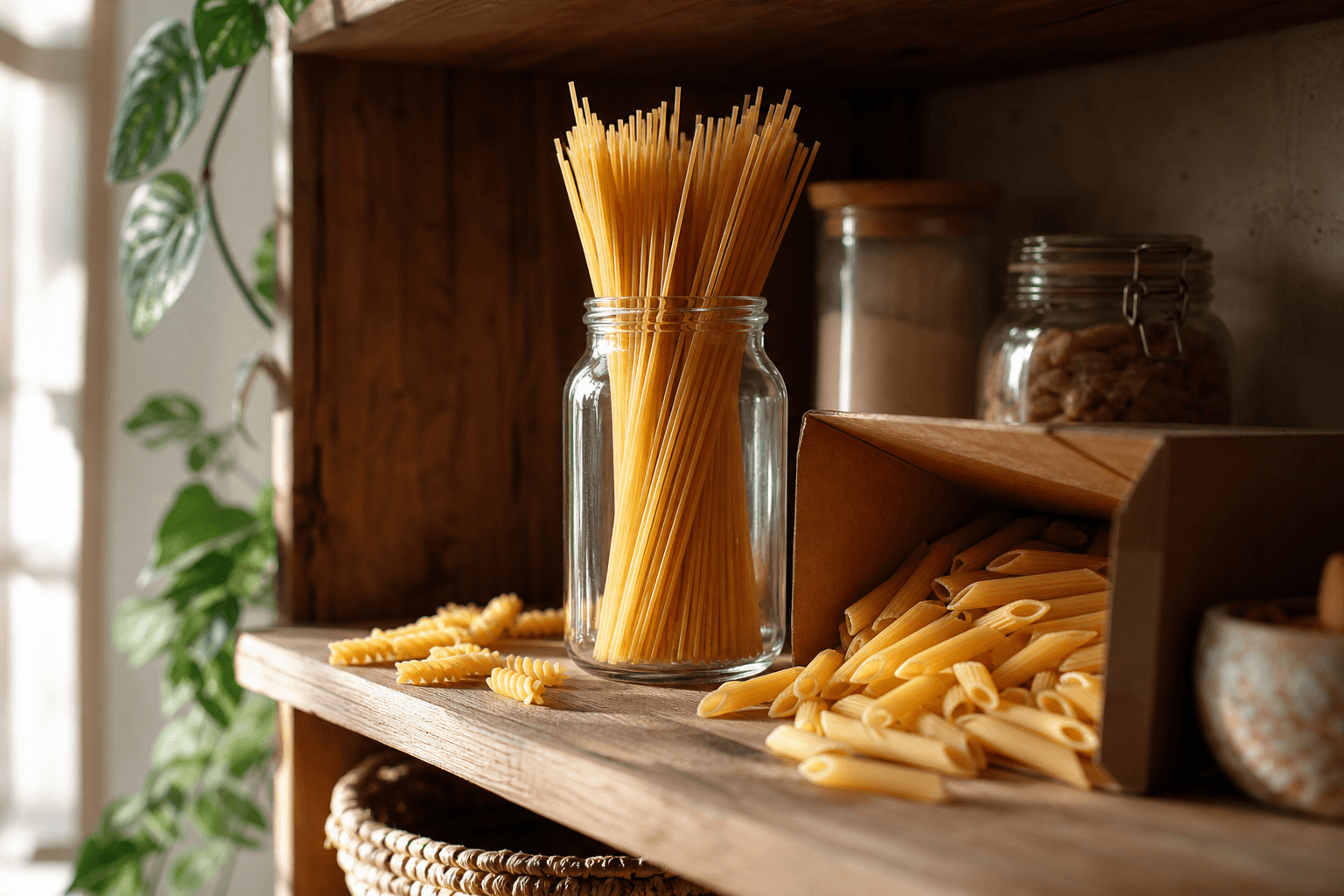
Dry pasta lasts about 1 year in the pantry after opening, once you move it to an airtight container, according to USDA storage guidance. Unopened, plan on about 2 years. This is a quality window, not a safety cutoff: sealed dry pasta is too low in moisture for bacteria to grow.
How long does dry pasta last after opening?
The exact number depends on what the pasta is made from. Plain semolina pasta (spaghetti, penne, macaroni, and the like) holds up the longest once opened. Dry egg noodles drop off fastest, since the egg content doesn't hold up well once air gets in. Whole wheat and gluten free pasta also lose quality sooner than plain pasta, because their flours carry more natural oil.
| Pasta type | Pantry, unopened | Pantry, after opening (airtight container) |
|---|---|---|
| Regular dry pasta, no egg (spaghetti, penne, macaroni, etc.) | About 2 years past purchase | About 1 year |
| Dry egg noodles | About 2 years | About 1 to 2 months (the egg content shortens the window once the seal is broken) |
| Whole wheat or whole grain dry pasta | About 1 to 2 years | About 1 year (bran oils can turn rancid sooner) |
| Gluten free dry pasta (rice, corn, lentil, or bean flour) | About 1 to 2 years | About 1 year (shorter for flax or nut based blends) |
For a broader rundown of pantry, fridge, and freezer timelines side by side, see our guide to how long food lasts. Dry pasta's low moisture content puts it in a different category from something like raw chicken, which only keeps a day or two once you bring it home.
How to tell if dry pasta has gone bad
Dry pasta rarely spoils the way fresh food does, but quality can slip in a few noticeable ways.
- Musty, sour, or rancid smell. This is the biggest tell, and it shows up most in whole wheat and gluten free pasta because of the oils in the bran or alternative flours.
- Small holes, fine webbing, or actual bugs. Pantry weevils get into dry goods through tiny gaps in packaging. If you spot any, toss the whole container, not just the affected portion.
- Clumping, dampness, or a hardened block. Moisture got into the package somehow, which raises the risk of mold.
- Any visible mold. Discard it immediately. Don't taste it to check.
You won't catch all of this by looking. A weevil egg can already be in a bag from the store and hatch weeks later, with no warning sign until the bugs show up. Rancidity in oil rich flours can start before you can smell it, too. That's why the time guide above still matters even when a box of pasta looks completely normal on the shelf.
How to store dry pasta so it lasts
- Move pasta into a truly airtight container, like a glass jar or a hard plastic bin with a gasket lid, right after opening. The folded over bag it came in isn't sealed enough to keep out moisture or pests.
- Keep it in a cool, dry spot away from the stove, oven, dishwasher, or any place that gets warm and humid. Shelf stable pantry goods generally do best below 85 degrees Fahrenheit.
- Store it somewhere dark. A closed cupboard or opaque container protects flavor better than open shelving under direct light.
- Label the container with the date you opened it. Keeping track of best-by dates and opened-on dates for a whole pantry by hand gets old fast, which is exactly the kind of thing an app that tracks food expiration dates can handle automatically.
- Keep pasta away from strong smelling foods like onions or spices, since dry goods can pick up odors over time.
Unlike a cooked grain such as rice, which needs to go in the fridge within two hours of cooking, dry pasta doesn't need refrigeration at all. Room temperature pantry storage is the right call.
Can you freeze dry pasta?
Freezing isn't necessary for safety, since dry pasta is already shelf stable at room temperature. It can still be worth doing, for two reasons. First, sealing the bag and freezing it for 4 to 7 days kills off any weevil eggs before you move it into long term storage. Second, frozen dry pasta in an airtight, freezer safe container keeps essentially indefinitely, which is handy if you buy in bulk. Let it come back to room temperature before opening the container so condensation doesn't get into the box.
When in doubt
USDA food safety guidance for shelf stable products comes down to one line: when in doubt, throw it out. Dry pasta almost never becomes actively unsafe to eat, but if you open the container and catch a rancid or musty smell, see mold, or find pests, throw out the whole batch rather than trying to salvage part of it.
Frequently asked questions
Does dry pasta expire? Not the way perishable food does. The USDA and FDA don't require expiration dates on packaged foods other than infant formula, so the "best by" date on a pasta box is the manufacturer's estimate of peak quality, not a safety deadline.
Can I eat pasta past its best by date? Yes, as long as it's been stored properly and shows none of the spoilage signs above, such as off odor, visible mold, or pests. Quality may have dropped, but it isn't automatically unsafe.
Why does my pasta smell like old cooking oil? That's rancidity, most common in whole wheat or gluten free pasta made with alternative flours that carry more natural oil. It's unlikely to make you sick, but the flavor is gone, so toss it.
Sources: FSIS Shelf-Stable Food Safety, FoodSafety.gov FoodKeeper App, FSIS Food Product Dating.