Should you put hot food in the fridge right away, or let it cool first?
USDA guidance says you can put hot food straight into the fridge, no need to cool it on the counter first. It covers the 2-hour rule, how to chill big batches fast, and how long leftovers keep.
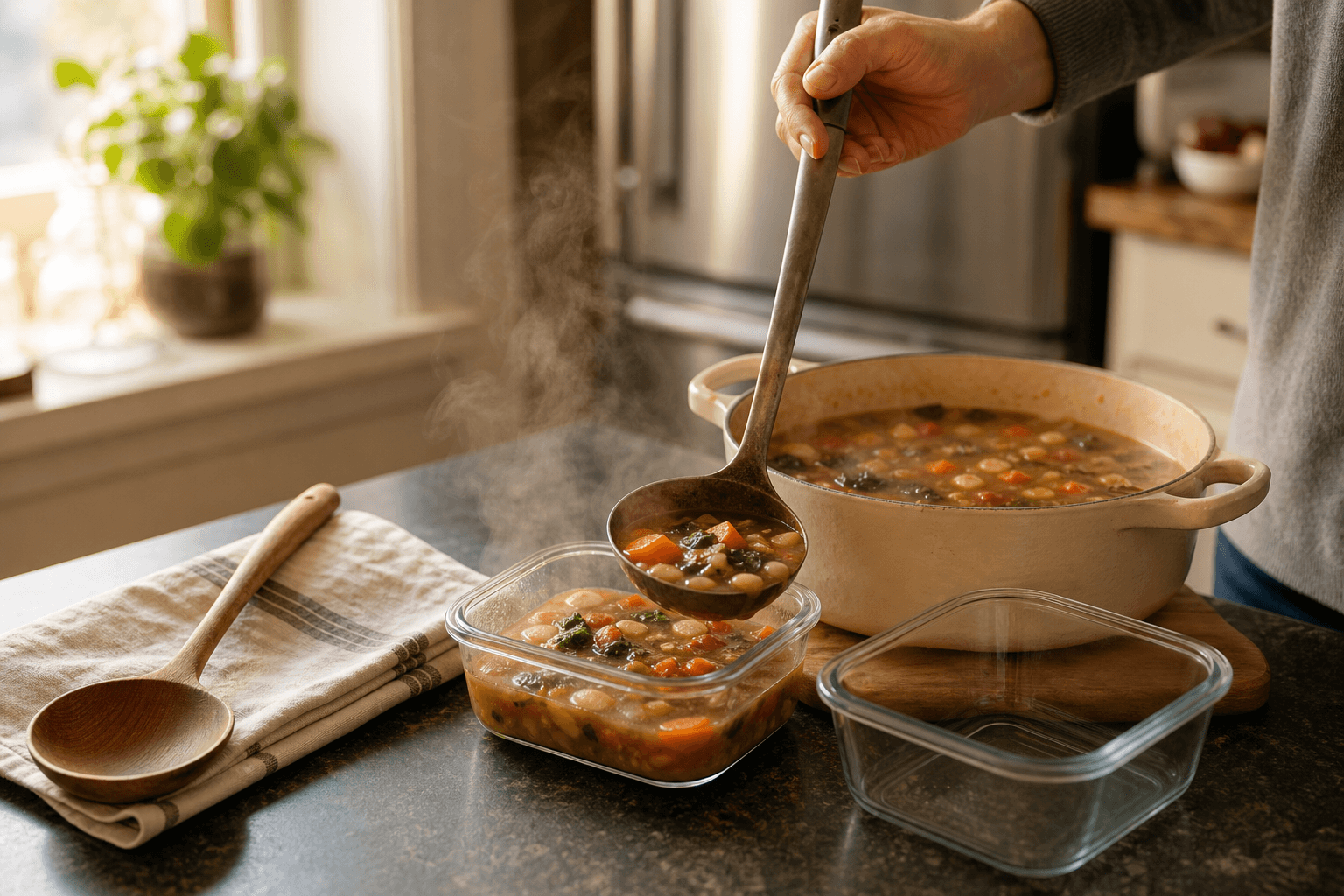
USDA guidance says hot food can go straight into the fridge. Refrigerate it within 2 hours of cooking, or within 1 hour if the room is above 90°F. There's no rule requiring food to cool on the counter first, and shallow containers help big batches chill faster and more safely.
Can you put hot food straight in the fridge, or should you let it cool first?
Go ahead and put it in hot. The old habit of leaving a pot on the stove "to cool down" before refrigerating works against food safety. According to USDA's Food Safety and Inspection Service, food needs to go into the refrigerator within 2 hours of cooking, or after it comes off the stove, out of the oven, or out of a warming appliance. If the kitchen or outdoor air is 90°F or hotter, that window shrinks to 1 hour, which matters at summer cookouts and potlucks.
Food doesn't need to reach room temperature first. Every extra minute a pot of soup, chili, or rice sits on the counter is time spent in the danger zone, the 40°F to 140°F range where bacteria can double in number in as little as 20 minutes. Refrigerating food while it's still hot gets it out of that range faster.
The one real catch: a large, dense amount of food, like a full stockpot of soup or a big pan of lasagna, cools slowly even inside the fridge, because the center can stay warm for hours while the outside chills. The fix is to help the food cool faster once it's already inside the fridge. The storage tips below cover exactly how. Baked a holiday dessert? See do you have to refrigerate pumpkin pie.
How long can food sit out, and how long do leftovers keep?
The table below lists USDA's time limits for the counter, the fridge, and the freezer.
| Situation | Time limit |
|---|---|
| Food sitting out at room temperature, under 90°F | 2 hours, then refrigerate, freeze, or discard it |
| Food sitting out where it's 90°F or hotter (patio, car, buffet table) | 1 hour, then refrigerate, freeze, or discard it |
| Cooked leftovers stored at 40°F or below | 3 to 4 days |
| Cooked leftovers stored at 0°F | 3 to 4 months for best quality |
| Reheated leftovers, before eating | Heated through to 165°F |
For shelf life on specific foods beyond leftovers, such as dairy, produce, and raw meat, see our full guide to how long food lasts in the fridge.
How to tell if leftovers have gone bad
Trust your senses first. Sour or off smells, a slimy or tacky texture, visible mold, and noticeable discoloration are all signs to toss the container without tasting it.
Some of the bacteria behind foodborne illness, though, don't change how food looks, smells, or tastes at all. That's true of Salmonella and Listeria, and of the bacteria that can grow in cooked starches like rice when they sit out too long. Leftovers can seem completely normal and still be unsafe once they've passed the 3 to 4 day fridge window or spent too long at room temperature. That's why the time rule wins over a sniff test, especially for foods like rice. Our guide to how long cooked rice lasts in the fridge walks through why rice needs extra caution.
How to store hot food so it lasts
A few habits make the 2-hour window easier to hit and help food cool safely once it's in the fridge:
- Split large batches into shallow containers, roughly 2 inches deep, instead of one deep pot. A big container of soup or chili can take many hours to cool through in the center, which lets bacteria multiply the whole time.
- For very large amounts, a quick dunk in an ice or cold water bath before refrigerating speeds things up even more.
- Don't pack the fridge so tightly that air can't circulate around new containers. Airflow is part of what cools food quickly.
- Keep the fridge itself at 40°F or below, and check it with an appliance thermometer if you're not sure.
- Label containers with the date they went in, since 3 to 4 days sneaks up fast.
This guidance is for food that's already cooked. Raw meat and poultry run on a shorter, stricter clock both before and after cooking, so if you're storing raw chicken, check our guide to how long raw chicken lasts in the fridge instead. And if keeping track of what went in the fridge and when is the part that trips you up, an app that tracks food expiration dates can log each container automatically so nothing quietly passes its window.
Can you freeze hot food right away?
Yes. The same logic applies: USDA guidance allows freezing food while it's still hot, and the 2-hour (or 1-hour) clock still governs how soon it needs to go in. Shallow, airtight containers or freezer bags with the air pressed out freeze faster and keep quality higher than one large block. Food held at 0°F stays safe to eat indefinitely, but for best taste and texture, plan on using frozen leftovers within 3 to 4 months.
When in doubt
USDA's standing rule for leftovers is simple: when in doubt, throw it out. You can't see, smell, or taste the bacteria that cause foodborne illness, so if you're not sure how long something sat out, or how long it's been in the fridge, don't taste-test it to find out. It isn't worth the risk.
The countdown before refrigeration matters just as much — see how long leftovers can sit out before refrigerating.
Frequently asked questions
Do I need to let soup or rice cool to room temperature before putting it in the fridge? No. USDA guidance says food can go into the fridge hot. Waiting for it to cool on the counter just extends the time it spends in the danger zone. If it's a large pot, split it into shallow containers first so it chills quickly once it's inside.
Will putting a hot pot in the fridge spoil everything else inside? A single dish of hot food won't meaningfully raise the temperature of a normal home refrigerator, especially if it's in a reasonably shallow container rather than a giant stockpot. Just avoid packing the fridge so full that air can't move around it.
What if cooked food got left out overnight by accident? Throw it out. That's well past the 2-hour limit (or 1 hour in a warm room), and USDA advises against tasting food to check whether it's still safe.
Sources: Leftovers and Food Safety, USDA FSIS, Danger Zone (40°F - 140°F), USDA FSIS, How Temperatures Affect Food, USDA FSIS
Track it in Well Stockd
Add what you have, see what you can cook tonight, and get a reminder before anything goes off.
