Is it safe to reheat rice more than once?
Yes, but only once, and only if you handled it right the first time. The USDA timeline below covers cooling, storing, and reheating leftover rice safely, along with why a second reheat raises your risk.
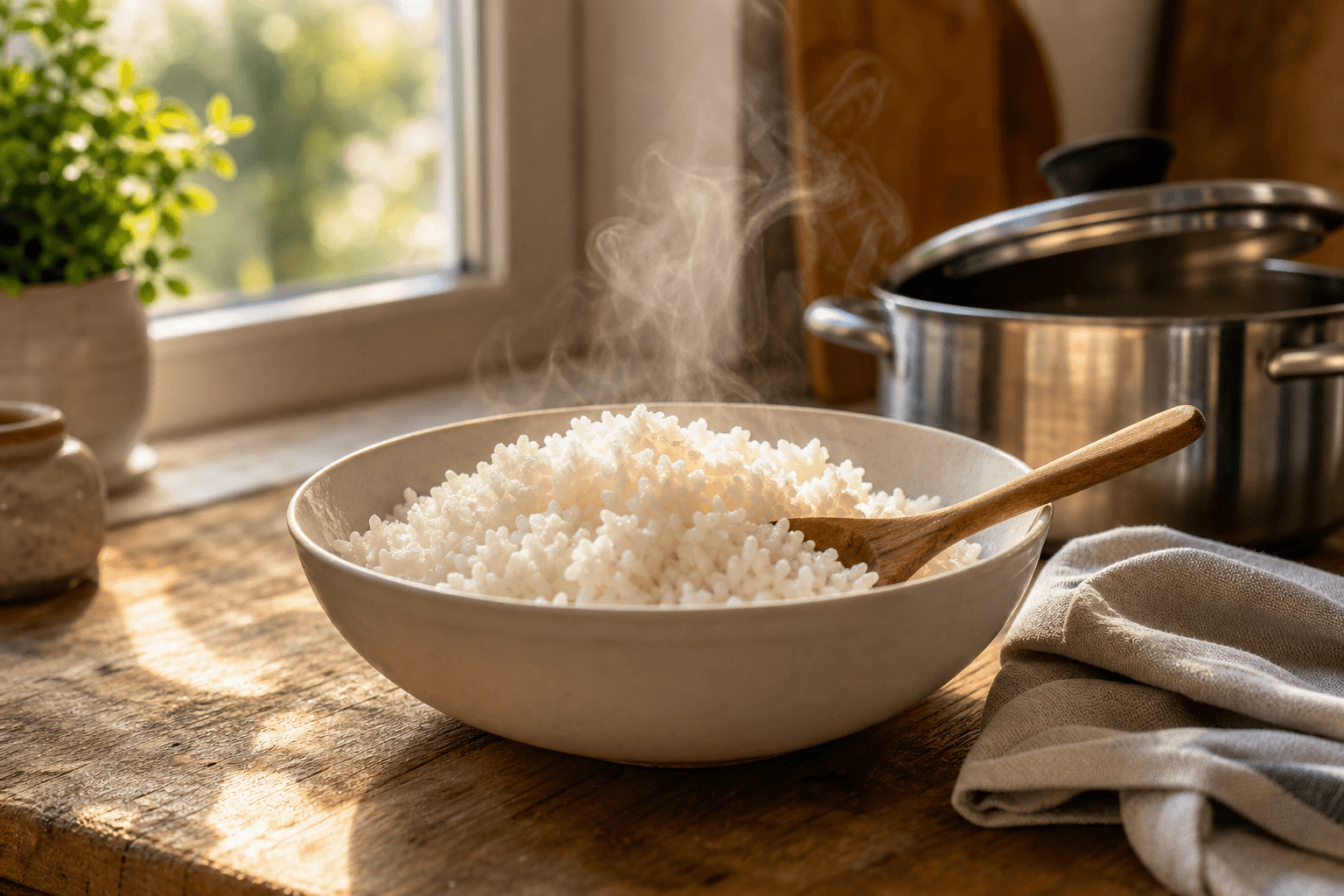
You can safely reheat rice once, as long as you refrigerated it within USDA's two-hour window, kept it no more than three to four days, and reheated it to 165 degrees Fahrenheit all the way through. Reheat the same batch a second or third time and your risk goes up, because the toxin behind most rice-related food poisoning survives heat.
Why you can only safely reheat rice once
Rice, even straight out of a sealed bag, can carry spores of a bacterium called Bacillus cereus. Those spores survive normal cooking. If cooked rice sits too long in the "danger zone" between 40 and 140 degrees Fahrenheit, the spores can wake up, multiply, and produce a toxin called cereulide. The FDA's Bacteriological Analytical Manual notes that cereulide is heat stable, so a trip through the microwave won't break it down once it's already formed.
That's the practical reason to reheat rice only once: a single, quick reheat of rice that was cooled and stored correctly is low risk. Every extra cycle of cooling it back down, letting it sit, and warming it up again gives any surviving bacteria more time in the danger zone to grow and produce more toxin, and reheating won't undo that. The safer habit is to portion rice before you refrigerate it, then reheat only what you plan to eat in one sitting.
How long does cooked rice last?
USDA's Food Safety and Inspection Service sets the timeline below for cooked rice and other cooked grains and leftovers. Use it as your baseline, and lean toward the shorter end if your fridge runs warm or you're not sure how quickly the rice cooled.
| Storage location | Safe time | Notes |
|---|---|---|
| Room temperature | 2 hours (1 hour if above 90°F) | Refrigerate within this window or throw the rice out |
| Refrigerator (40°F or below) | 3 to 4 days | Use a shallow, airtight container |
| Freezer (0°F) | 3 to 4 months for best quality | Safe indefinitely if kept frozen, but texture declines over time |
| Reheated rice | Eat right away, or refrigerate again within 2 hours | Reheat only the portion you plan to eat |
Rice is more forgiving than raw proteins. Raw chicken, for comparison, only holds one to two days in the fridge before it needs to be cooked or frozen. If you want more detail on rice specifically, including fridge timing by dish type, our guide to how long cooked rice lasts in the fridge goes deeper.
How to tell if cooked rice has gone bad
Trust your senses first. Leftover rice that has spoiled usually smells sour or fermented, feels unusually slimy or sticky, or shows gray, yellow, or fuzzy spots. Any of those signs and the rice goes straight in the trash. Don't taste-test it to check.
But the Bacillus cereus toxin that causes most rice-related illness doesn't change how rice looks, smells, or tastes. Rice that's sat in the danger zone too long can seem completely normal and still make you sick, which is why the time and temperature rule matters more than a sniff test. If the rice is past four days in the fridge, or you can't remember when you cooked it, treat it as unsafe even if nothing seems off.
How to store cooked rice so it lasts
- Cool it fast. Spread hot rice into a shallow container or baking sheet instead of leaving a deep pot to cool slowly on the counter, and get it into the fridge within two hours (one hour on a hot day).
- Skip the "keep warm" setting on a rice cooker for storage. It holds rice in or near the danger zone for hours.
- Store rice in an airtight container at 40°F or below, and portion it into meal-sized amounts so you're not reheating the whole batch every time.
- Label containers with the date you cooked the rice. Well Stockd's food expiration tracking app can log that date automatically and remind you before the four-day window closes, so you're not guessing from memory.
Can you freeze cooked rice?
Yes. Cooked rice freezes well when portioned flat in freezer bags or shallow containers, which also helps it thaw and reheat evenly. For best texture, use it within three to four months, though it stays safe to eat indefinitely as long as your freezer holds 0°F. Thaw it in the refrigerator rather than on the counter, then reheat it once to 165°F before eating.
When in doubt
USDA's food safety motto is "when in doubt, throw it out," and rice is a good place to apply it. If you're unsure how long rice sat out, whether your fridge stayed cold enough, or how many times it's already been reheated, don't risk it. Our full guide to how long food lasts covers this same rule across dozens of other foods, including dairy, leftovers, and raw meat.
Frequently asked questions
Can you reheat rice more than once? You technically can, but USDA-aligned food safety guidance says to reheat it only once. Repeated cooling and reheating gives any surviving Bacillus cereus more chances to grow and produce toxin, and heat doesn't destroy that toxin.
Does reheating rice to 165°F kill the bacteria that cause food poisoning? Reheating rice to 165°F throughout kills live Bacillus cereus, but it won't destroy cereulide, the toxin the bacteria may have already produced while the rice sat out too long. Prevention (fast cooling, cold storage, one reheat) matters more than the reheating temperature alone.
Is "fried rice syndrome" the same thing? Yes. That's the common nickname for Bacillus cereus food poisoning linked to rice and other starchy foods left at room temperature too long before being refrigerated or reheated.
Sources: USDA FSIS, Leftovers and Food Safety, USDA FSIS, "Danger Zone" (40°F - 140°F), USDA FSIS, Freezing and Food Safety, FDA, BAM Chapter 14: Bacillus cereus.
Track it in Well Stockd
Add what you have, see what you can cook tonight, and get a reminder before anything goes off.
