Can you freeze fresh pasta?
Fresh pasta freezes better than it keeps in the fridge. Here's how to freeze it right, how long it lasts at 0°F, and how to cook it straight from frozen.
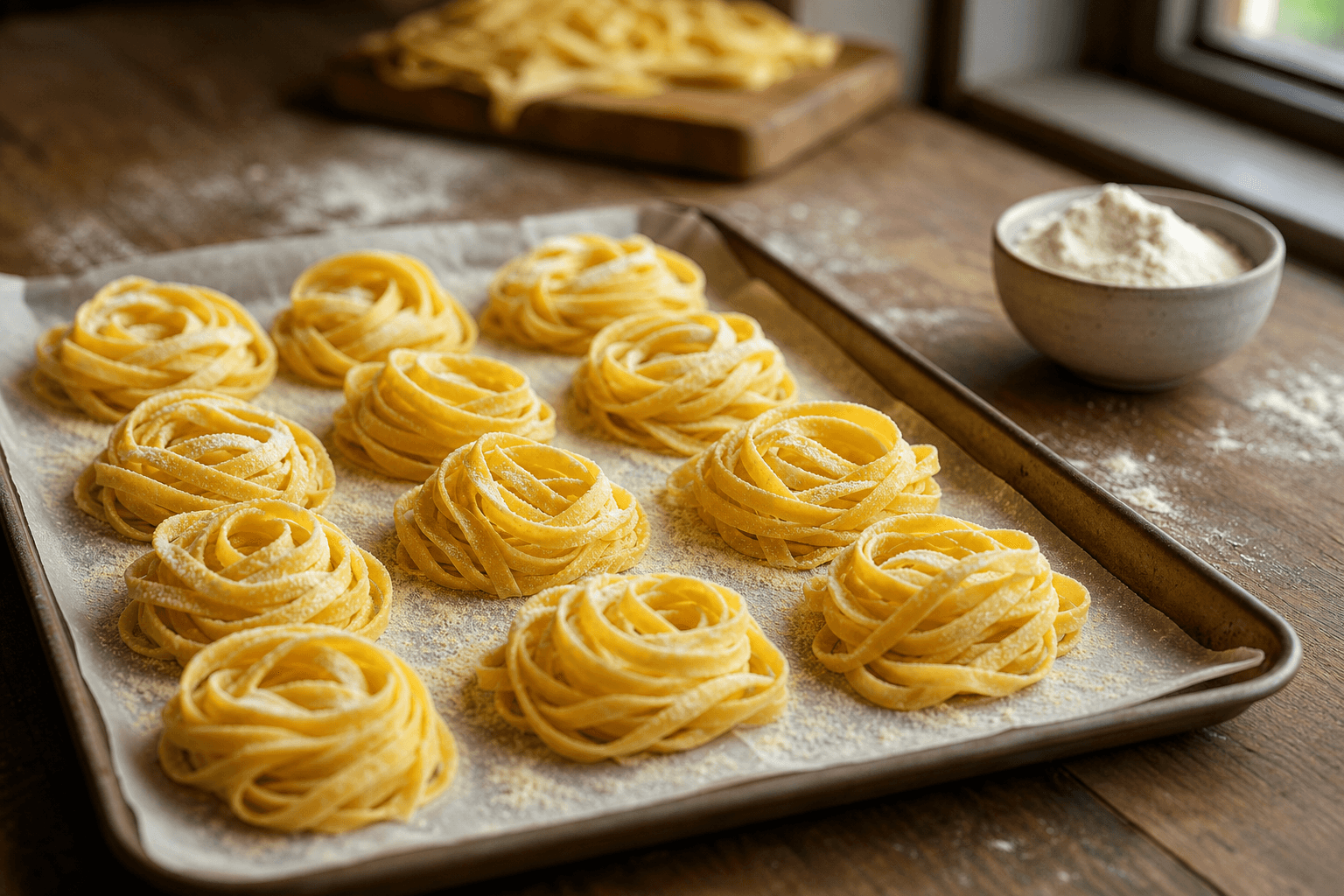
Yes, you can freeze fresh pasta, and it freezes better than it keeps in the fridge. Dust it with flour, portion it into nests, and freeze in an airtight bag. It holds its best quality for about 2 months at 0°F, and cooks straight from frozen.
Can you freeze fresh pasta?
Fresh pasta, the soft, eggy dough you buy in the refrigerated section or roll out yourself, is one of the better candidates for the freezer. Unlike a lot of delicate foods, raw pasta dough holds its structure well when frozen, since it's mostly flour, egg, and a little water rather than anything with high water content that turns mushy on thaw.
That's good news, because fresh pasta doesn't last long in the fridge. According to USDA FoodKeeper guidance, fresh pasta keeps for only 1 to 2 days refrigerated before quality and safety start to slip. If you're not cooking it within a day or two of buying or making it, freezing is the move, not waiting it out on the shelf.
This works whether you bought a package of fresh fettuccine at the store, rolled out sheets for lasagna, or filled ravioli or tortellini by hand. The steps below cover all of them.
How to freeze fresh pasta
- Dust the pieces generously with semolina or all-purpose flour so cut noodles, sheets, or filled shapes don't fuse into one block in the freezer.
- Portion it out: twist strands into individual nests, or lay sheets and filled shapes in a single layer. That way you only thaw what you need later.
- Spread the portions on a parchment-lined baking sheet without letting them touch, and freeze until firm, about 1 to 2 hours. This keeps pieces from clumping together once bagged.
- Transfer the frozen portions to a freezer bag or airtight container, press out as much air as you can, and seal.
- Write the freeze date on the bag. Fresh pasta holds its best quality for about 2 months, so a label saves you from guessing later.
- Freeze it at 0°F or below. That's the standard home freezer temperature, and it holds quality steady over time.
How long fresh pasta keeps frozen and how to thaw it
| Pasta type | Refrigerator | Freezer (0°F or below) |
|---|---|---|
| Fresh pasta, uncooked | 1 to 2 days | About 2 months |
| Cooked pasta | 3 to 5 days | 1 to 2 months |
| Dry pasta, unopened | Up to 2 years in the pantry | Freezing not needed |
Frozen fresh pasta stays technically safe to eat well past 2 months as long as your freezer holds steady at 0°F, since food kept continuously at that temperature doesn't spoil. The 2-month mark is a quality guideline, not a safety cutoff. Past that window, expect the dough to dry out, pick up freezer smells, or turn brittle at the edges, even though it's still safe to cook. When you're not sure how long a bag has been buried in your freezer and the label's gone, it's safer to throw it out than to guess.
You don't need to thaw fresh pasta before cooking it. Drop the frozen strands, sheets, or filled shapes directly into a pot of boiling water and add about a minute to your normal cook time. Thawing first makes things worse, since the dough turns sticky and tears easily once it starts to soften. If you do need to thaw a sheet for something like building lasagna, move it to the refrigerator overnight rather than leaving it on the counter, since fresh pasta made with egg is a perishable dough and shouldn't sit at room temperature for more than 2 hours, or 1 hour above 90°F.
What changes and what to use fresh pasta for after
Freezing fresh pasta is gentle on it compared to most fresh foods, but it's not invisible. The dough can turn slightly softer once cooked from frozen, and delicate filled shapes like ravioli can loosen a bit at the edges in the boil. Color and flavor stay close to fresh.
That's why frozen fresh pasta works best in dishes with sauce or soup, not in a cold pasta salad where the bite needs to be right. Toss it with a simple butter and parmesan sauce, fold it into a baked dish, or drop noodles straight into simmering broth. If you keep dairy staples on hand for those sauces, both heavy cream and cream cheese freeze well too, so you can build a full freezer-to-stovetop meal without a grocery run.
For more on what else holds up in the freezer, including produce and leftovers, see our guide on what you can and cannot freeze. And if you'd rather not rely on memory for when that bag of pasta went into the freezer, the Well Stockd app tracks freeze dates for you and flags items before quality starts to drop.
Frequently asked questions
Can you freeze fresh pasta that is already cooked? Yes. Cooked pasta keeps for 1 to 2 months in the freezer, a bit shorter than freezing it raw. Toss the cooled noodles with a little oil so they don't clump, then freeze in a portioned, airtight bag.
Does fresh pasta need to be cooked before freezing? No. Fresh pasta freezes better raw. Freezing it uncooked keeps the texture closer to fresh, since cooking it and then reheating from frozen tends to leave noodles softer than cooking straight from frozen dough.
Can you freeze filled pasta like ravioli or tortellini? Yes, the same way. Dust the pieces with flour, freeze them in a single layer on a tray until firm, then transfer to an airtight bag. Cook straight from frozen, adding a couple of extra minutes to the boil.
Sources: USDA FoodKeeper, USDA FSIS: Freezing and Food Safety, USDA FSIS: The Danger Zone (40°F - 140°F)
Track it in Well Stockd
Add what you have, see what you can cook tonight, and get a reminder before anything goes off.
