Can you use expired flour? What's really safe
Flour past its printed date is usually fine to bake with, but "expired" and "raw" are two different safety questions. Here's what USDA's numbers really say.
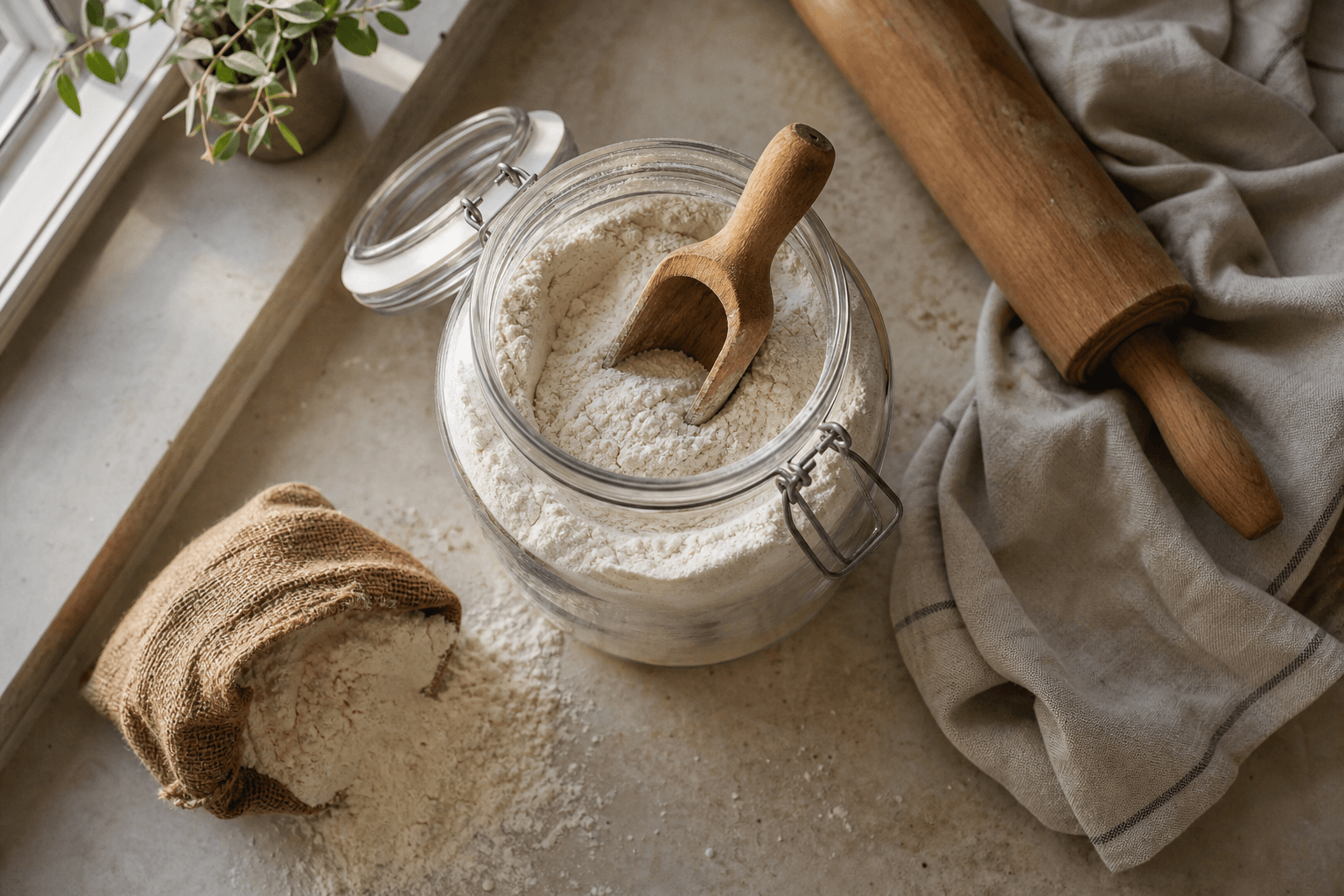
Yes, in most cases. USDA's FoodKeeper guidance puts all-purpose flour at 6 to 12 months in the pantry and whole wheat flour at 3 to 6 months, but both stay safe to bake with well past that if they smell normal, look normal, and are bug-free. The date on the bag is a quality marker, not a safety cutoff.
That said, "using expired flour" and "using raw flour" are two different questions, and the second one matters more than most people realize.
How long does flour last?
Flour is a low-moisture, shelf-stable pantry staple, which is why it does not spoil the way milk or meat does. The numbers below come from USDA's FoodKeeper database, the same source behind the FoodKeeper app.
| Flour type | Unopened, pantry | Opened, pantry | Opened, refrigerator | Freezer (for best quality) |
|---|---|---|---|---|
| All-purpose (white) flour | 6 to 12 months | 6 to 8 months | About 1 year | About 2 years |
| Whole wheat flour | 3 to 6 months | 3 to 6 months | 6 to 8 months | About 1 year |
Whole wheat, rye, and other whole-grain flours run shorter because they keep the bran and germ, which hold natural oils that turn rancid faster than the starchy center used in white flour. Self-rising flour follows roughly the same timeline as all-purpose, though its baking powder loses lift over time, so old self-rising flour is more likely to bake flat than to be unsafe.
These windows are quality estimates, not expiration deadlines. Compare that to cooked rice sitting in the fridge, where the clock is about bacterial growth on a moist food and matters far more precisely. See how long cooked rice lasts in the fridge for that kind of timeline.
How to tell if flour has gone bad
Trust your nose before your eyes. Fresh flour has almost no smell. Flour that has turned will smell musty, sour, or a bit like old paint or crayons, which is the oils going rancid. Here is what to check:
- Any off, sour, or musty smell means it is past its best.
- Clumping (a sign moisture got in), discoloration, or tiny moving specks (weevils or pantry moths) mean toss it.
- Flour that has hardened into damp clumps has absorbed moisture and should go too.
If you see mold or bugs anywhere in the bag, throw the whole thing out rather than scooping around it. Some spoilage is not obvious from a sniff test alone, which is why the storage-time table above matters more than a single smell check, especially for whole wheat flour stored warm.
There is a separate, bigger safety issue that has nothing to do with age. Raw flour, even a bag you bought yesterday, can carry Salmonella or E. coli, because milling raw grain does not kill bacteria. That is a different risk from raw chicken, which can turn unsafe within days in the fridge (see how long raw chicken lasts in the fridge). Age does not change that risk: never eat flour uncooked. Never taste raw dough, batter, or flour straight from the bag, and always follow package cooking temperatures and times for baking mixes.
How to store flour so it lasts
- Move flour into an airtight container as soon as you open the bag; the original paper bag lets in air and moisture.
- Keep it in a cool, dark, dry spot away from the stove, dishwasher, or any heat source, since warmth speeds up rancidity.
- Keep the scoop or measuring cup dry, and avoid storing flour near strong-smelling foods, since it can pick up odors.
- Buy whole wheat and other whole-grain flours in amounts you will use within a few months, since they go rancid faster than white flour.
Can you freeze flour?
Yes, and it is the easiest way to stretch flour's quality window, especially for whole wheat. Freezing essentially pauses the slow oxidation that causes rancidity. Pack flour into an airtight, freezer-safe container or bag with the air pressed out, and it commonly holds good baking quality for around 2 years for all-purpose and about a year for whole wheat. You do not need to thaw it before baking, though letting it come to room temperature first makes measuring more accurate. USDA notes that food kept continuously frozen stays safe indefinitely, so the freezer numbers here are about quality and taste, not a safety limit.
When in doubt, throw it out
That is USDA's standard advice for any food you are unsure about, and it applies here: if flour smells off, looks discolored or clumped, or has any sign of pests, do not try to bake with it. The cost of a bag of flour is small next to the hassle of a ruined batch of dough or, in the case of mold, a real health risk. The "toss it if in doubt" rule for staleness is separate from the raw flour rule above: even flour that smells and looks perfect still needs to be cooked before you eat it.
If keeping track of what is aging in your pantry is the part that trips you up, an app that tracks food expiration dates can flag flour and other staples before they turn, so nothing quietly goes rancid in the back of the cupboard.
For the rest of the cupboard, what pantry foods last past their expiration date has the full list.
Frequently asked questions
Can expired flour make you sick? Rarely from the flour simply being old. Rancid flour, from oils breaking down, mostly affects taste, smell, and how baked goods rise rather than causing illness. The real risks are visible mold or pest contamination, which mean the bag should be discarded, and raw flour pathogens like Salmonella or E. coli, which can be present in flour of any age and are only eliminated by cooking.
Is it okay to use flour with a few small clumps or bugs? No. Clumping usually means moisture got into the bag, which can invite mold even if you cannot see it yet, and any sign of bugs or webbing means the whole bag should go rather than just the affected scoop.
Does flour ever truly go bad? Not in a single, sudden way like fresh produce or dairy. Flour is shelf-stable, so with dry, airtight storage it typically stays usable well past the date on the bag. What changes over time is quality: rancidity, absorbed moisture, absorbed odors, or pests, and those are the real reasons to eventually replace it rather than a fixed safety deadline.
Sources: USDA FoodKeeper (FSIS/FMI/Cornell University), FSIS Freezing and Food Safety, FDA Handling Flour Safely: What You Need to Know, CDC Raw Flour and Dough.