Dried basil instead of fresh: the ratio and the catch
The dried basil to fresh ratio is 3:1, 1 teaspoon dried per tablespoon chopped fresh. Where that swap works, where it fails, and what to use instead.
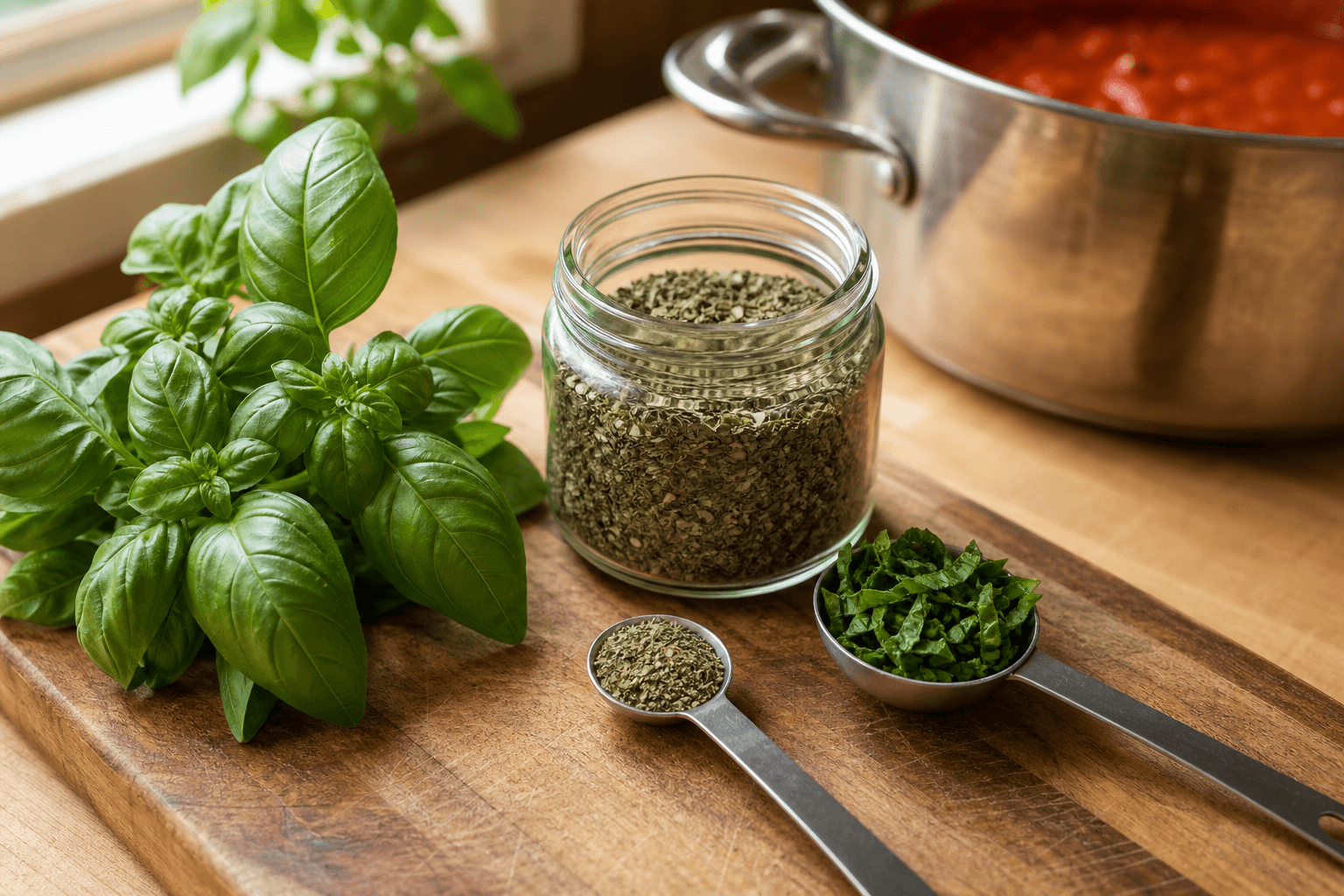
Use 1 teaspoon of dried basil for every tablespoon of chopped fresh basil. Penn State Extension, NDSU Extension and University of Illinois Extension all print that 3:1 ratio.
Here is what the charts leave out. America's Test Kitchen tested the dried-for-fresh swap herb by herb and put basil on its never-substitute list. Basil's flavor lives in volatile compounds that drying mostly destroys, and ATK found dried herbs hold a slightly dusty, stale flavor from oxidation. The 3:1 rule earns its keep with oregano, rosemary, sage and thyme in recipes that have plenty of liquid and cook 20 minutes or longer. With basil, measure at 3:1 and use it only in something that simmers.
Dried basil substitute ratios
| Substitute | Ratio | Best for | Watch out |
|---|---|---|---|
| Dried basil in a simmered sauce | 1 Tbsp fresh chopped = 1 tsp dried | Marinara, minestrone, chili, pizza sauce, long braises | Goes in with the tomatoes at the start, never at the end |
| Dried oregano or marjoram | 1 Tbsp fresh basil = 1 tsp dried | Red sauce when you have no basil at all | Tastes like oregano, one of the four herbs ATK endorses dried |
| Frozen basil | 1:1 for fresh in cooked dishes | Sauces, soups, anything cooked | Needs prep before the basil wilts: blanch 3 seconds and bag, or puree into ice cube trays |
| Ground or powdered basil | 1 Tbsp fresh = about 1/4 tsp ground | Dry rubs and spice blends | Sources disagree. Start at 1/4 tsp and add it at the end |
| Fresh parsley plus a little dried basil | Parsley matches the fresh basil volume, plus 1/4 of the dried basil you would otherwise use | Garnish-adjacent uses that need something green | A technique, not a tested ratio |
How to swap dried basil for fresh basil
- Look at where the basil enters the recipe. Stirred in off the heat, blended raw or sprinkled on top means the swap fails at any ratio.
- Divide the fresh amount by three. A tablespoon of chopped fresh becomes 1 teaspoon dried. A quarter cup becomes about 4 teaspoons.
- Add the dried basil early, with the tomatoes or the stock. It needs liquid and heat to rehydrate, and ATK's 20 minutes of cooking is the floor.
- Taste toward the end of the simmer. A flat sauce at that point is the basil, and more salt will not cover it.
- Finish with chopped fresh parsley if you have some. It puts back the green note dried basil cannot supply.
What dried basil changes about the dish
Fresh basil is sweet and perfumed, and it fades fast under heat, which is why most recipes add it at the end. Dried basil works the other way around. It gives almost nothing up front and releases what it has over a long wet cook. Penn State puts dried herbs at three to four times the strength of fresh by volume, so the smaller spoonful is not a weaker dose. It carries a drier, flatter flavor at a similar concentration.
The look changes too. Fresh basil stays visible as green ribbons. Dried basil breaks down into the sauce and leaves dark flecks.
When not to substitute dried basil for fresh
Skip the swap in pesto, caprese, tomato salad, a sprinkle over finished pizza, or anything else raw. The compounds that make basil taste like basil are the ones drying removes.
The measurement will warn you too. A 2 oz package of fresh basil yields about 2/3 cup chopped, per Cook's Illustrated, so a recipe calling for a whole bunch wants roughly 10 tablespoons. Run that through the 3:1 rule and you land on more than 3 tablespoons of dried basil, which no sauce wants. An absurd number on the dried side means the basil was there for freshness, and that does not convert.
Freezing basil beats drying it
NDSU Extension recommends freezing over drying, because drying basil changes its flavor dramatically. Blanch the leaves for three seconds, pat them dry and freeze them in a bag, or puree them and freeze the puree in ice cube trays. Frozen basil goes into cooked dishes 1:1 for fresh.
Oregon State University Extension explains why home-dried basil disappoints. Basil is a tender-leaf herb with a high moisture content, and it will mold if it is not dried quickly. To hold a bunch for a few days instead, NDSU says to rinse it, pat it dry and keep it in an airtight bag in the refrigerator for three to five days.
Caveats before you measure dried basil
The 3:1 ratio assumes the dried basil still has something to give. Penn State says most dried herbs hold their quality about a year in an airtight container in a cool, dark place, and Illinois Extension suggests smelling them every six months. An older jar will not hit the ratio no matter how carefully you measure.
Ground basil is where the sources split. Penn State prints 1 teaspoon dried as 1/4 teaspoon powdered. Purdue prints 1/4 to 1/2 teaspoon ground per tablespoon of fresh. Start at 1/4 teaspoon and taste up from there.
Related basil and herb swaps
- The fresh to dried herb conversion chart has the ratios for oregano, rosemary, thyme and the rest of the rack.
- Fresh vs frozen vs canned substitution ratios answers the same question for produce.
- Substituting frozen spinach for fresh is the swap where the frozen form usually wins outright.
- The printable ingredient substitution chart is the one to stick inside a cabinet door.
Common questions about dried basil
How much dried basil equals fresh basil?
One teaspoon of dried basil replaces one tablespoon of chopped fresh basil, one-third the amount. Ground basil is stronger still, so use about 1/4 teaspoon per tablespoon of fresh.
How much dried basil equals 1/4 cup fresh basil?
About 4 teaspoons, or a heaping tablespoon. At that volume you should question the swap. A quarter cup of fresh basil is usually in a recipe for freshness, and dried basil cannot supply it.
Can I use dried basil in pesto?
No. Pesto is a raw preparation built entirely on fresh basil's volatile aroma, which drying destroys. Use frozen basil, or make the pesto with another herb.
Is frozen basil better than dried basil?
For flavor, yes. NDSU Extension lists freezing first and says drying basil is not the best option, because the flavor changes dramatically as it dries. Blanch the leaves three seconds, pat them dry and freeze, or puree and freeze in ice cube trays.
Cook with the basil you actually have
Well Stockd tracks what is in your kitchen, and its substitution engine suggests swaps from what you already have when a recipe calls for something you are out of. Frozen and canned forms count, and you can reject any swap you never want offered again. If using the basil before it browns is the harder problem, that is what an app that tracks food expiration dates and a pantry inventory app are for.
Sources: NDSU Extension, Field to Fork: Basil, America's Test Kitchen, The Science of Substituting Dried Herbs for Fresh, Penn State Extension, Preserving Herbs by Drying, Oregon State University Extension, Drying Herbs, America's Test Kitchen, Our Handy Guide to Herb Yields, University of Illinois Extension, More Herbs, Less Salt.
Track it in Well Stockd
Add what you have, see what you can cook tonight, and get a reminder before anything goes off.
