How long does raw salmon last in the fridge?
USDA guidance puts raw salmon at just 1 to 2 days in the fridge. This guide covers how to store it, how to spot spoilage, and when to freeze it instead.
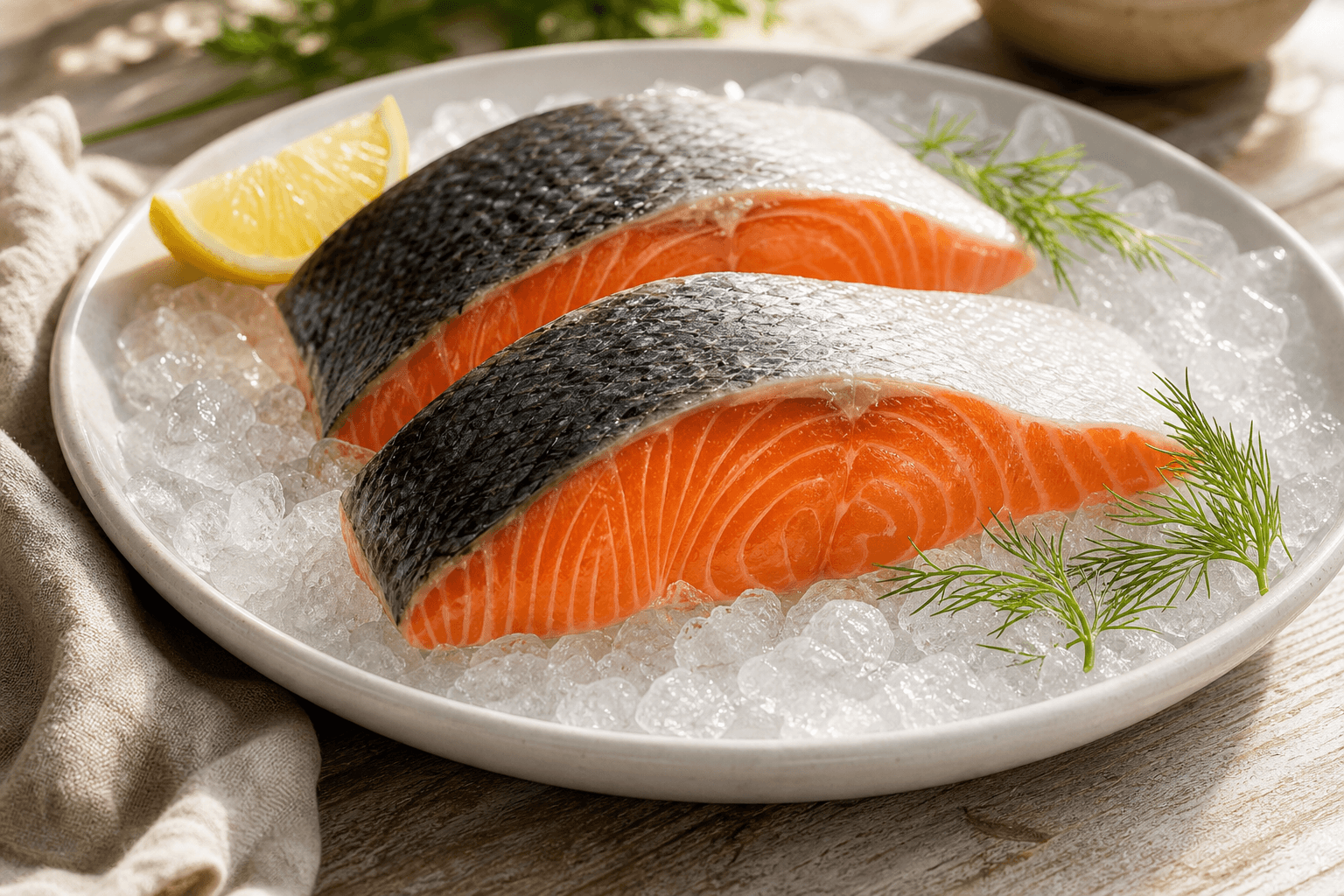
Raw salmon lasts 1 to 2 days in the refrigerator, according to USDA food safety guidance. That's true whether it's a fillet, a steak, or a whole side. Keep it at 40°F or colder and cook or freeze it within that window: bacteria can grow on salmon well before it looks or smells off.
That short window catches a lot of people off guard, especially when the package has a sell-by date that's still days away. The date on the label tells the store when to stop selling the fish, not how long it stays safe once it's in your fridge. The clock on that 1 to 2 day window starts the moment you get it home.
How long does raw salmon last in the fridge
The table below covers both raw and cooked salmon, stored at safe refrigerator and freezer temperatures. The numbers come from USDA Food Safety and Inspection Service (FSIS) guidance and the FoodKeeper storage chart.
| Form | Refrigerator (40°F or below) | Freezer (0°F or below) |
|---|---|---|
| Raw salmon (fillet, steak, or whole side) | 1 to 2 days | 2 to 3 months for best quality |
| Cooked salmon | 3 to 4 days | Up to 3 months for best quality |
Salmon kept continuously at 0°F stays safe to eat indefinitely once frozen. The 2 to 3 month window is about quality, not safety. After that, the texture and flavor start to fade, even though the fish is still fine to cook.
How to tell if raw salmon has gone bad
Some spoilage in raw salmon is impossible to see. Certain bacteria, including Listeria and Vibrio, can grow on it without changing how it smells, looks, or tastes. That's why the time rule matters more than a sniff test. If raw salmon has sat in the fridge longer than 1 to 2 days, toss it, even if it still looks fine.
These signs mean the salmon has gone bad and should not be eaten:
- A strong, sour, or ammonia-like smell, rather than the mild, ocean-like scent of fresh salmon
- Dull, grayish flesh instead of a bright pink-orange color
- A slimy or sticky film on the surface
- Flesh that stays dented when you press it instead of springing back
- Cloudy or milky liquid pooling in the package
If you spot any of these, don't taste it to check. Just toss it.
The full sensory checklist lives in how to tell if salmon is bad.
How to store raw salmon so it lasts
- Refrigerate raw salmon within 2 hours of buying it, or within 1 hour if the temperature around it is 90°F or higher, such as a hot car.
- Keep your fridge at 40°F or below, and store salmon on the coldest shelf, usually the back of the bottom shelf, rather than the door.
- Leave it in its original wrap if it's tightly sealed, or rewrap it in plastic and set it on a plate or in a shallow container so drips don't touch other food.
- Cook or freeze it within 1 to 2 days. If you're not sure you'll get to it in time, freeze it the day you buy it.
- Keep track of when you bought or froze it. An app that tracks food expiration dates, like Well Stockd, can log the date automatically and remind you before that 2-day window closes.
Can you freeze raw salmon?
Yes, and it freezes well. Wrap raw salmon tightly in freezer paper, a vacuum-sealed bag, or a heavy-duty freezer bag with the air pressed out, then freeze it at 0°F or below. For best quality, use it within 2 to 3 months. It's safe to eat after that if it's stayed frozen the whole time, but the texture gets softer and the flavor fades. Thaw it in the refrigerator, not on the counter. Once it's thawed, treat it like fresh salmon and cook it within 1 to 2 days.
When in doubt
USDA food safety guidance is blunt about this one: when in doubt, throw it out. Raw salmon can carry bacteria that don't change its smell or appearance at all, so if it's been in the fridge more than 1 to 2 days, or shows any of the spoilage signs above, let it go rather than risk it. The same short window applies to other raw proteins. If you're also storing poultry, our guide to how long raw chicken lasts in the fridge covers a similarly tight timeline.
Frequently asked questions
Is raw salmon still safe after the sell-by date has passed? The sell-by date is for the store, not your fridge clock. Once salmon is home, USDA guidance still limits it to 1 to 2 days in the refrigerator, whether the printed date is tomorrow or next week. When the two disagree, go with the shorter window.
Does vacuum-sealed raw salmon last longer in the fridge? No. Vacuum sealing slows air exposure and helps with freezer storage, but it doesn't stretch the 1 to 2 day refrigerator window. Low-oxygen packaging can favor certain bacteria if the fish isn't kept cold enough, so the same time rule still applies.
What about leftovers from a cooked salmon dinner? Cooked salmon holds up longer than raw, generally 3 to 4 days in the refrigerator. If you're juggling a fridge full of mixed leftovers, our post on how long cooked rice lasts in the fridge can help you plan meals around what needs to be eaten first.
For a wider look at storage times for proteins, produce, and pantry staples, see our full guide to how long food lasts.
Sources: USDA Food Safety and Inspection Service, How long can you store fish?; FoodSafety.gov, Cold Food Storage Chart; FoodSafety.gov, Safe Selection and Handling of Fish and Shellfish.
Quick planning number: see the Salmon fridge shelf-life reference.
Track it in Well Stockd
Add what you have, see what you can cook tonight, and get a reminder before anything goes off.
