How long is canned food good after the expiration date?
USDA says unopened canned food keeps best quality for 2 to 5 years if low acid, or 12 to 18 months if high acid, as long as the can is undamaged. This guide explains how to check a can for spoilage, store it properly, and know when to toss it.
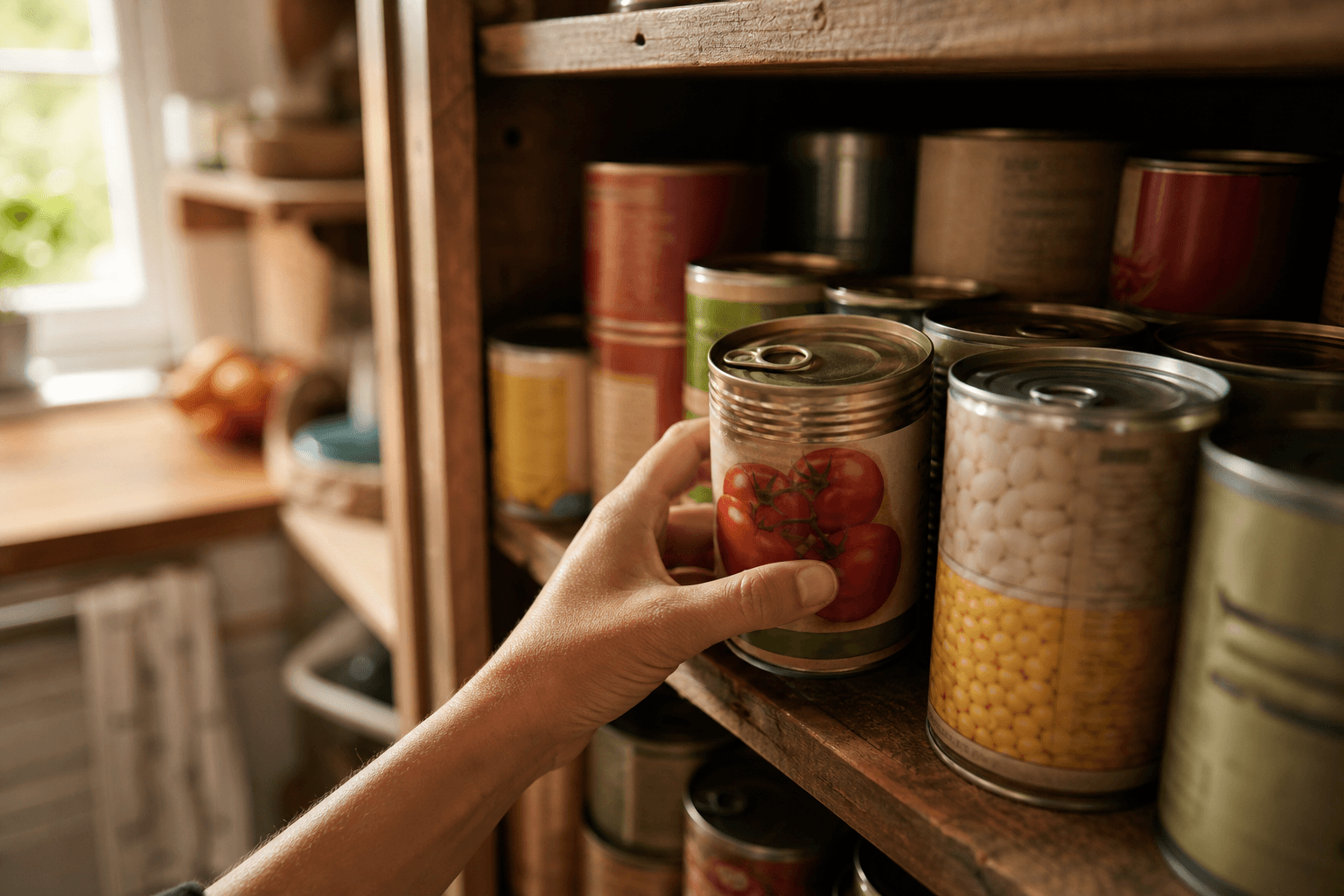
Most unopened canned food stays safe well past the date on the label. USDA guidance puts low acid canned goods, like meat, soup, and vegetables, at 2 to 5 years of best quality, and high acid canned goods, like tomatoes, fruit, and juice, at 12 to 18 months, as long as the can itself is undamaged.
That date on the lid, whether it says "best if used by," "sell by," or "use by," is about peak flavor and texture, not a safety cutoff. Except for infant formula, the federal government does not require these dates at all. USDA says plainly that you can safely use a shelf-stable product after the date passes, as long as it has been stored properly and shows no signs of spoilage. For a broader look at how long other foods hold up once you bring them home, see our guide to how long food lasts and, for another pantry staple, how long dry pasta lasts after opening.
How long does canned food last after the expiration date?
Acidity decides most of it. Low acid foods like meat and vegetables outlast high acid foods like tomatoes and citrus juice by a wide margin, because acid slowly reacts with the metal inside the can.
| Canned food type | Examples | Unopened, in the pantry | After opening, in the fridge |
|---|---|---|---|
| Low acid canned goods | Meat, poultry, stews, soup (except tomato), pasta, potatoes, corn, carrots, spinach, beans, beets, peas, pumpkin | 2 to 5 years | 3 to 4 days |
| High acid canned goods | Tomatoes, tomato and citrus juice, fruit, pickles, sauerkraut, vinegar based dressings | 12 to 18 months | 5 to 7 days |
| Canned ham, shelf stable | Small shelf-stable hams, not the "keep refrigerated" kind | 2 to 5 years | 3 to 4 days |
| Home canned foods | Vegetables, fruit, and other foods canned at home | 12 months | 3 to 4 days |
| Tuna or seafood in pouches | Tuna, salmon, and other seafood in flexible retort pouches | 18 months | 3 to 4 days |
Boil home canned food before you eat it: 10 minutes for high acid foods, 20 minutes for low acid foods like corn and spinach, since home processing does not always reach the same time and temperature guarantees as commercial canning. These pantry windows are also USDA's best quality estimates, not hard expiration points. A sealed, undamaged can that is a year or two past its window is often still fine to eat. It may just have lost some flavor, color, or nutrients along the way.
How to tell if canned food has gone bad
Check the can before you check the contents. Signs to watch for include:
- A bulging or swollen lid or can end
- Leaking, or liquid that spurts out when you open it
- A loud hiss or forceful release of pressure when opened (a soft hiss from the vacuum seal is normal)
- Rust you cannot rub off with a finger or paper towel, or any rust visible once the can is open
- A foul, sour, or otherwise off smell
- Foaming, or cloudy liquid where it should be clear
- A deep dent you can lay a finger into, especially along the top or side seam
Some spoilage, including the toxin that causes botulism, can happen without changing the smell, color, or appearance of the food at all. The same is true elsewhere in the kitchen. Raw chicken can look and smell perfectly normal well after it is no longer safe, which is exactly why the time guidelines above carry as much weight as your nose and eyes. If a can is intact, was stored properly, and falls within its shelf window, trust the numbers. If it shows any of the warning signs, do not taste it to check, not even a small amount.
How to store canned food so it lasts
- Keep cans in a cool, dry spot, ideally below 85 degrees Fahrenheit
- Skip the space above or beside the stove, under the sink, or a damp basement or garage: heat and humidity shorten a can's life fast
- Rotate stock so older cans get used first
- Wipe down any cans that get wet or damp so they don't develop rust
- Leave dented, rusted, bulging, or leaking cans on the store shelf rather than bringing them home
If keeping track of ages across a full pantry feels like guesswork, an app that tracks food expiration dates for you can log what you bought and when, so nothing quietly ages out behind the soup cans.
Can you freeze canned food?
Don't freeze food while it's still sealed in the can. As the food freezes it expands, and that can crack the seam or break the seal, letting bacteria in. If you want to freeze leftovers from a can you've already opened, move them into a freezer safe container first, the same way you'd handle leftover cooked rice or other cooked food headed for the freezer.
If a can freezes by accident, say it was left in a cold car or garage, check it carefully before using it. Throw out any can that is swollen. If it isn't swollen but you know it thawed and then refroze, throw it out anyway. A can that is still frozen solid can be thawed safely in the refrigerator. Once thawed, if it looks and smells normal, cook the contents right away by boiling for 10 to 20 minutes before eating.
When in doubt, throw it out
This is USDA's own phrase for canned goods. Botulism is rare in commercially canned food, but the toxin is dangerous enough that no meal is worth the risk. Never taste a suspect can to test it. If you notice a bulging can, a badly dented seam, a foul odor, or liquid that spurts out when you open it, double bag it, put it straight in the trash, and wash anything it touched, including your hands.
Frequently asked questions
Can you eat canned food a year past the expiration date?
In most cases, yes. The date on the can is about peak quality, not a safety deadline, and low acid canned foods like vegetables, soup, and meat typically stay good for 2 to 5 years in the pantry. High acid foods like tomatoes and fruit hold up for about 12 to 18 months. Just check the can for damage first.
Does canned food really last forever?
Not quite, even though commercial canning makes the contents sterile inside a sealed container. Over the years the metal slowly corrodes from the inside, especially with high acid foods, which eventually affects taste, texture, and nutrient content. Rust and dents can also weaken the seal over time.
Is it safe to eat food from a dented can?
A small, shallow dent is usually fine. Skip anything with a deep dent, one you could lay a finger into, particularly along the top or side seam, since a dent there can break the seal and let bacteria get inside.
Sources: USDA Food Safety and Inspection Service, Shelf-Stable Food Safety; USDA Food Safety and Inspection Service, Food Product Dating; Ask USDA, How long can you keep canned goods.
Track it in Well Stockd
Add what you have, see what you can cook tonight, and get a reminder before anything goes off.
