How to Tell if a Cantaloupe Is Ripe: Stem, Scent, Give
How to tell if a cantaloupe is ripe: check the stem scar, sniff the stem end, press the blossom end. Plus why it won't sweeten on the counter and how to store it.
A ripe cantaloupe smells sweet and musky at the stem end, the blossom end (opposite the stem) gives slightly under your thumb, and the stem scar is smooth with no piece of vine attached. The skin under the netting also shifts from green toward yellow as it ripens.
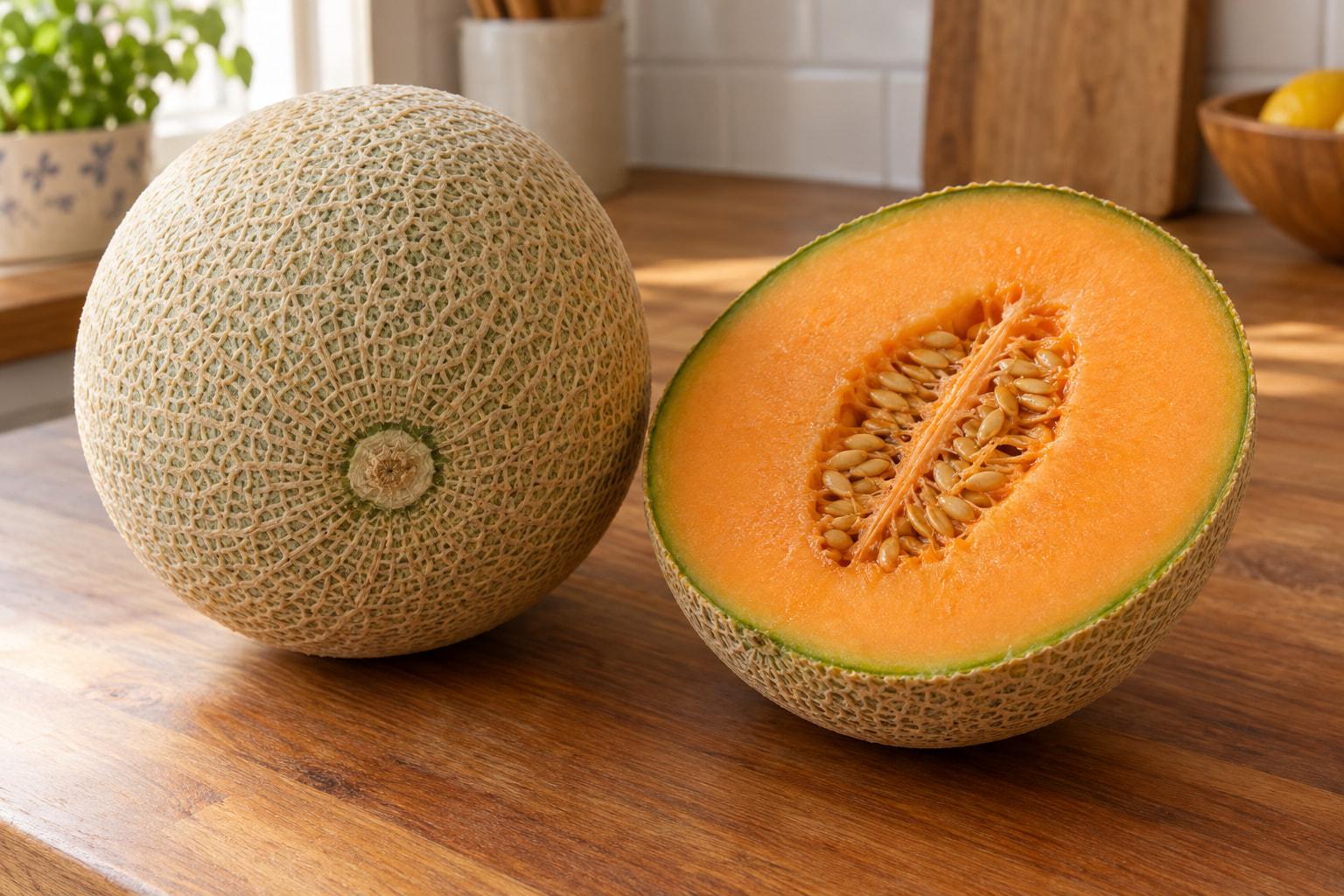
Those five checks are how to tell if a cantaloupe is ripe at the store. Below: what "full slip" means, why a cantaloupe softens but doesn't sweeten after it's picked, and how long a ripe one lasts.
How to tell if a cantaloupe is ripe: five checks
Pull these together from extension-service guidance rather than relying on any single one.
| Check | Ripe | Not ready |
|---|---|---|
| Stem scar | Smooth, slightly sunken, well rounded, no vine attached | Rough, with a piece of stem still on |
| Smell | Sweet, musky, strongest at the stem end | Little or no smell |
| Blossom end | Gives slightly when pressed | Hard |
| Skin | Yellowing or light yellow under the netting | Solid green or gray |
| Netting | Raised and well rounded | Poorly formed |
Sources: Ohio State University Extension (stem end smooth and slightly sunken, blossom end gives, sweet musky aroma), Kansas State University (yellowing skin, musky fragrance, soft opposite end), and UC Davis (raised, well-rounded netting; skin goes from deep green to light yellow at full ripeness).
What does "full slip" on a cantaloupe mean?
On the vine, a ripe cantaloupe separates from its stem easily and leaves a clean scar. University of Illinois Extension calls this full slip. That's why the smooth scar is your best clue in a store. Michigan State University Extension says a melon with pieces of vine still attached was probably harvested too early and won't be as sweet. UC Davis likewise treats a stem end with no stem attachment as the mark of a properly mature melon, and an attached stem as a sign of premature harvest.
Will a cantaloupe get sweeter on the counter?
No, though it will get softer. UC Davis says cantaloupes ripen after harvest but do not increase in sugar content, and Illinois Extension explains that sugar doesn't rise after picking because the leaves are no longer there to feed the fruit. A firm cantaloupe left out for a few days may soften, but it won't taste any sweeter. Ohio State suggests holding a whole melon a day or two at room temperature until it ripens.
How long does a ripe cantaloupe last in the fridge?
Kansas State says a cantaloupe can be stored in a refrigerator for two weeks. The University of Georgia gives a range of 5 to 14 days at 32 to 36°F, so plan on the short end.
Wash the rind before you cut it. The University of Florida, adapting FDA guidance, says to scrub the outside under cool tap water, because melons grow on the ground and have caused illness outbreaks. Store cut pieces in a clean container at 41°F or below. USDA's FoodKeeper data gives cut melon 2 to 4 days in the fridge, while the Florida sheet allows up to seven, so use the shorter figure. USDA's general rule is to refrigerate within two hours, one hour above 90°F. When in doubt, throw it out. For more, see how long cut fruit lasts in the fridge and can you freeze cantaloupe.
Keep track of melons before they turn
Add what you buy to Well Stockd and fresh fridge and pantry food gets an estimated expiration date based on typical shelf life, so the food closest to going off sorts to the top. Try it free. If you're comparing options, see our guide to apps that track expiration dates. Our shelf-life guide covers other fresh foods.
Related guides
- How to tell if a watermelon is good
- How to tell if honeydew is ripe
- How to tell if a pineapple is ripe
FAQ
Is a cantaloupe with green skin ripe?
Often not. UC Davis describes the skin color as moving from gray to dull green when immature, deep uniform green at maturity, and light yellow at full ripeness, though some cultivars keep a greenish cast. Check the smell and the stem scar too.
Should a ripe cantaloupe be soft or firm?
Mostly firm, with a slight give at the blossom end. UC Davis lists a firm melon with no bruising as a quality sign.
Why does my cantaloupe have no smell?
A melon with little aroma is probably underripe or was picked early. Ohio State names a sweet, musky aroma as the sign of a ripe melon.