How to turn leftovers into a completely new meal
The fastest way to turn leftovers into a new meal is to break them into parts, rebuild them in a different format, and finish with one fresh element. The three-step method below covers exactly how, along with a leftover pairing chart and USDA-backed reheating times.
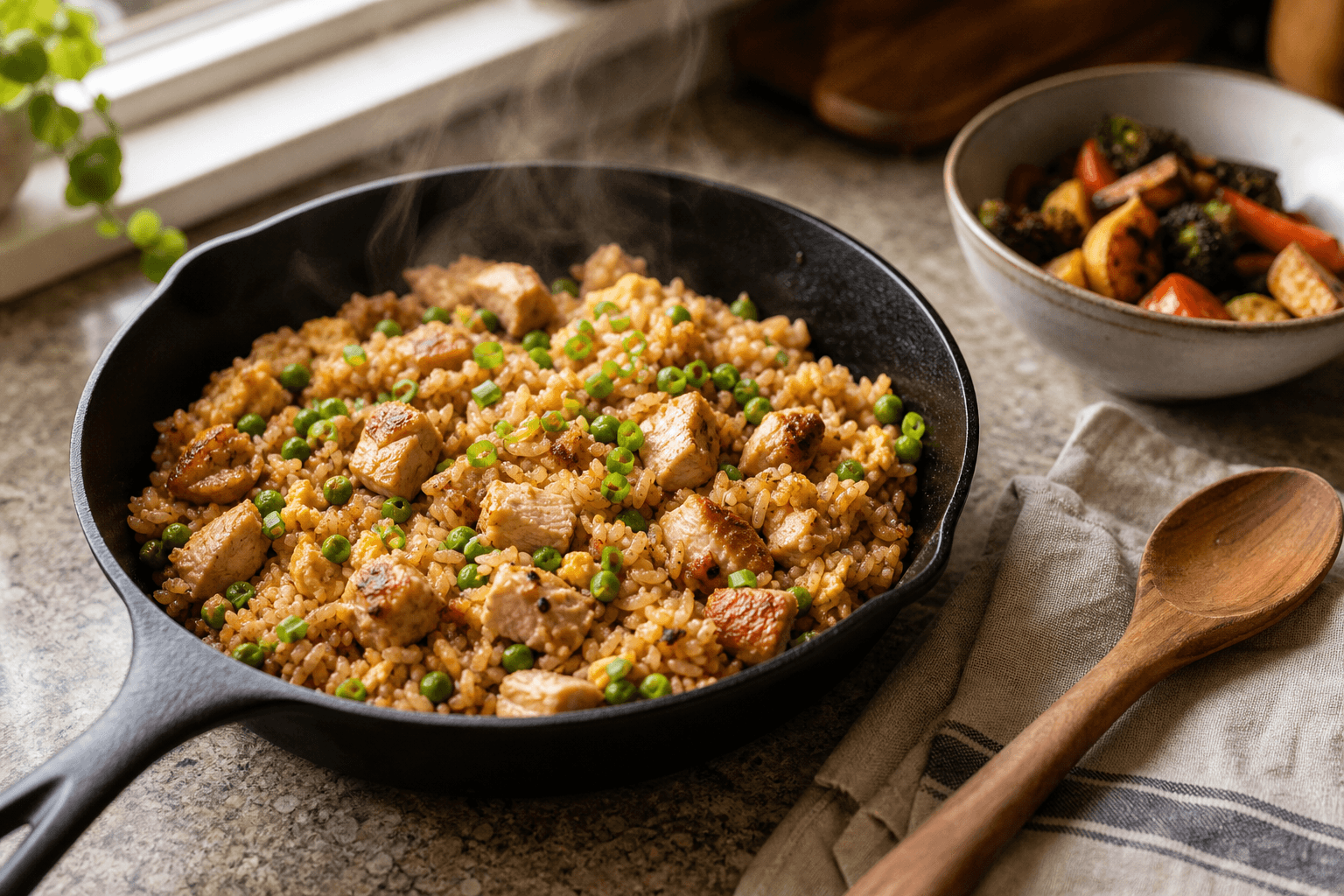
The fastest way to turn leftovers into a completely new meal is to break last night's dinner into its parts (protein, starch, vegetable) and rebuild them in a different format, like fried rice, soup, hash, or a grain bowl, then finish with one fresh element, such as a sauce, herb, or squeeze of citrus, that resets the flavor.
Why do leftovers taste like a repeat instead of a new dish?
Leftovers taste tired for a simple reason: you are eating the same flavor and texture combination twice in a row, usually reheated in the same container, on the same plate, in the same shape. Nothing is wrong with the food. Your brain just reads it as "the same meal" a second time.
The fix is a new format, not new ingredients. Roast chicken eaten cold off the bone reads as leftovers. Shred that same chicken and fold it into a tortilla with melted cheese and salsa, and it reads as a taco, even though the chicken itself never changed, only the format did. This is the same instinct behind figuring out what to cook with what you already have instead of shopping for a brand-new recipe every night.
How do you turn leftovers into a completely new meal?
Use this order and you will rarely eat the exact same plate twice in one week.
- Break it into parts. Separate what you have into protein, starch, and vegetable, even just mentally. A half container of chili is really ground beef, beans, and tomato. A half pan of roasted vegetables is just vegetables waiting for a starch and a protein to join them.
- Pick a new format. Choose a vehicle that is different from how the food was served the first time. If it was a plated dinner, remix it into a soup, a stuffed vegetable, a fried rice, a frittata, a sandwich, a hash, or a grain bowl.
- Add one fresh element. This is the step people skip, and it is the one that makes the dish taste new. A spoon of yogurt, a handful of chopped herbs, a squeeze of lime, a fried egg on top, or a drizzle of hot sauce is often enough to convince your palate that you are eating something different.
Small amounts of several leftovers combine especially well this way. Two spoonfuls of rice, a few bites of chicken, and the last of a bag of frozen peas is not enough for a meal on its own. Throw them in a hot pan with soy sauce, garlic, and a fried egg, and it becomes fried rice. A fridge recipe finder is useful here too, since it can suggest a format for odd small amounts that would not occur to you standing at the stove.
What can specific leftovers become?
| Starting leftover | New format | What resets the flavor |
|---|---|---|
| Roast chicken | Chicken tortilla soup or tacos | Lime, cilantro, hot sauce |
| Plain rice | Fried rice | Soy sauce, sesame oil, fried egg |
| Mashed potatoes | Potato pancakes or shepherd's pie topping | A crisp fried edge, fresh chives |
| Taco meat or chili | Stuffed peppers or loaded nachos | Fresh pico de gallo, sour cream |
| Roasted vegetables | Frittata or grain bowl | Feta, a fried egg, tahini dressing |
| Plain pasta | Baked pasta or cold pasta salad | Fresh mozzarella, basil, lemon zest |
| Steak or pork roast | Stir-fry or open-faced sandwich | Ginger, garlic, sharp mustard |
| Cooked beans | Soup or a bean and grain bowl | Smoked paprika, fresh herbs |
| Bread ends | Panzanella salad or bread pudding | Vinegar dressing or warm spices |
Notice the pattern: almost nothing on the right side is a totally new ingredient. It is the same food in a different format, with one new flavor accent. Meatloaf is a good example, see ways to remake leftover meatloaf.
How long are leftovers safe to remix, and how do you reheat them?
This part matters more than the recipe. The USDA's Food Safety and Inspection Service says cooked leftovers are safe in the refrigerator for 3 to 4 days, and safe in the freezer for 3 to 4 months, though flavor and texture start to fade the longer they sit frozen. Cool leftovers quickly by splitting large batches into shallow containers, and get them into the fridge within 2 hours of cooking, or 1 hour if the room is above 90 degrees Fahrenheit.
When you reheat leftovers, whether you are eating them as-is or folding them into a new dish, bring them to 165 degrees Fahrenheit measured with a food thermometer. Soups, sauces, and gravies should come to a full boil. This is also a natural checkpoint for a remix: if the component you want to use has been in the fridge past day 4, or you genuinely cannot remember which day it went in, it belongs in the compost, not the new dish. If the new dish involves real cooking, such as a soup, stir-fry, or baked pasta, you can add cold leftovers directly and let the cooking process carry them to a safe temperature. If you are only assembling something cold, like a sandwich or a salad, reheat the components first and let them cool again before combining.
Where does a fridge inventory app fit in?
The hardest part of remixing leftovers usually isn't the cooking, it's remembering what's actually in the fridge and how many days it has been sitting there before it turns into a science experiment. If you log leftovers into Well Stockd as you put them away, the app tracks the days-old count for you and can surface recipes built around exactly what is sitting in your containers, similar to how you would want to tell it what's in your fridge and get a recipe back. The half cup of rice and the last two bites of roast chicken get planned into dinner instead of forgotten behind the milk.
Frequently asked questions
Can I combine leftovers from more than one meal into one new dish? Yes, and this is often when the remix method works best. Small amounts of chicken, rice, and vegetables from three separate nights combine into a single stir-fry or grain bowl far more easily than any one of them makes a full meal on its own. Taco meat works well here, see leftover taco meat ideas.
Do I need to reheat leftovers before I remix them into a new dish? Only if the final dish is served cold. If you are cooking the remix, such as simmering a soup or baking a pasta dish, cold leftovers can go in directly and heat through as part of that process.
How many times can I reheat the same batch of leftovers? Food safety guidance focuses on total time spent in the fridge, not a fixed number of reheats. Take out only the portion you plan to eat, keep the rest cold, and stay inside the 3 to 4 day refrigerator window.
Sources: Leftovers and Food Safety, USDA Food Safety and Inspection Service, How do I reheat leftovers safely?, USDA
Track it in Well Stockd
Add what you have, see what you can cook tonight, and get a reminder before anything goes off.
