What Goes on Each Shelf of the Refrigerator
A shelf-by-shelf breakdown of where every food belongs in the fridge, from the coldest bottom shelf for raw meat to the warmest door shelves for condiments, plus a printable cheat sheet.
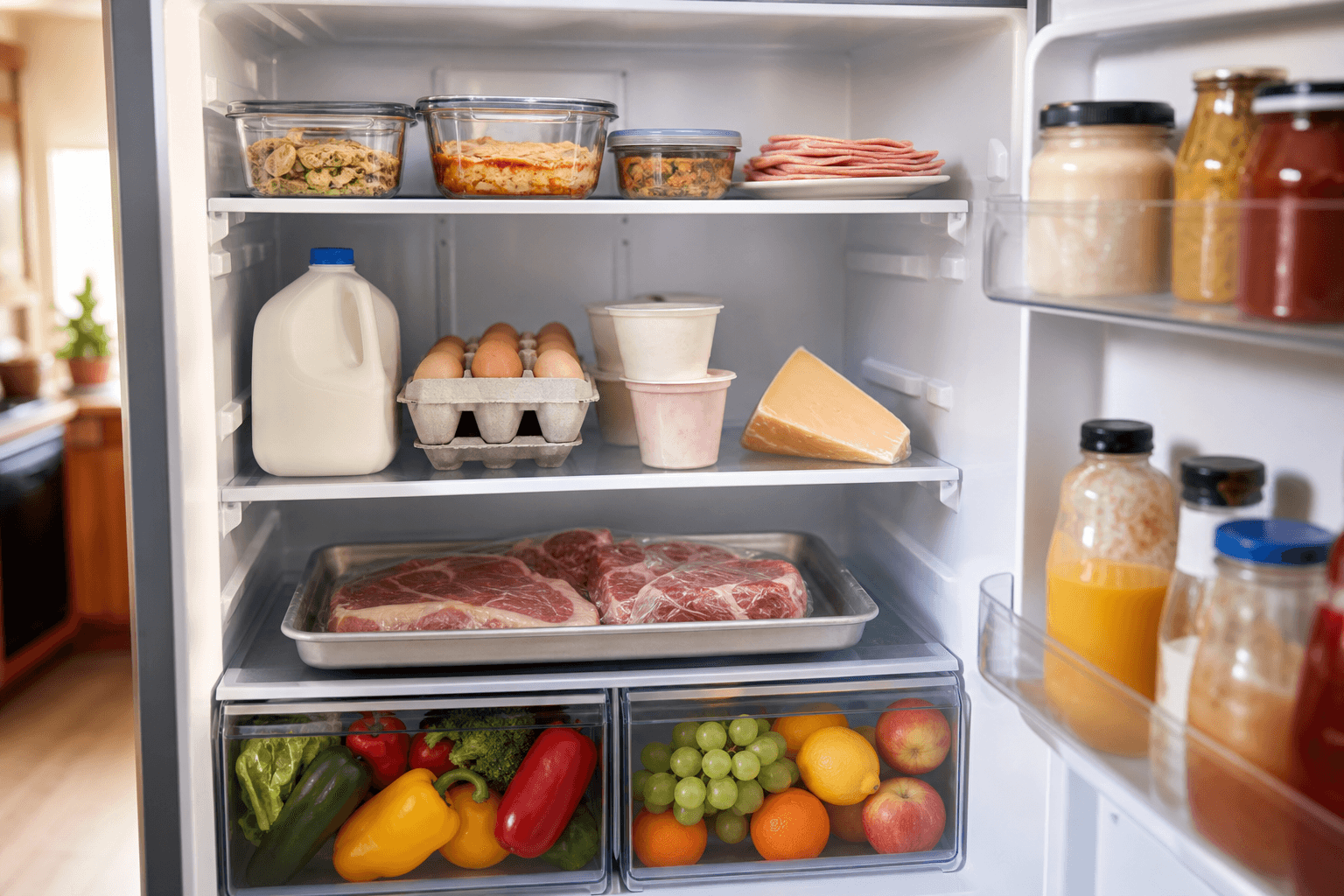
Ready-to-eat food and leftovers go on the top shelf, dairy and eggs go on a middle shelf, raw meat and seafood go on the bottom shelf in a sealed container, and produce goes in the crisper drawers. The door, the warmest spot, is for condiments only.
That order isn't random. Every refrigerator has its own internal weather: colder near the back and bottom, warmer near the front and the door. Lining up your food with those zones is what keeps it safe and fresh longer. Once you see the fridge as a set of zones instead of one big cold box, shelf placement stops being a guessing game.
Why does shelf placement matter?
Cold air sinks, so the bottom of your fridge runs coldest, often 34 to 36°F, while the door can swing close to 40°F every time it opens. The whole appliance should stay at 40°F or below, but the difference between shelves can be 6 to 10 degrees depending on your model. That gap matters because raw meat, poultry, and seafood are the foods most likely to carry bacteria, so they belong in the coldest zone, sealed up so any drips can't reach anything below. Food that won't be cooked again, like leftovers or deli meat, belongs above raw meat so nothing can drip onto it. This is the same logic that keeps a good kitchen inventory working: put things where they're safest and easiest to check on, not just wherever there's space.
What goes on the top shelf?
The top shelf is one of the warmer spots but also the most visible one, so it's the right home for food you'll eat as is. That includes leftovers in sealed containers, deli meat, cooked dishes waiting to be reheated, and anything ready to grab for lunch. Keeping this shelf visible does double duty: you see the leftovers before they turn into a science experiment, and you keep them safely above any raw meat.
What goes on the middle shelves?
The middle shelves hold a steady, moderate cold that suits dairy well. Milk, yogurt, cheese, and butter do best here, away from the door where temperature swings can shorten their shelf life. Eggs belong on a middle shelf too, still in their original carton, not in the little egg-shaped bins built into many fridge doors. The carton protects the eggs from absorbing odors, and a shelf keeps them at a steadier temperature than the door ever will.
What goes on the bottom shelf?
The bottom shelf is the coldest part of the fridge and the correct place for raw meat, poultry, and seafood. Keep each one wrapped tightly or set in a sealed container or on a rimmed tray, so juices can't leak onto anything stored below or beside it. If you're stacking more than one raw protein, put poultry on the very bottom, since it needs the highest internal cooking temperature and carries the most risk if its juices touch other food.
What goes in the crisper drawers?
Crisper drawers are built to manage humidity, not just cold, which is why fruits and vegetables belong there instead of on an open shelf. If your fridge has two drawers with separate humidity settings, use the higher humidity one for leafy greens and other vegetables, and the lower humidity one for fruit. Fruit tends to release ethylene gas as it ripens, which can make nearby vegetables spoil faster, so keeping the two apart helps both last longer. This is also the zone worth checking most often if you're trying to keep track of food in your fridge, since produce is usually the first thing to go bad unnoticed.
What goes in the door?
The door is the warmest, least stable part of the whole refrigerator, so it should only hold food that can handle a little temperature swing. Condiments, salad dressing, jam, pickles, and bottled drinks are all good fits. Milk and eggs are common door residents in fridges built with a dairy shelf or egg bin, but they keep better on an interior shelf, since the door sees the biggest swings every time it opens.
A shelf-by-shelf cheat sheet
| Shelf or zone | Typical temperature | What goes there | Why |
|---|---|---|---|
| Top shelf | About 37 to 40°F | Leftovers, deli meat, ready-to-eat food, drinks | Warmer, visible spot for food you won't cook further |
| Middle shelves | About 36 to 38°F | Milk, eggs in the carton, yogurt, cheese, butter | Steady cold, away from any raw meat drips above |
| Bottom shelf | About 34 to 36°F, the coldest spot | Raw meat, poultry, seafood, sealed or on a tray | Coldest air sinks here, and drips stay below everything else |
| Crisper drawers | Slightly warmer, humidity controlled | Fruits and vegetables, kept separate | Higher humidity keeps greens crisp, lower humidity keeps fruit firm |
| Door shelves | Up to 40°F, swings with every opening | Condiments, dressing, jam, juice | Least stable zone, fine for food that doesn't spoil easily |
Common shelf-organizing mistakes
A few habits undo all of this without you noticing. Storing eggs or milk in the door bins is the most common one, since both do better on a steady interior shelf. Setting raw meat on a shelf above produce or ready-to-eat food is another, even when it's wrapped, since a small leak can go unnoticed for days. Packing shelves so full that air can't circulate is a quieter problem, since it creates warm pockets even when the thermostat reads 37°F. And skipping an appliance thermometer means trusting a dial that's often off by several degrees from the real temperature inside.
Keep the system going after you sort the shelves
Sorting your fridge by zone solves the safety half of the problem. The other half is remembering what's in there and when it needs to be used, which is easy to lose track of once the produce drawer fills back up. That's the gap a pantry inventory app like Well Stockd is built to close: log what goes into each zone, and it flags food before it expires and works it into recipe suggestions so nothing quietly goes bad on a shelf you just organized. If you're setting up a fuller system, our guide to keeping track of pantry inventory covers the shelf-stable side of the kitchen the same way this one covers the fridge.
Frequently asked questions
Should eggs go in the door? No. Eggs keep best on an interior shelf in their original carton, not in a door bin, since the door swings closer to room temperature every time it opens.
Where should milk go? On a middle or top shelf, toward the back rather than the front. The back of a shelf runs a few degrees colder than the front, and milk lasts longer at a steady temperature than it does in the door.
How cold should my fridge be? 40°F or below for the fridge and 0°F or below for the freezer. Check with an inexpensive appliance thermometer placed near the center, since the built-in dial doesn't always match the real temperature inside.
Sources: FSIS, USDA, refrigeration and food safety, FDA refrigerator and freezer storage chart, StateFoodSafety, fridge storage for food safety