How to Know if a Mango Is Bad: Signs to Toss It
How to know if a mango is bad: mold, black lesions, brown or jelly-like flesh and off smells, plus which marks are normal. Based on UC Davis, the National Mango Board and USDA.
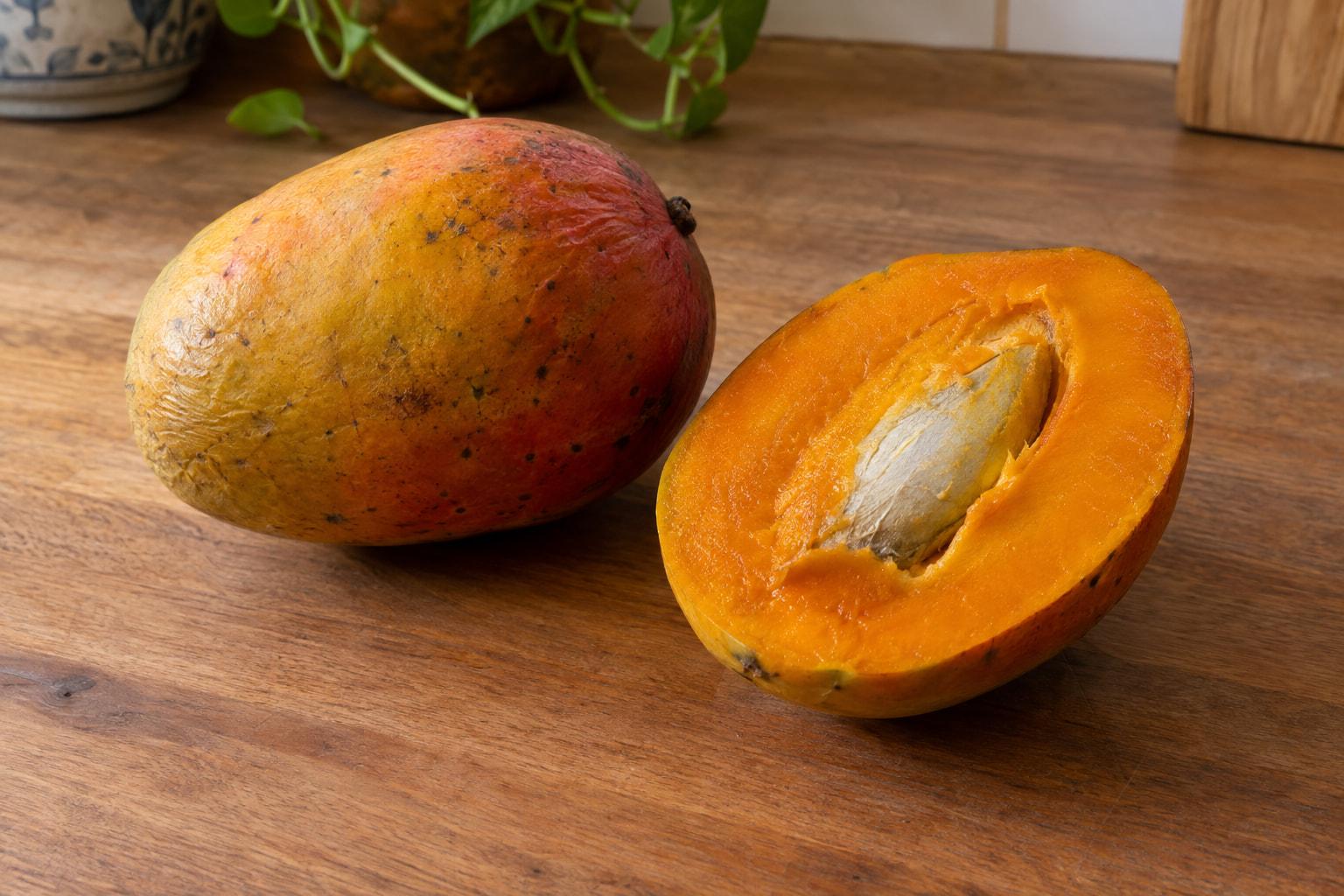
A bad mango has mold, a spreading lesion, flesh that is brown or mushy throughout, or an off smell. Wrinkled skin and a few freckles can be normal. If you see mold or smell anything off, throw the whole mango out.
That's how to know if a mango is bad once you've brought one home. If you're still deciding whether yours is ready to eat, our guide to how to tell if a mango is ripe covers picking and ripening.
How to know if a mango is bad: signs and what they mean
| Sign | What it likely is | Verdict |
|---|---|---|
| Fuzzy mold anywhere | Mold | Throw it out |
| Dark lesion that spreads, especially around the stem | Anthracnose or stem-end rot | Throw it out if it's soft or spreading |
| Sour, fermented or otherwise unusual smell | Overripe or spoiling | Throw it out |
| Flesh brown or mushy throughout, or spongy at the tip | Over-ripeness or breakdown | Throw it out |
| Jelly-like flesh around the seed | A ripening disorder, not mold | Judge by smell and look; toss if unsure |
| Dark smudges near the stem | Sap burn, skin only | Peel and check the flesh |
| Wrinkled skin, freckles, bumps | Often normal | Check feel and smell |
UC Davis's mango fact sheet describes these: anthracnose lesions that can stay on the skin or invade and darken the flesh, a black circular lesion around the stem from stem-end rot, soft-nose (softened, spongy, over-ripe-looking flesh at the tip), jelly-seed (flesh around the seed breaking down into a jelly-like mass), and sap burn (dark-brown to black skin discoloration from sap from the cut stem). The mold row applies USDA's soft-fruit rule by analogy (more on that below). The smell row comes from USDA's power-outage guidance, which says that if any food has an unusual odor, color or texture, throw it out.
Which marks on a mango are normal?
More than you'd expect. The National Mango Board says that for Honey (Ataulfo) mangos, light wrinkling is a good indicator of ripeness, and that green hues, freckles and the occasional bump are not flaws. A mango can also stay green when ripe. So don't judge by looks alone: feel, smell and any mold decide it. A bad mango and a ripe mango answer different questions, and our ripeness page explains the other one.
Can you cut off the bad part of a mango?
No, not if there's mold. USDA's mold guidance lists cucumbers, peaches and tomatoes as soft produce to discard when moldy, because soft, high-moisture food can be contaminated below the surface. USDA doesn't name mango. A ripe mango is the same kind of juicy fruit, so we apply that rule here by analogy. USDA also says mold spreads quickly in fruits and vegetables, so check what the mango touched. When in doubt, throw it out.
A skin-only issue like sap burn is different: UC Davis describes it as skin discoloration. Peel the mango and check the flesh for the signs above.
Can chilling damage make a mango look bad?
Yes. UC Davis lists chilling injury symptoms as uneven ripening, poor color and flavor, surface pitting, grayish scald-like skin and increased susceptibility to decay. The National Mango Board says never store whole mangos below 50°F. If a refrigerated mango has gray patches, check carefully for decay before eating.
How long can mango sit out once cut?
USDA's general rule is two hours, or one hour above 90°F, before perishable food goes back in the fridge. Once refrigerated, USDA's FoodKeeper data gives cut fruit in general 4 days. For more, see how long cut fruit lasts in the fridge.
Catch it before it turns
Add what you buy to Well Stockd and fresh fridge and pantry food gets an estimated expiration date based on typical shelf life, so the food closest to going off sorts to the top. Try it free. If you're comparing options, see our guide to apps that track expiration dates. For other produce, our shelf-life guide is the place to start.
Related guides
- How to tell if a mango is ripe
- How to tell if a watermelon is bad
- Are wilted vegetables still safe to eat?
FAQ
Are black spots on a mango bad?
Not always. Small freckles are normal, per the National Mango Board. A dark lesion that's spreading or soft is more likely anthracnose or stem-end rot, which UC Davis says can darken the flesh.
Is a wrinkled mango bad?
Not necessarily. Wrinkling is a sign of ripeness on a Honey (Ataulfo) mango. Look for mold, an off smell and mushy flesh before you decide.
What does a bad mango smell like?
No source we found describes one smell for a spoiled mango, so USDA's broader power-outage rule applies: if food has an unusual odor, throw it out. A ripe mango smells fruity, especially at the stem.