Are wilted vegetables still safe to eat?
Wilted vegetables are almost always still safe to eat. USDA grading standards treat wilting as a quality issue, not a safety hazard. Here's how to tell real spoilage from ordinary limpness, plus how long common vegetables last in the fridge.
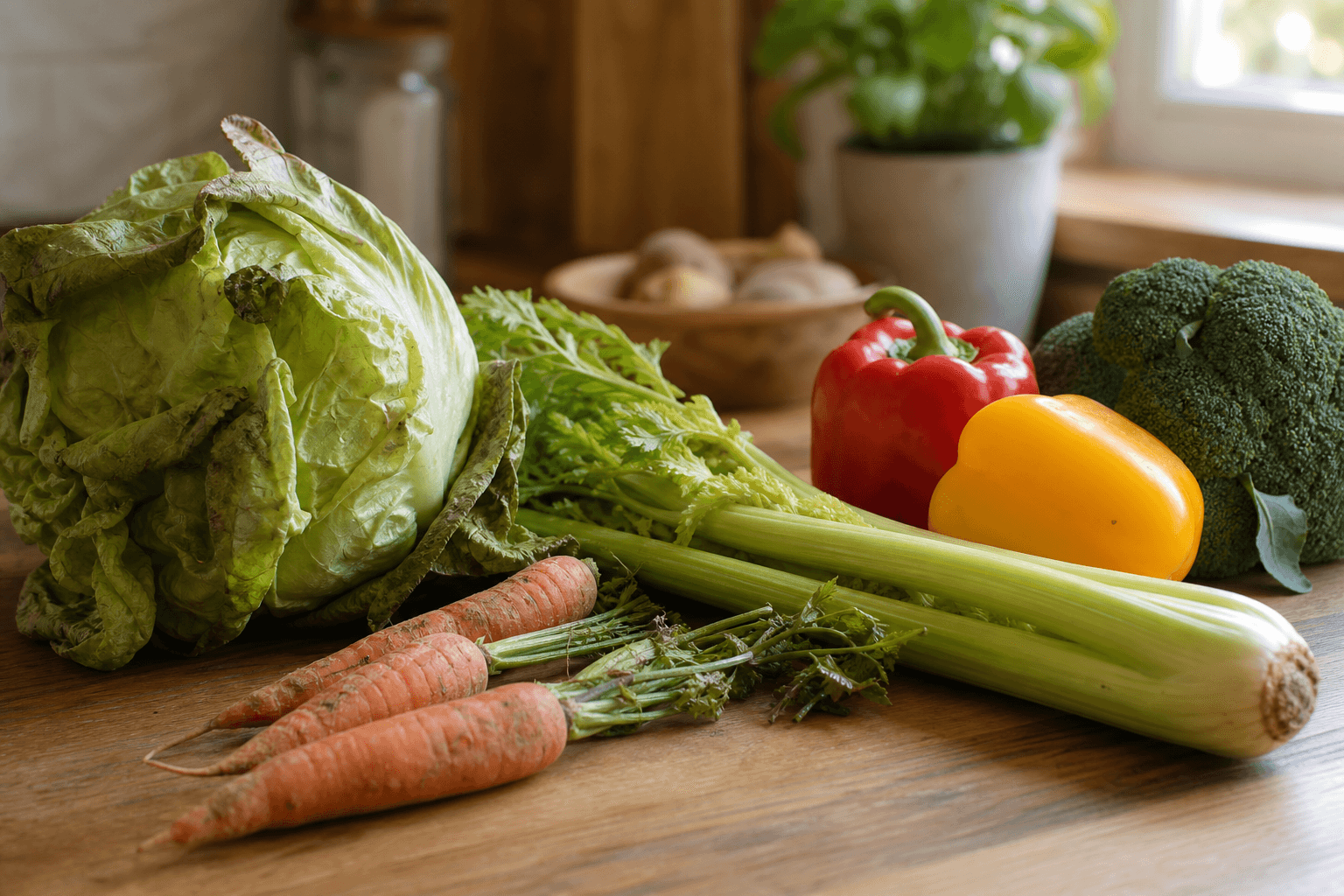
Yes, wilted vegetables are almost always still safe to eat. USDA grading standards call wilting a quality defect, not a safety hazard, and USDA storage data shows most fresh vegetables hold up for 3 days to 3 weeks in the fridge. Sliminess, mold, and a sour smell are the real warning signs. Limpness by itself is not one of them.
How long do fresh vegetables last before wilting turns risky?
Vegetables start losing water the moment they are picked, and wilting is just that moisture loss showing up as limpness. It does not automatically mean anything has spoiled. The table below shows how long common vegetables typically hold up in a refrigerator at 40°F or below, based on USDA's FoodKeeper database. Once you are past that window, treat wilting as a stronger cue to check the vegetable closely before you cook or eat it.
| Vegetable | Refrigerator life while fresh | Freezes well? |
|---|---|---|
| Lettuce, iceberg or romaine | 1 to 2 weeks | No |
| Leaf lettuce and spinach | 3 to 7 days | No, not raw |
| Broccoli | 3 to 5 days | Yes, 10 to 12 months |
| Cauliflower | 3 to 5 days | Yes, 10 to 12 months |
| Cabbage | 1 to 2 weeks | Yes, 10 to 12 months |
| Carrots | 2 to 3 weeks | Yes, 10 to 12 months |
| Celery | 1 to 2 weeks | Yes, 10 to 12 months |
| Cucumbers | 4 to 6 days | No |
| Bell peppers | 4 to 14 days | Yes, 6 to 8 months |
| Zucchini and summer squash | 4 to 5 days | Yes, 10 to 12 months |
| Mushrooms | 3 to 7 days | Yes, 10 to 12 months |
| Tomatoes | 2 to 7 days once ripe (best kept at room temperature until then) | About 2 months |
These are quality guidelines, not hard cutoffs. Growing conditions, how the vegetable was handled before it reached your fridge, and your fridge's actual temperature all shift the numbers a little in either direction.
How can you tell if a wilted vegetable has gone bad?
Wilting alone is a texture problem. What you are checking for is spoilage, and that shows up differently:
- A slimy or wet film on the surface, especially on leafy greens
- A sour, ammonia-like, or otherwise off smell
- Mushy, oozing, or dark, soft spots
- Visible mold, especially fuzzy white, green, or black patches
- Any change in color that looks like decay rather than fading
Mold is worth a specific rule. For firm, dense vegetables like carrots, cabbage, and bell peppers, you can cut away at least 1 inch around and below a small moldy spot and safely eat the rest. Soft, high-moisture vegetables like cucumbers, tomatoes, and leafy greens are a different story: mold can send threads through the flesh that you cannot see, so if you spot any, the whole item goes in the trash.
Some spoilage bacteria cannot be seen, smelled, or tasted at all. That is why the storage-time table above matters as much as your eyes and nose. This is different from something like raw chicken, where the danger is almost entirely invisible bacteria and looks tell you very little; our guide to how long raw chicken lasts in the fridge covers that case. Cooked rice carries a similar risk, since the toxin behind most rice-related food poisoning does not change how the rice looks; see how long cooked rice lasts in the fridge. Vegetables are more forgiving because wilting, sliminess, and mold usually give you an honest warning before food safety becomes a real concern.
How should you store vegetables so they last longer?
- Use your crisper drawer's humidity settings: high humidity for leafy greens, broccoli, and carrots; low humidity for produce that gives off ethylene gas, like tomatoes.
- Keep unwashed produce dry until you are ready to use it. Washing before storage adds moisture that speeds up spoilage; wash just before eating instead.
- Wrap leafy greens loosely in a paper towel inside a bag to soak up extra moisture without drying them out.
- Store carrots and celery standing in a little water to help them stay crisp longer.
- Buy vegetables in the amounts you will use inside their typical window rather than stocking up and hoping.
An app that tracks what is already in your fridge, like Well Stockd, can flag vegetables before they slip past their window so you use them while they are still fresh.
Can you freeze wilted vegetables?
Yes, as long as the vegetable is simply wilted and not slimy, moldy, or foul-smelling. Freezing will not bring back crispness, so it is best for vegetables you plan to cook rather than eat raw. Blanch vegetables briefly in boiling water before freezing; it helps them hold color, texture, and quality in the freezer for the times listed in the table above. A few vegetables, including lettuce and cucumbers, do not freeze well even after blanching, since they turn watery and limp on thawing. That is a quality issue, not a safety one.
When in doubt, what does the USDA say?
USDA guidance is blunt on this point: throw out any food you suspect is spoiled, and never taste it to check. That applies here too. If a vegetable smells off, feels slimy, or you genuinely cannot tell whether it has crossed the line, do not risk a bite to find out. When in doubt, throw it out.
Cut produce spoils on a faster clock — see how long cut fruit lasts in the fridge.
Frequently asked questions
Is it safe to eat wilted lettuce?
Yes, in most cases. A limp leaf that is not slimy, discolored, or foul-smelling is still safe to eat, just past its crispest. If more than a few leaves are slimy or the whole head smells off, toss the bunch.
Can you make wilted vegetables crisp again?
Often, for a little while. Trimming the stem ends and soaking wilted celery, carrots, or leafy greens in ice water for 15 to 30 minutes can pull water back into the cells and restore some crunch. This fixes texture, not safety, so it will not undo real spoilage.
Does wilting mean bacteria are growing?
Not directly. Wilting is water loss, not microbial growth. But it tends to show up as a vegetable nears the end of its typical fridge life, right when spoilage bacteria have had the most time to build up. Treat wilting as a reason to look closely, not as proof either way.
This is one guide in our series on how long food really lasts.
Sources: USDA FoodKeeper database; USDA Agricultural Marketing Service grade standards for fresh produce; USDA/FSIS guidance on molds on food and foodborne illness prevention.