Soup Left Out Overnight: Is It Safe to Eat?
Soup left out overnight is not safe to eat. The USDA two-hour rule, why a lid and a second boil do not help, and how to cool a pot of soup properly.
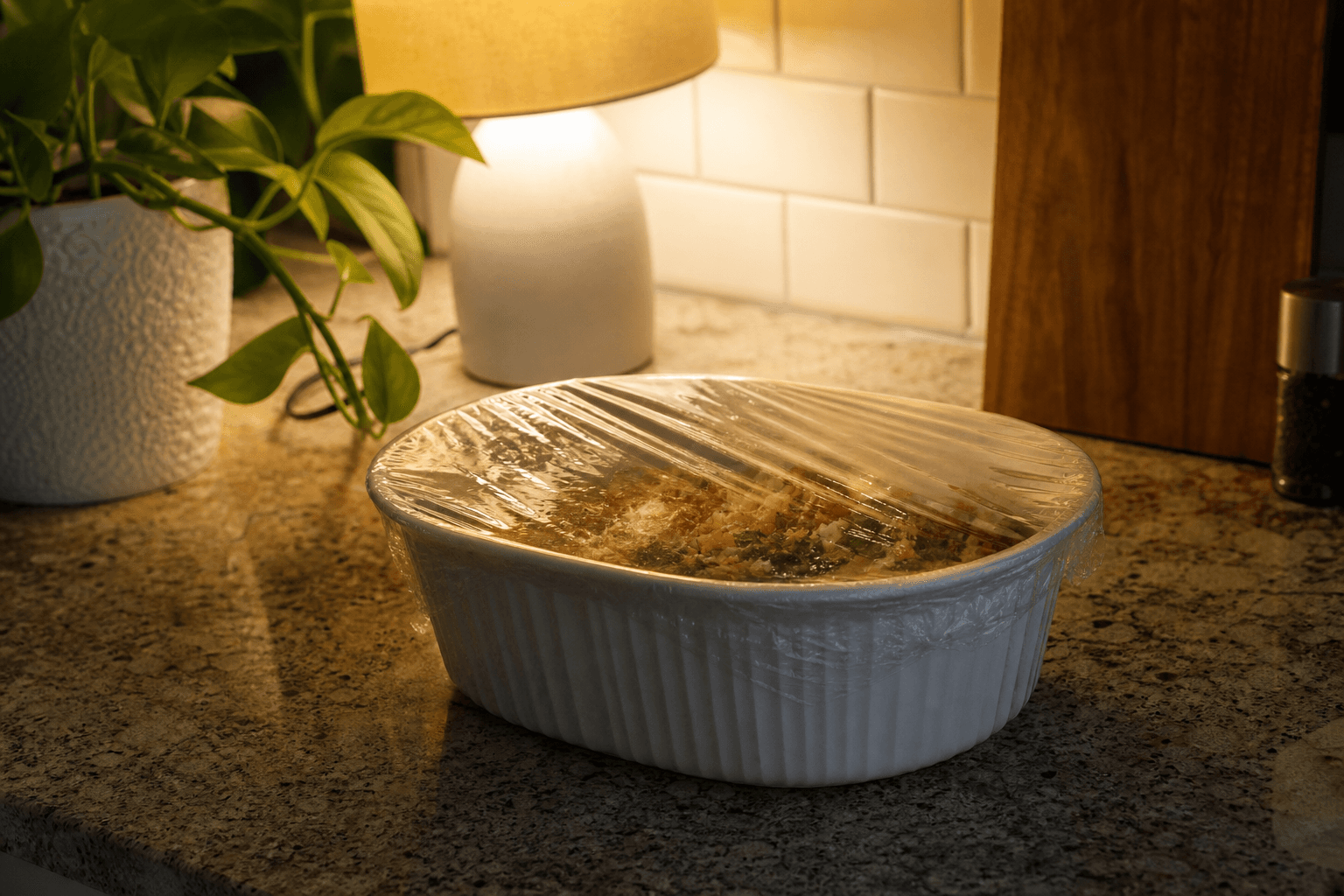
Soup left out overnight is not safe to eat, according to USDA guidelines. Perishable food can sit at room temperature for two hours at most, and a full night is far past that. Throw the pot out, even if it was covered and you planned to boil it again.
That covers stew too, and a thick stew is worse rather than better, because it holds heat longer. It is the same rule that covers every perishable leftover, which the general guide to food left out overnight works through in full.
How long can soup sit out?
Perishable food can sit at room temperature for a maximum of two hours before it has to go back in the fridge, and above 90 F that window is one hour (FSIS, Leftovers and Food Safety). USDA calls 40 F to 140 F the danger zone, because bacteria can double in number in as little as 20 minutes in that range (FSIS, Danger Zone).
Soup is the worst shape for this. A full pot has a small surface and a deep, hot middle, so it drifts down into the danger zone and then stays there for hours. The sibling page on chicken broth left out overnight follows the same clock, and how long leftovers can sit out before refrigerating has the timing detail.
| Storage method | Safe storage time |
|---|---|
| Room temperature (40 F to 140 F) | Up to 2 hours, or 1 hour above 90 F |
| Refrigerator (40 F or below) | 3 to 4 days (FoodSafety.gov cold food storage chart) |
| Freezer (0 F) | Safe indefinitely, best quality within 3 to 4 months |
| Unopened canned or carton soup, in the cupboard | The use-by date printed on the pack |
| Opened canned or carton soup, refrigerated | 3 to 4 days |
Does a lid change the answer?
No. Soup left out overnight covered is in exactly the same position as soup left out uncovered. A lid keeps dust and insects off and slows heat loss a little, which means it holds the soup inside the danger zone for slightly longer rather than getting it out sooner. It cannot chill anything, and the bacteria that matter are already in the pot rather than arriving from the air. Treat covered and uncovered pots the same way.
What about leaving soup out to cool?
Leaving a pot out overnight to cool used to be common advice, and it is not safe. A deep pot takes many hours to fall through the danger zone, and the middle stays warm long after the surface feels cool to the touch, so the soup spends most of the night in the range where bacteria multiply fastest.
The fix is to cool it deliberately rather than passively. Divide the soup into shallow containers and refrigerate it within two hours. The same applies to stew left out overnight, only more so, because thick stews hold heat even longer than broths.
Does boiling it again make it safe?
No. Boiling kills many active bacteria, but some bacteria produce heat-stable toxins while the food sits out, and those toxins survive cooking (FSIS, Leftovers and Food Safety). Bringing the pot back to the boil is the most common wrong answer to this question, and it does not work.
The 165 F reheating figure applies to soup you refrigerated in time, and is it safe to reheat leftovers twice covers the repeat question.
Soup with rice, pasta or beans in it
Those soups carry an extra problem. Bacillus cereus spores survive cooking, and at room temperature they can grow and produce cereulide, a heat-stable toxin that reheating does not reliably destroy (FDA Bad Bug Book, UF IFAS Extension). Rice and pasta also thicken the soup, which slows cooling further.
How to tell if soup has gone bad
A sour or sulfurous smell, cloudiness, foam, unexpected bubbles, a slimy texture or any visible mold all mean the pot is finished. Those signs are worth knowing for soup that has been in the fridge for a few days.
They cannot clear a pot that stood out overnight. Soup that is unsafe often looks and smells completely normal, so your nose has nothing to work with. Do not taste it to decide, because a taste of it is the thing you are trying to avoid.
Keep or toss
| Situation | How long it was out | Verdict | Why |
|---|---|---|---|
| Forgotten after dinner, then refrigerated | Under 2 hours | Keep | Inside the two-hour window |
| Covered pot on the stove | Overnight | Toss | A lid holds warmth in and stops nothing |
| Uncovered pot on the stove | Overnight | Toss | Hours past the two-hour limit |
| Kitchen above 90 F | Overnight | Toss | The window there is one hour |
| Slow cooker switched off | Overnight | Toss | Insulated walls make it cool more slowly, not more safely |
| Still warm in the morning | Overnight | Toss | Warmth means it stayed in the danger zone |
| Soup with rice or pasta in it | Overnight | Toss | A heat-stable toxin can form and reheating does not remove it |
How to cool and store soup properly
Divide hot soup into shallow containers straight away rather than waiting for the pot to cool, and get it into the fridge within two hours. Rest the lids ajar until the steam stops, then seal them. Refrigerated soup keeps 3 to 4 days, and reheating it to 165 F is the right step for soup that went in on time.
Label every container with the date you cooked it. If containers keep vanishing to the back of the shelf, keeping track of leftovers in the fridge is the system that fixes it.
A pot gets forgotten because nothing is keeping track of the day it was cooked. A weekly plan does, so Tuesday's soup turns into Wednesday's lunch instead of Thursday's problem. Start the free trial
Can you freeze soup?
Yes, as long as it went into the fridge on time. Chill it first, pack it in portions with room at the top for expansion, and freeze anything you will not eat inside the 3 to 4 day window. Thin broths come back best, while potatoes go grainy and pasta softens, and what you can and cannot freeze covers the rest.
When in doubt, throw it out
When in doubt, throw it out. That is the USDA fallback and it is the whole answer here. Losing a pot you spent an afternoon on is a real loss, and it is still cheaper than the alternative. If you have already eaten some and you feel unwell, contact a doctor.
FAQ
Is soup left out overnight safe to eat?
No. A pot that stood all night has spent far longer than the two-hour room temperature limit. Throw it out.
Is soup left out overnight covered still good?
No. A lid keeps dust out and holds warmth in, so covered soup spends the night in the same temperature range as uncovered soup.
Does boiling soup that sat out overnight make it safe again?
No. Boiling kills many active bacteria, but some bacteria produce heat-stable toxins while the soup sits out, and those toxins survive cooking.
Can you leave soup out overnight to cool?
No. Divide the soup into shallow containers and refrigerate it within two hours instead. A deep pot cannot cool fast enough on the counter.
How long can soup sit out at room temperature?
Two hours at most, and one hour if the kitchen is above 90 F. Inside that window, refrigerate it, where it keeps 3 to 4 days.
Start free, then try the planner for 7 days once your first three fresh foods are in, with no card. Plan the week around what you already have, and give every batch a job before you cook it. Start the free trial