What to do with wilting vegetables before they spoil
A fifteen to thirty minute soak in ice water brings most wilting vegetables back to crisp. The ones that won't bounce back still have a second life in soup, a stir-fry, or the freezer.
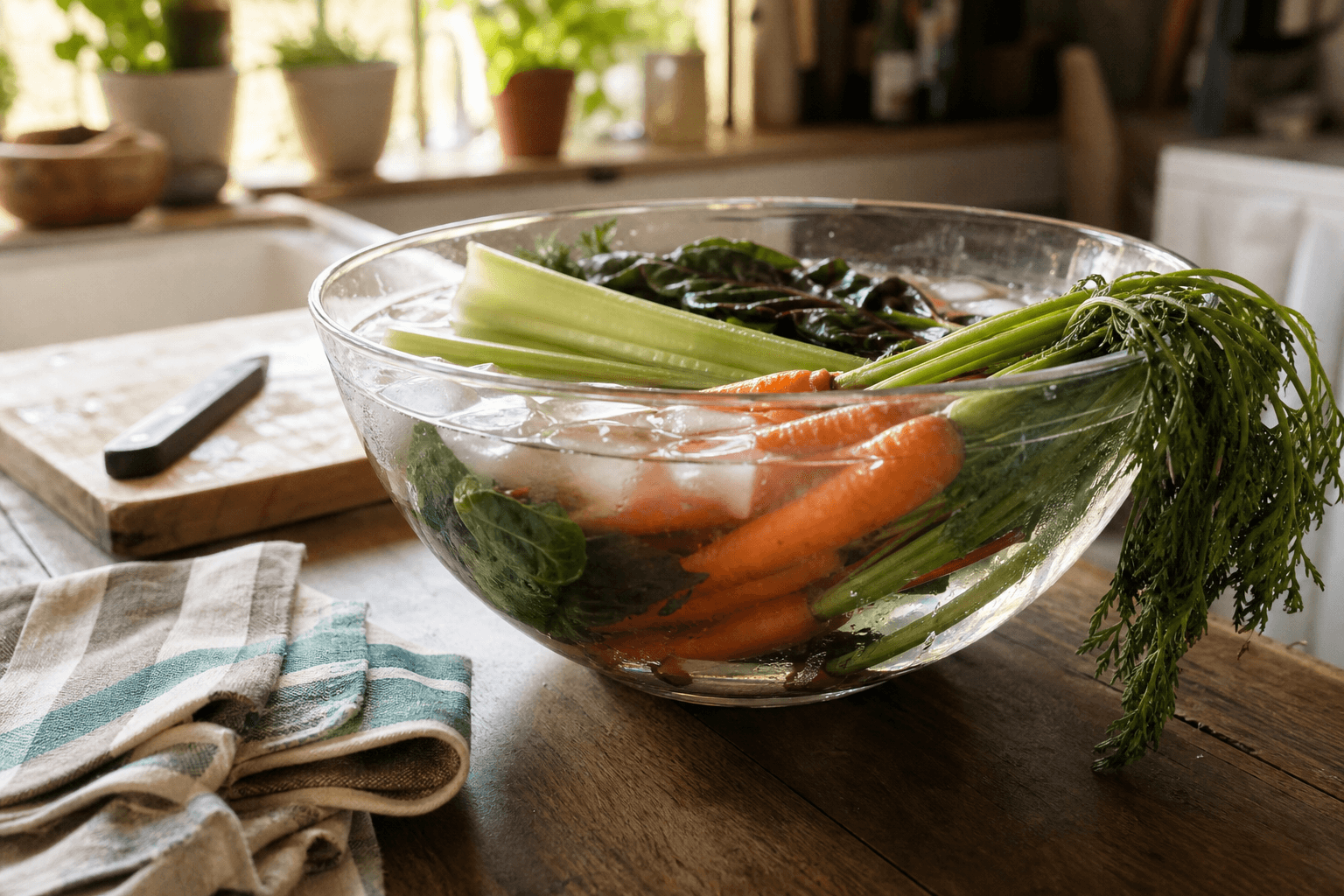
The fastest fix for wilting vegetables is a fifteen to thirty minute soak in ice water. It pulls moisture back into the plant cells and brings the crispness back to most greens, stalks, and roots. If something is too far gone to bounce back, cook it into soup, a stir-fry, or a freezer-ready puree that same day, before it ends up in the trash.
Why vegetables wilt before you get to them
Vegetables are still alive when you bring them home, and they keep losing water through their cell walls long after harvest. Warm kitchen air, a loosely closed produce bag, or a spot at the back of the crisper drawer all speed up that moisture loss. Add ethylene gas from nearby fruit like apples and bananas, and a bunch of kale or a bag of carrots can go from crisp to limp in a matter of days. None of that means the food is spoiled. It usually just means it needs water back.
How to revive wilted vegetables with an ice water bath
The ice water bath works because wilting is a water problem, and the fix is to put the water back in. Here's how:
- Trim the ends. For stemmed vegetables like broccoli, asparagus, celery, and scallions, cut the stalks at an angle. That opens up more of the capillaries that draw water in.
- Build the bath. Fill a large bowl with cold water and ice, using roughly three parts water to one part ice.
- Submerge fully. For leafy greens, tear or split large leaves first so more surface area touches water. Stemmed vegetables can stand upright in the bowl instead of lying flat.
- Let them soak. Timing depends on the vegetable, but most leafy greens are ready in fifteen to thirty minutes, while stalks and firm roots benefit from closer to an hour.
- Dry before storing. Spin greens dry or pat everything with a clean towel. Vegetables that go back into the fridge wet will turn soggy again within a day.
An ice water bath is a temporary rescue, not a permanent fix, so plan to use revived vegetables within about 24 hours.
Which vegetables bounce back, and how long to soak them
| Vegetable | Ice bath time | If it will not revive |
|---|---|---|
| Lettuce, kale, chard, arugula | 15 to 30 minutes, torn or split first | Wilted-greens soup, a quick saute, or a smoothie |
| Broccoli, asparagus, celery, scallions | 15 minutes to 1 hour, stems cut on an angle | Stir-fry, roasted vegetables, or vegetable broth |
| Whole carrots | About 1 hour | Grated into slaw, roasted, or added to soup |
| Sliced carrots, radishes | 15 to 20 minutes | Same as above |
| Parsley, cilantro, other herbs | 10 to 15 minutes standing in a glass of water | Pesto, chimichurri, or frozen in oil in an ice cube tray |
Not every wrinkled vegetable is a candidate. If you see visible mold, sliminess covering more than half the leaves, or a sour smell, skip the ice bath and toss that piece. If just a few leaves on an otherwise firm head of lettuce are slimy, you can usually pick those out and save the rest.
What to do when vegetables are too far gone to revive
Some vegetables will not spring back no matter how long they sit in ice water, and that is fine. Soft, limp produce is often better suited to cooking than to a salad bowl anyway.
- Soup or broth: limp celery, carrots, and greens simmer down into a stock or vegetable soup, and the texture problem disappears.
- Stir-fry or saute: high heat covers up a little sogginess in broccoli, peppers, or greens, especially with a hot pan and a splash of soy sauce.
- Puree and freeze: blend softening vegetables into a sauce, soup base, or baby food style puree, and freeze it in portions for later.
- Pesto or chimichurri: wilting herbs and greens hold up well blended with oil, garlic, and nuts, and the sauce keeps in the freezer for months.
If this keeps happening with the same items week after week, it's worth looking at what's going wrong earlier in the process. Our guide to how to stop throwing away food from the fridge walks through common storage mistakes that cause vegetables to wilt faster than they should.
How to stop vegetables from wilting in the first place
Reviving wilted vegetables is a good skill, but preventing the wilt is less work overall. A few habits make the biggest difference:
- Store leafy greens loosely wrapped in a dry towel inside a partially open bag, not sealed airtight.
- Keep ethylene-producing fruit like apples, pears, and bananas away from your crisper drawer.
- Stand herbs upright in a glass of water in the fridge, like a bouquet, rather than sealing them in a bag.
- Use your highest-humidity crisper drawer for leafy vegetables and your lowest-humidity drawer for fruit.
- Shop with a plan so vegetables get used while they're still fresh, rather than sitting forgotten behind other groceries.
That's where a lot of wilting starts, back at the grocery list stage rather than in the fridge. Our post on how to stop wasting groceries before they go bad covers how to buy closer to what you'll cook.
Tracking expiry dates by hand is easy to fall behind on, especially with a fridge full of odds and ends. Well Stockd, a fridge and pantry inventory app, flags vegetables as they approach their use-by window so you catch them while they're still crisp instead of finding them wilted at the back of the drawer a week later. It also suggests recipes built around what's already on hand, which helps use up produce before an ice bath becomes the only option. You can read more in our roundup of the best pantry inventory app to reduce food waste.
For the full picture on cutting kitchen waste beyond the vegetable drawer, see our main guide to how to stop wasting food at home.
Frequently asked questions
Can you eat vegetables after they have wilted? Yes, in most cases. Wilting is a texture and moisture issue, not automatically a safety issue. Wash the vegetable well and check for mold, sliminess, or a sour smell before eating. If those signs show up on more than a small portion, toss it.
Does soaking wilted vegetables in ice water make them soggy? Not if you dry them thoroughly afterward. Revived vegetables that go back into storage still wet will turn limp again fast, so pat or spin them dry before refrigerating and plan to use them within about a day.
How long can vegetables sit before they start wilting? It depends on the vegetable and how you store it. Tender leafy greens can start wilting within two to three days if left loosely bagged at room temperature, while sturdier vegetables like carrots and celery can hold up for a week or more in a proper crisper drawer.
Sources: How to Revive Wilted Vegetables, America's Test Kitchen, Unwilting Lettuce, America's Test Kitchen, How to Revive Wilted Greens, The FruitGuys