What to make with vegetables about to go bad
Wilted does not mean wasted. Here's the fastest way to turn soft carrots, tired greens, and wrinkly tomatoes into soup, stir-fry, or a sheet-pan roast before they spoil.
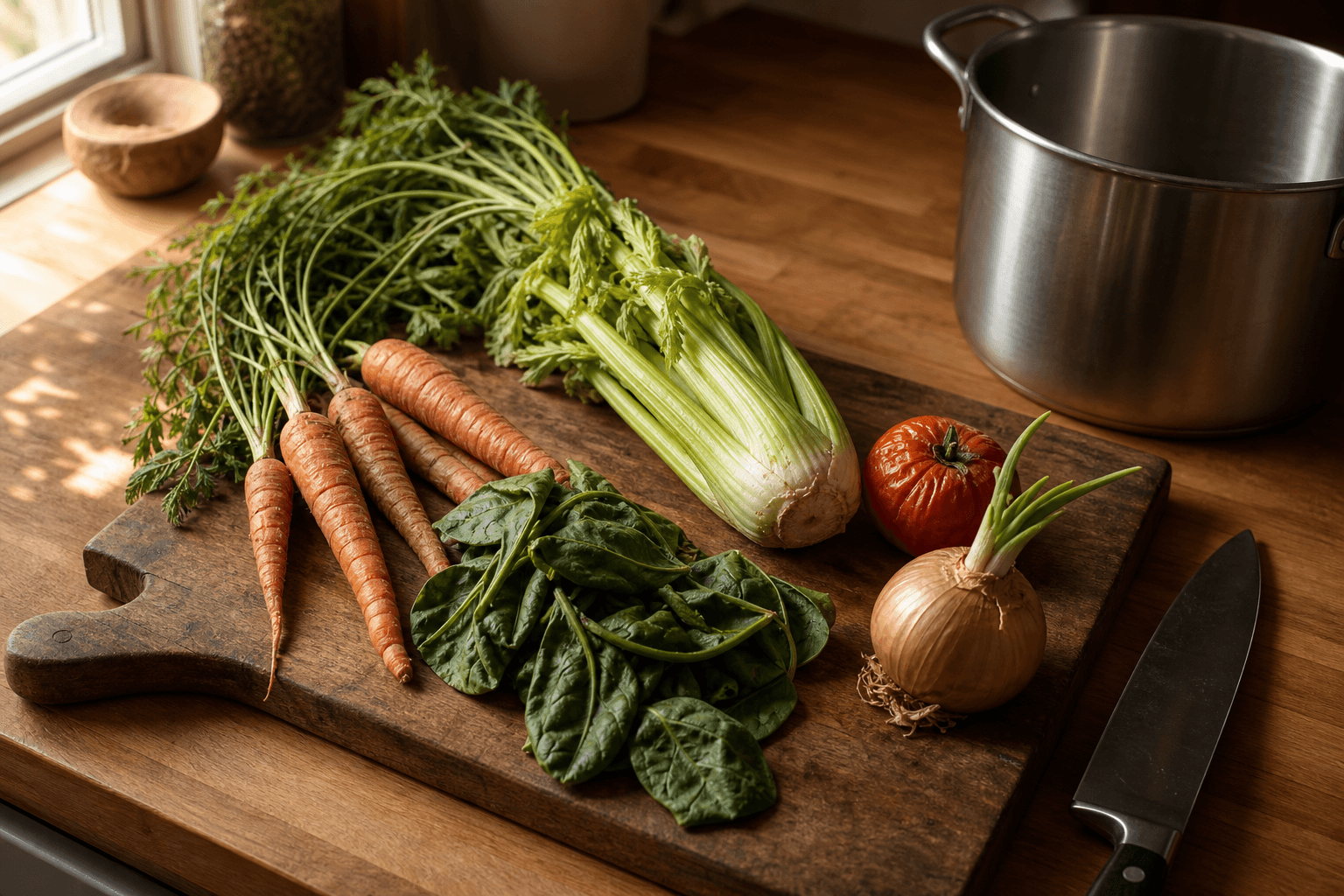
The fastest fix is a big pot: chop whatever vegetables are wilting, no matter how mismatched, and cook them into soup, stir-fry, or a sheet-pan roast today. Softening vegetables are still safe to eat, so lead with heat and worry about a tidy recipe later.
This is one piece of a bigger habit. For the full set of moves that cut food waste across your kitchen, start with our guide to how to stop wasting food at home. Here is what to do right now with what is already going soft on your counter.
Is it safe to eat vegetables that are wilted or soft?
Wilted is not the same as spoiled. A carrot that has gone bendy, spinach that has lost its snap, or a bell pepper with a soft patch has lost moisture and quality, not safety. The FDA's guidance on selecting and serving produce says to cut away any damaged or bruised areas before cooking, and to throw out produce that is slimy, discolored, or growing mold, since mold breaks down plant tissue and can open the door to foodborne illness.
So the rule of thumb is simple: if it's floppy, faded, or a little soft, cook it today. If it's slimy, oozing, or growing fuzz, it goes in the compost. If you want the fuller breakdown of what counts as spoiled versus just past its prime, we cover it in how to stop throwing away food from the fridge.
What is the fastest way to use up vegetables before they spoil?
Four steps, and none of them need a recipe you don't already have the ingredients for.
- Sort what is in the drawer. Toss anything slimy, moldy, or foul smelling. Keep everything else, even if it looks tired.
- Pick one base method that can absorb almost anything: soup, stir-fry, a sheet-pan roast, or a blended sauce. All four forgive odd combinations of vegetables in a way a specific recipe does not.
- Cook in order of toughness. Root vegetables and stems go in first. Quick-cooking vegetables like spinach or zucchini go in during the last few minutes so nothing turns to mush twice.
- Freeze what you won't eat this week. Cooked soup, stir-fry mixes, and blanched vegetables all hold up well in the freezer, so a lopsided batch turns into three future dinners instead of one big pot you're sick of by Thursday.
If you'd rather freeze raw vegetables than cook them right away, blanch them first: drop them in boiling water for one to five minutes depending on the vegetable, then straight into ice water. That short shock stops the enzyme activity that makes frozen vegetables turn mushy and dull, according to the National Center for Home Food Preservation at the University of Georgia.
What should I make based on what is wilting?
Different vegetables wilt in different ways, so each one calls for a different rescue.
| What's wilting | Best rescue method | Try this |
|---|---|---|
| Leafy greens (spinach, kale, lettuce, herbs) | Sauté, blend, or wilt into eggs | Garlicky sautéed greens, pesto or chimichurri, greens folded into scrambled eggs |
| Soft carrots, celery, broccoli, cauliflower | Roast or simmer into soup | Sheet-pan roasted vegetables, vegetable soup, fried rice |
| Wrinkly or bruised tomatoes | Slow-roast or simmer into sauce | Oven-roasted tomatoes, quick marinara, shakshuka |
| Sprouting onions, garlic, or soft potatoes | Build a whole dish around them | Hash, frittata, soup base |
| A little of everything, no clear theme | One-pot cooking | Vegetable broth from scraps, minestrone, stir-fry, fried rice |
What is a simple formula I can use with almost any vegetables?
Three formulas cover most of what a wilting vegetable drawer throws at you, and none of them need exact measurements.
- Soup: oil, one chopped onion, two to three cups of chopped vegetables, four cups of broth or water, salt. Simmer 20 minutes, then blend it smooth or leave it chunky.
- Stir-fry: oil and garlic in a hot pan, vegetables added in order of toughness, a splash of soy sauce at the end, served over rice or noodles.
- Roast: chopped vegetables tossed with oil and salt on a sheet pan, 400 degrees Fahrenheit for 20 to 30 minutes, flipped once halfway through.
Any of these three will take carrots, celery, broccoli, peppers, zucchini, and tomatoes in the same pot without anyone noticing they came from three different produce bags bought weeks apart.
How do I stop the vegetable drawer pile-up next time?
Cooking down a wilting pile once a week works, but it's more of a rescue than a system. If you keep making the same emergency soup because you can't remember what's in the crisper, the fix is to see it before it wilts, not after. Our guide on how to stop wasting groceries before they go bad covers the shopping and storage habits that cut down on rescue missions in the first place.
That's also the gap Well Stockd is built to close. It tracks what's in your fridge, freezer, and pantry, flags what's closest to its use-by date, and matches what you already have against recipes you can make tonight, so wilting vegetables end up in a real meal instead of a pot of guilt-soup. See how it compares to other options in our comparison of pantry inventory apps built to reduce food waste.
Frequently asked questions
Can I still eat vegetables that are wilted or a little soft? In most cases, yes. Wilting is a loss of moisture and quality, not a safety issue. Cut away any bruised or damaged spots, then cook the vegetable in soup, a stir-fry, or a roast. Only toss produce that's slimy, oozing, discolored, or growing mold.
What is the best way to freeze vegetables before they go bad? Blanch them first. Drop cut vegetables into boiling water for one to five minutes depending on the vegetable, then move them straight into ice water to stop the cooking. That stops the enzyme activity that would otherwise turn them mushy and dull in the freezer. Pat them dry, then freeze flat in a bag or container.
Can I mix different vegetables together in one soup or stir-fry? Yes, that's the whole point. Soup, stir-fry, and sheet-pan roasting all forgive odd combinations. Add tougher vegetables like carrots and potatoes first, and quicker-cooking ones like spinach or zucchini near the end, so nothing overcooks.
Sources: FDA, Selecting and Serving Produce Safely, National Center for Home Food Preservation, Blanching