2-week meal plan on a budget, with a full grocery list
A realistic 2-week meal plan for a family of four, built on repeat staples like rice, beans, and chicken thighs, comes in around $300 to $450 total. Below is the step-by-step method, a sample 14-day dinner rotation, and the grocery list behind it.
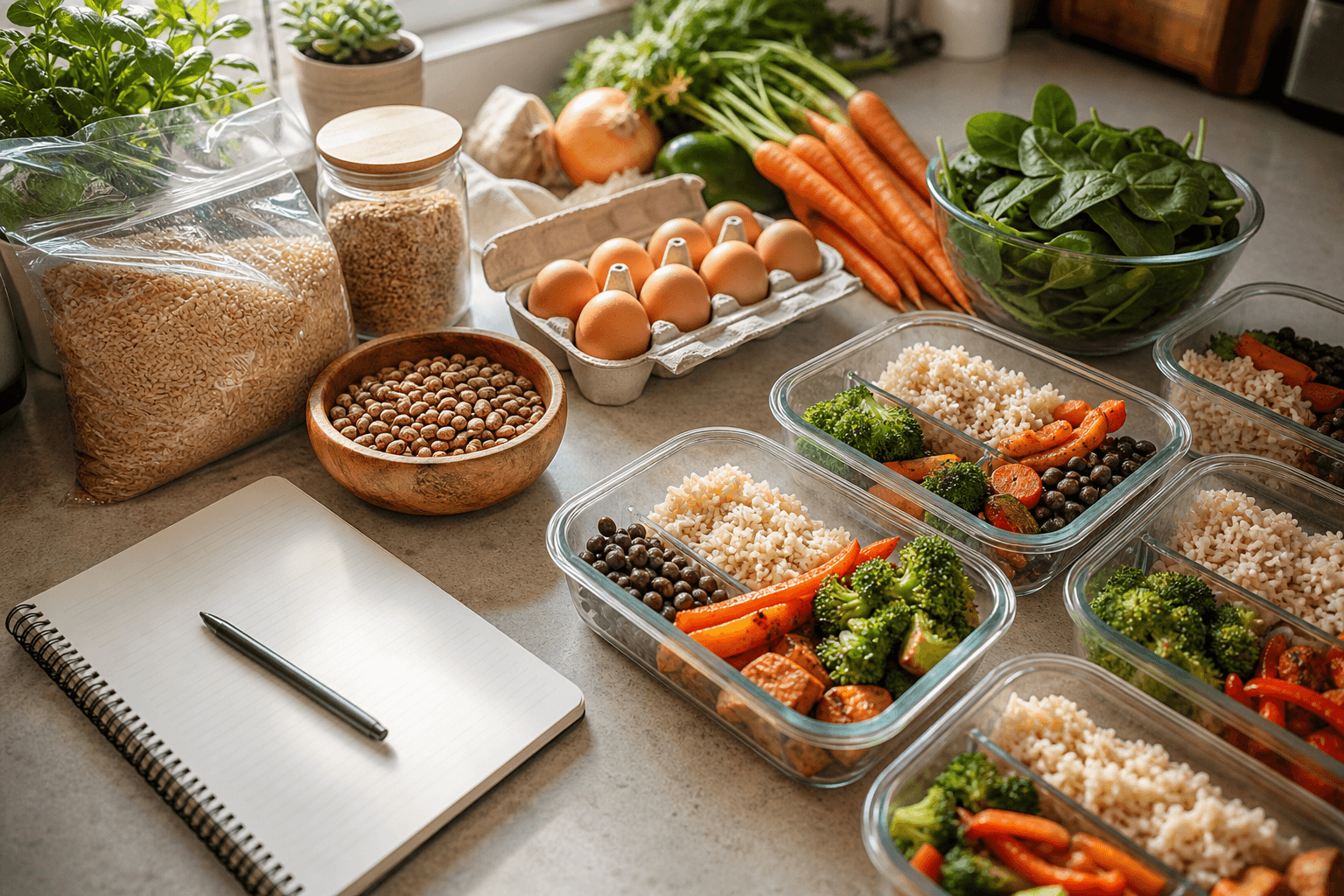
A budget two-week meal plan for a family of four typically runs $300 to $450 total, or about $1.50 to $2.50 per serving, when it is built around 8 to 10 repeating dinners, cheap staples like beans, rice, eggs, and canned tomatoes, and one grocery list organized by store aisle. That lands at or below the USDA's Thrifty Food Plan benchmark of roughly $229 a week for a family of that size.
The math works because a two-week plan gives you more room to repeat ingredients than a one-week plan does. A five-pound bag of rice, a big container of dried beans, or a rotisserie chicken can all stretch across three or four dinners instead of just one, and buying in that slightly larger quantity almost always costs less per serving. Below is a full method, a sample 14-day menu with grocery list, and answers to the questions that come up most.
How much should a 2-week grocery list cost?
It depends on household size, but the USDA's own numbers give you a useful floor. The 2026 Thrifty Food Plan, the same benchmark used to calculate maximum SNAP benefits, puts a family of four at about $229 a week for a nutritionally adequate diet with every meal cooked at home. Over two weeks that is roughly $458.
A planned, repeat-ingredient budget menu can usually land under that number, in the $300 to $450 range for a family of four, because meal planning itself is one of the more reliable ways to cut grocery spending. Households that plan consistently tend to spend 15 to 20 percent less than households that shop meal by meal, mostly because planning kills the mid-week "what's for dinner" trip where extra items sneak into the cart.
For one or two people, scale down proportionally: expect somewhere between $90 and $180 for two weeks, depending on how much meat you buy and how many convenience items make the list.
Step-by-step: build a 2-week budget plan in five moves
- Set your number before you plan a single meal. Decide what two weeks of groceries should cost for your household, using the Thrifty Food Plan figures above as a ceiling. Having a number first keeps the menu honest instead of building a wish list and hoping it fits the budget later.
- Pick 8 to 10 dinners, not 14. This is the part that saves the most money. Choose a short list of meals built on the same four or five cheap staples: rice, dried beans or lentils, eggs, pasta, and one inexpensive protein like bone-in chicken thighs, then repeat those meals across the two weeks with small variations. The same base chili, served plain one night and as chili-topped baked potatoes three nights later, costs less and takes less planning than 14 unique recipes.
- Map the calendar and build in leftovers on purpose. Assign each dinner to a day, but plan at least two nights as deliberate leftover nights rather than new cooking. If you followed a weekly meal planning routine for beginners before, this is the same skill, just stretched across two weeks so the leftover math has more room to work.
- Turn the menu into one grocery list, grouped by aisle. Go meal by meal and pull every ingredient onto a single list sorted into produce, dairy, pantry, freezer, and meat, checking off anything you already have before it goes on the list. A list built this way is also faster to shop, since you are not backtracking across the store.
- Shop once for shelf-stable and freezer items, then top up fresh produce midweek. Rice, beans, canned tomatoes, pasta, and frozen vegetables can all be bought on day one and last the full two weeks. Fresh produce like lettuce, herbs, or berries is worth a smaller second trip around day seven so nothing wilts before you get to it.
Sample 14-day budget dinner plan and grocery list
This rotation is built for a family of four and leans on seven core dinners, repeated with small swaps so the ingredient list stays short. Costs are rough per-serving estimates based on current staple pricing.
| Day | Dinner | Built from | Approx. cost/serving |
|---|---|---|---|
| 1 | Baked chicken thighs, rice, roasted frozen veg | chicken thighs, rice | $1.80 |
| 2 | Bean and rice burrito bowls | beans, rice (leftover) | $1.20 |
| 3 | Pasta with canned tomato sauce and white beans | pasta, canned tomatoes, beans | $1.10 |
| 4 | Sheet pan sausage and vegetables | sausage, frozen veg | $2.00 |
| 5 | Lentil soup with cornbread | lentils | $1.30 |
| 6 | Egg fried rice | eggs, rice (leftover) | $1.00 |
| 7 | Chicken thigh tacos | chicken (frozen leftover), tortillas | $1.60 |
| 8 | Baked potato bar with beans and cheese | potatoes, beans | $1.40 |
| 9 | Pasta with canned tomato sauce, spinach added | pasta, canned tomatoes, spinach | $1.20 |
| 10 | Slow cooker chili | beans, canned tomatoes | $1.50 |
| 11 | Lentil curry with rice | lentils, rice | $1.30 |
| 12 | Chicken and vegetable stir fry | chicken (frozen leftover), frozen veg | $1.70 |
| 13 | Bean quesadillas | beans, tortillas, cheese | $1.30 |
| 14 | Breakfast for dinner: eggs, toast, fruit | eggs | $1.10 |
The grocery list behind that table stays short on purpose: rice, dried or canned beans, dried lentils, eggs, pasta, canned tomatoes, bone-in chicken thighs, sausage, frozen mixed vegetables, spinach, potatoes, tortillas, shredded cheese, cornbread mix, and whatever fruit is cheapest that week. Everything else in the two weeks is a variation on those fourteen items, not a new purchase.
Which staples give you the most meals per dollar?
A handful of ingredients do most of the heavy lifting in a budget plan, and knowing their approximate cost helps you shop with confidence instead of guessing.
| Staple | Typical price | What it gets you |
|---|---|---|
| Dried black beans | ~$1.80/lb | 6 cups cooked, enough for 3 to 4 dinners |
| Dried lentils | ~$1.50 to $2.50/lb | Cooks in 20 minutes, no soaking, 3 to 4 servings |
| Eggs | Cheapest animal protein by weight | Breakfast, fried rice, quesadilla filling, baked-dinner backup |
| Bone-in, skin-on chicken thighs | ~$1.50 to $2.50/lb | Roasts once, restretches into tacos and stir fry |
| Rice (bulk bag) | Pennies per serving | Base for 4 to 5 different dinners |
Buying dried beans and lentils instead of canned, and bone-in chicken thighs instead of boneless breasts, is usually where the biggest single savings show up, since you are paying less for the same or better nutrition.
How do you keep the list from creeping over budget at the store?
A few habits protect the number you set in step one:
- Shop with a list and stick to it. Shopping while hungry or without a list is a fast way to add 20 to 30 percent to the total, since everything in the store starts looking tempting.
- Check unit price, not package price, especially on rice, beans, and pasta sold in different bag sizes.
- Buy frozen vegetables when fresh produce would spoil before you use it. Frozen is picked and flash-frozen at peak ripeness, so nutrition is comparable and nothing goes soft in the crisper drawer.
- Batch cook in two sessions instead of fourteen. Cook rice, beans, and one protein in bulk once at the start of each week, then reheat and remix them into different dinners, keeping only what you will eat within 3 to 4 days in the fridge and freezing the rest. This is the same idea behind freezer meal batch cooking, just applied fresh instead of frozen.
- Track leftovers on purpose. The EPA estimates the average family of four spends nearly $3,000 a year on food that never gets eaten, and a two-week plan is only a budget win if the food on the list gets cooked and finished.
Can an app help you stick to a 2-week grocery budget?
Yes, mostly by solving the part that is easy to get wrong by hand: knowing what you already have before you shop. A meal planning app with pantry inventory checks your fridge and pantry against your planned menu and only puts what is missing on the list, so you are not rebuying rice or canned tomatoes you already own. Well Stockd builds a shopping list this way automatically, which is worth a look if the grocery list is the part of this process that keeps sliding out of control.
If you are just getting started with any of this, it helps to build the weekly habit first before stretching it to two weeks. The guide to meal planning for the week covers the basic routine this whole two-week version is built on.
Frequently asked questions
Is it cheaper to meal plan two weeks at a time instead of one week?
Usually, yes. A two-week window gives bulk staples like rice, dried beans, and family-pack chicken more meals to spread across, which lowers the cost per serving compared to buying smaller amounts weekly. It also means fewer total shopping trips, which cuts down on impulse buys.
What is the cheapest protein to build a budget meal plan around?
Dried beans and lentils are typically the cheapest per gram of protein, with eggs close behind as the cheapest animal protein. Bone-in, skin-on chicken thighs are usually the best-value meat, since they cost less per pound than boneless cuts and hold up well to reheating.
Can I really only shop once for two weeks?
For pantry and freezer staples, yes. Rice, dried beans, pasta, canned tomatoes, and frozen vegetables all keep for the full two weeks. Fresh items like lettuce, berries, and fresh herbs are the exception, and a short second trip around the one-week mark keeps those from going bad before you use them. For strawberries, see making strawberries last longer.
Sources: USDA Food and Nutrition Administration, Thrifty Food Plan monthly cost of food reports; U.S. Environmental Protection Agency, household food waste estimates.