How to meal plan for the week and stick to it
The meal plans that stick are simpler than you'd think: five dinners instead of seven, built from what's already in your kitchen, with one backup meal for the night that goes sideways. This post walks through the method, a sample week, and how to keep it going past week one.
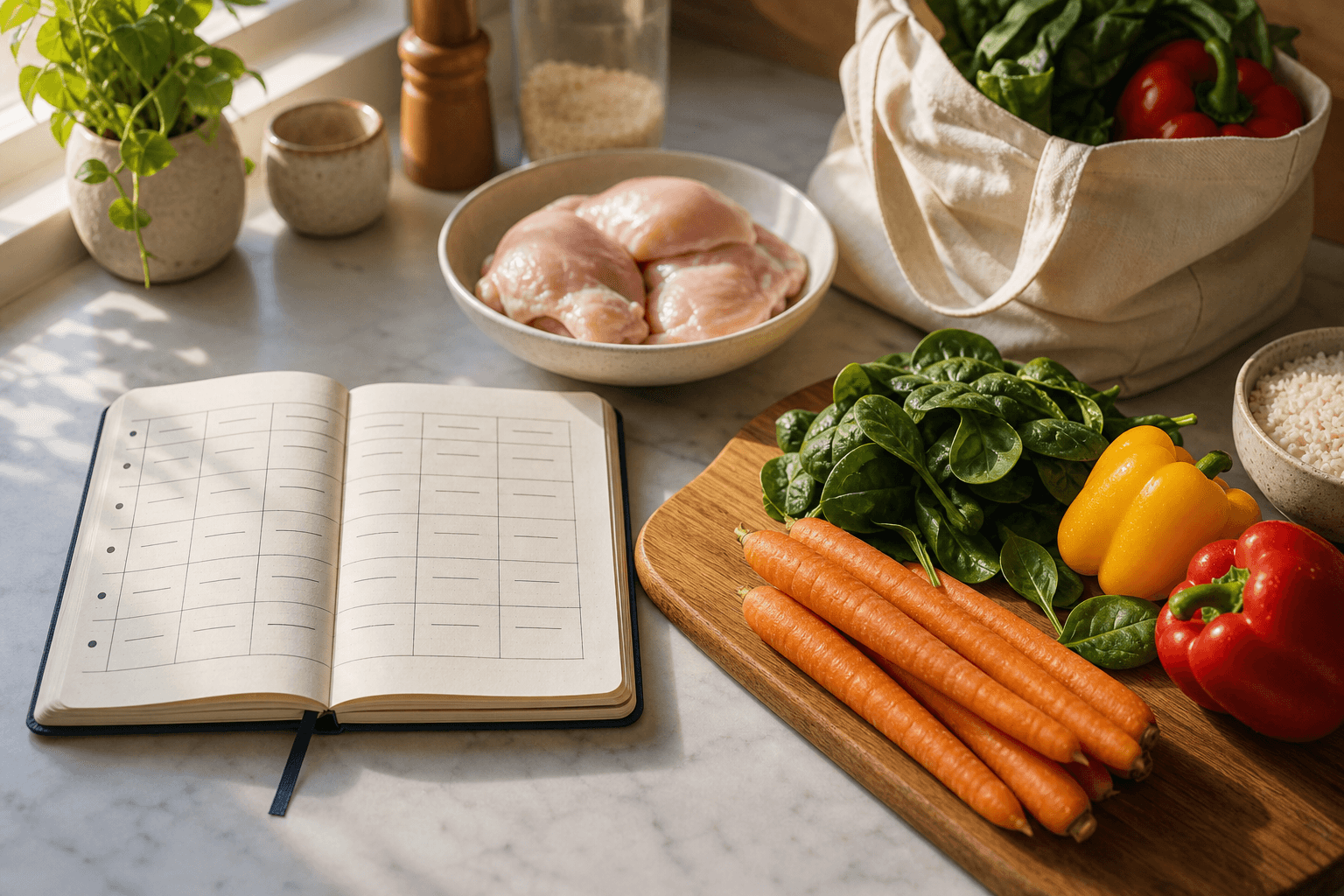
Meal plans that stick share one method: plan five dinners, not seven, build each one around two or three proteins you already like, shop from a list drawn from what's already in your kitchen, and set one backup meal for the night everything goes sideways. Aim for a plan you can execute at 80 percent, not a perfect one you abandon by Wednesday.
Most meal plans fail for a boring reason: they're written for a version of the week that doesn't exist. The fix isn't more discipline. It's a plan with fewer moving parts and a built-in exit ramp for the nights that go wrong.
How do you meal plan for the week in five steps?
- Pick five dinners, not seven. Plan for the nights you'll realistically cook. Most households eat out, order in, or run on leftovers at least twice a week without meaning to. Planning five dinners instead of seven means you're not scrambling to explain a plan that was wrong from the start.
- Build each meal around what you already have. Before you plan anything new, walk through your fridge, freezer, and pantry. A half bag of rice, three chicken thighs, and a wilting bunch of spinach are the start of a meal, not a problem to work around. Planning from your own inventory first is the single biggest lever for cutting your grocery bill and food waste at the same time. If you haven't done this before, our guide to weekly meal planning for beginners walks through it step by step.
- Shop with a list, not a scroll through recipes. Once the five meals are set, write one grocery list organized by store section, not by recipe. Buying in store-section order (produce, meat, dairy, pantry) is what prevents the double trip back for forgotten items.
- Set one backup meal for the night everything goes sideways. Every week has one night that doesn't go as planned. Decide now what that night is: eggs and toast, a frozen pizza, a bag of dumplings from the freezer. A backup meal keeps one bad night from turning into three nights of ordering delivery and a written-off week. Using it isn't a sign you gave up on the plan.
- Prep once, not five times. Pick one afternoon (or even 20 minutes the night before) to handle the slow parts: cook a batch of rice or grain, wash and chop vegetables, cook one protein all the way through. Think of it as stocking parts you can turn into a different meal each night in ten minutes, not assembling five identical containers.
What does a realistic week look like?
This five-dinner week follows the method above, with a deliberate leftover night and a no-cook backup built in.
| Day | Dinner | Built around | Prep time |
|---|---|---|---|
| Monday | Sheet-pan chicken thighs with roasted vegetables | Chicken thighs, whatever vegetables need using up | 35 minutes |
| Tuesday | Ground beef tacos | Ground beef, tortillas, shredded cheese | 20 minutes |
| Wednesday | Leftover taco beef turned into a rice bowl | Reuses Tuesday's beef and Step 5 prepped rice | 10 minutes |
| Thursday | Pasta with white beans and greens | Pantry staples plus wilting greens | 25 minutes |
| Friday | Backup meal: eggs, toast, whatever is left | No real cooking required | 5 minutes |
Notice that only three nights involve new cooking. Wednesday recycles Tuesday's protein, and Friday isn't really a meal so much as permission to stop.
What breaks a meal plan?
It's almost never the cooking. It's one of three things: the plan assumed a version of the week you didn't have time for, the grocery list didn't match what was already at home so you bought duplicates, or there was no backup meal, so one bad night turned into three nights of ordering in. Building a five-day plan, shopping against your real inventory, and picking a backup ahead of time solves all three at once. For a printable starting point, our meal planning for beginners template lays out the same structure you can fill in each week.
How do you handle leftovers so the plan stays on track?
Reusing leftovers, like Wednesday's rice bowl above, is what makes a five-meal plan cover most of the week without extra cooking. The tradeoff is a hard deadline: the USDA's Food Safety and Inspection Service recommends eating refrigerated leftovers within 3 to 4 days, and getting food into the fridge within 2 hours of cooking (1 hour if it's sitting somewhere hotter than 90°F). If a leftover isn't going to get eaten by day four, freeze it that day instead. Frozen leftovers stay safe for 3 to 4 months, which makes the freezer the natural home for the backup meal from Step 4.
Do you need an app to meal plan for the week?
No, a whiteboard and a grocery list work fine. If you want an app for it, our meal planning app guide is the place to start. Where most people get stuck is Step 2, matching a meal plan to what's already in the kitchen, because that means mentally cataloging a fridge and two pantry shelves from memory. That's the specific problem Well Stockd is built for: it tracks what you have on hand and shows which meals you can already make before you plan anything new, so the grocery list only fills the real gaps. If planning around your own inventory is the part that keeps falling apart, see how a meal planning app with pantry inventory handles that step automatically. For the broader framework this article builds on, start with our guide to how to meal plan for the week.
Frequently asked questions
How many meals should I plan for the week?
Plan five dinners and leave two nights open for leftovers, eating out, or your backup meal. Planning all seven sets you up to break the plan the first time real life shows up.
What if I fall off the plan partway through the week?
Use the backup meal and pick the plan back up the next day. One skipped night doesn't undo a plan built around five meals; it's already priced in.
Is meal planning worth it for one or two people?
Yes, arguably more so, since a single missed dinner and a resulting takeout order is a bigger percentage hit to a smaller grocery budget. The five-meal, one-backup structure scales down fine; you'll just have more leftover nights per week, not fewer.
Sources: Leftovers and Food Safety, USDA Food Safety and Inspection Service