Can you use canned tomatoes instead of fresh?
One 28 ounce can of tomatoes replaces about 2 pounds of fresh and yields 3-1/8 cups with juice, per the USDA Food Buying Guide. Ratios for 28 oz and 14.5 oz cans, how to handle the packing juice, when fresh still wins, and the home canning acidification rule.
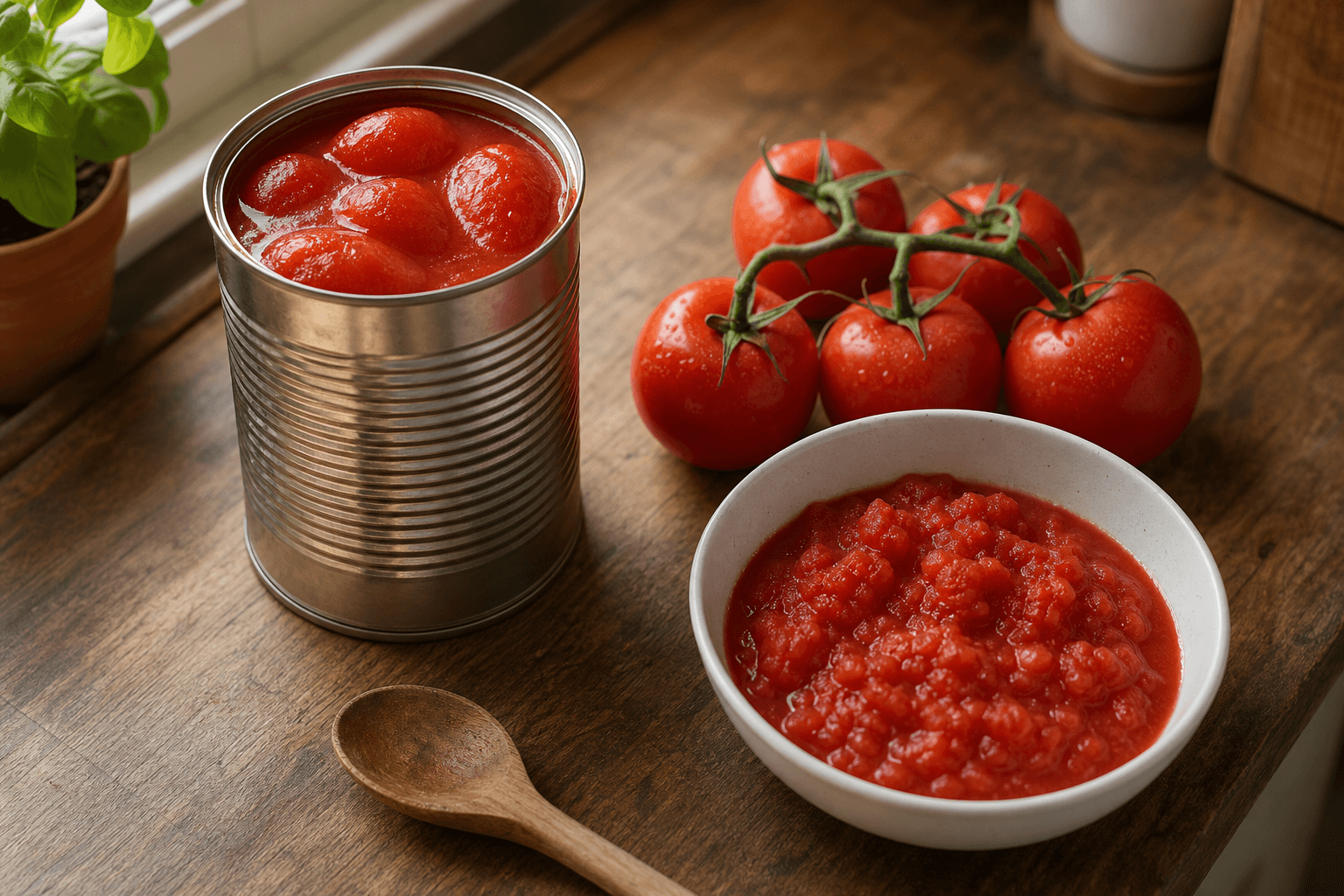
Yes, you can use canned tomatoes instead of fresh in any cooked dish, and out of season they are usually the better tomato. One 28 ounce can replaces about 2 pounds of fresh tomatoes and gives you 3-1/8 cups with the juice, per the USDA Food Buying Guide. Keep fresh tomatoes for dishes where raw texture is the point.
Canned tomatoes are not the compromise. Nearly 80% of tomatoes eaten in the United States come out of a can, per the UC Davis review by Rickman, Bruhn and Barrett, and that review found processed tomatoes carry more lycopene than fresh on both a wet and dry weight basis: 0.065 grams per kilogram in fresh tomatoes against 0.11 in canned whole and 0.16 in canned diced. Canning cultivars are bred for concentrated flavor, too, in a way supermarket slicing tomatoes are not.
Canned tomato substitution ratios
| Substitute | Ratio | Best for | Watch out |
|---|---|---|---|
| Canned whole peeled, 28 oz | 1 can = about 2 lb fresh = 3-1/8 cups with juice | Sauces, braises, soups, stews, shakshuka, chili | Cut other liquid by about 1/2 cup for the packing juice |
| Canned whole or diced, 14.5 oz | 1 can = about 1 lb fresh = 1-1/2 cups whole or 1-3/4 cups diced | Recipes calling for 3 or 4 fresh tomatoes | Half the 28 oz figure. A medium fresh tomato is about 1/2 cup chopped |
| Fire-roasted diced | 1:1, can for can | Chili, salsa, tacos, tortilla soup | Smoke belongs in Southwestern dishes, not Italian ones |
| Fresh for canned (the reverse) | 2 lb fresh, peeled and seeded = one 28 oz can | Peak summer, when good tomatoes are cheap | Score, blanch 30 to 60 seconds, shock and peel. Expect a longer simmer |
| Raw dishes | Do not substitute | Nothing | Canned tomatoes are cooked already and never have raw bite |
That 2 pound figure sits between two sources. USDA yield tables work out to 1.87 pounds of fresh per 28 ounce can, while the National Center for Home Food Preservation's canning ratio of 2-3/4 pounds per quart of crushed scales to 2.41 pounds. Anywhere from 1-3/4 to 2-1/2 pounds is defensible, and the gap is how far you cook the fresh tomatoes down.
How to swap canned tomatoes for fresh
- Match the can to the job. Whole peeled melt into a silky sauce, diced hold their shape, crushed sit between.
- Taste the can before you commit. Brands vary widely in salt and acidity, so some want a pinch of sugar and others none.
- Count the juice as liquid. Cut the recipe's other liquid by about 1/2 cup per 28 ounce can, or drain (about 2 cups drained) and keep the juice to add back if the pot goes dry.
- Break them down the way the dish wants. Crush whole tomatoes by hand in the pot, or run kitchen shears through the can.
- Simmer until the tinny canned edge cooks off before judging seasoning.
What changes when you cook with canned tomatoes
Flavor gets deeper and sweeter, because processing tomatoes are picked ripe and concentrated. Texture is the trade. Canned tomatoes are soft all the way through, so a sauce comes together faster and a salad falls apart.
America's Test Kitchen points out that US canners add calcium chloride, which keeps whole tomatoes firm. Imported San Marzano tomatoes skip it and break down more readily, which is why a US can stays chunky when you wanted smooth.
When not to substitute canned tomatoes for fresh
Salads, bruschetta, salsa fresca and tomato sandwiches need fresh tomatoes. Draining will not give a canned tomato the snap of a raw one. Home canning is the other hard stop.
Canned tomato caveats and safety notes
None of these swaps apply to home canning. Do not substitute fresh for canned or change proportions in a tested canning recipe. If you are canning tomatoes, the National Center for Home Food Preservation says to acidify every jar: 2 tablespoons of bottled lemon juice or 1/2 teaspoon of citric acid per quart, or 1 tablespoon and 1/4 teaspoon per pint. Ripe tomatoes are not reliably acidic enough on their own, and bottled lemon juice is specified for consistent acidity.
Move leftovers into a non-metal container. High-acid canned foods keep 5 to 7 days refrigerated once opened, per the Wyoming Department of Health. Unopened they hold 12 to 18 months, shorter than the 2 to 5 years Cornell Cooperative Extension gives low-acid canned vegetables, because acid slowly works on the can lining.
Related tomato and pantry swaps
Still on the tomato shelf? How much tomato sauce equals tomato paste covers the concentrate math, and substitute for tomato paste in chili plus can I use ketchup instead of tomato paste handle the swaps people reach for most. The fresh vs frozen vs canned substitution ratios guide covers other produce, and the printable ingredient substitution chart belongs on the fridge door.
Cook with the canned tomatoes you already own
Well Stockd tracks what is in your kitchen, and its substitution engine suggests swaps from your own shelves when you are out of an ingredient. Canned and frozen forms count, and you can reject any swap you do not want. For the pantry side, see the best pantry inventory app and an app to track food expiration dates.
Canned tomato questions people ask
How many fresh tomatoes are in a 28 oz can of tomatoes?
About 2 pounds, roughly 8 to 12 tomatoes depending on size. The can yields 3-1/8 cups with juice or about 2 cups drained.
Do I drain canned tomatoes when substituting for fresh?
Usually not. The juice carries flavor and most recipes need the liquid. If the dish is already wet, drain and reserve the juice to add back if needed.
Are canned tomatoes less healthy than fresh tomatoes?
No. They carry more lycopene than fresh, and minerals and fiber survive canning. The one real concern is added sodium, which no-salt-added cans solve.
How long do canned tomatoes last?
Twelve to eighteen months unopened, shorter than most canned vegetables because the acidity slowly attacks the can lining. Five to seven days refrigerated after opening.
Sources: USDA Food Buying Guide, Vegetables Yield Table | Rickman et al., J Sci Food Agric 2007 (UC Davis) | NCHFP, crushed tomatoes | NCHFP, canning tomatoes introduction | America's Test Kitchen, canned tomatoes | Cornell Cooperative Extension, food storage | Wyoming Dept. of Health, Food Storage Times
Quick answer: see the Canned Tomatoes storage reference.
Track it in Well Stockd
Add what you have, see what you can cook tonight, and get a reminder before anything goes off.
