Can I Use Ketchup Instead of Tomato Paste?
A straight answer on swapping ketchup for tomato paste at 1:1, how much sugar and vinegar rides along per tablespoon, the ratios for tomato sauce and canned or fresh tomatoes, and the one technique where ketchup will scorch.
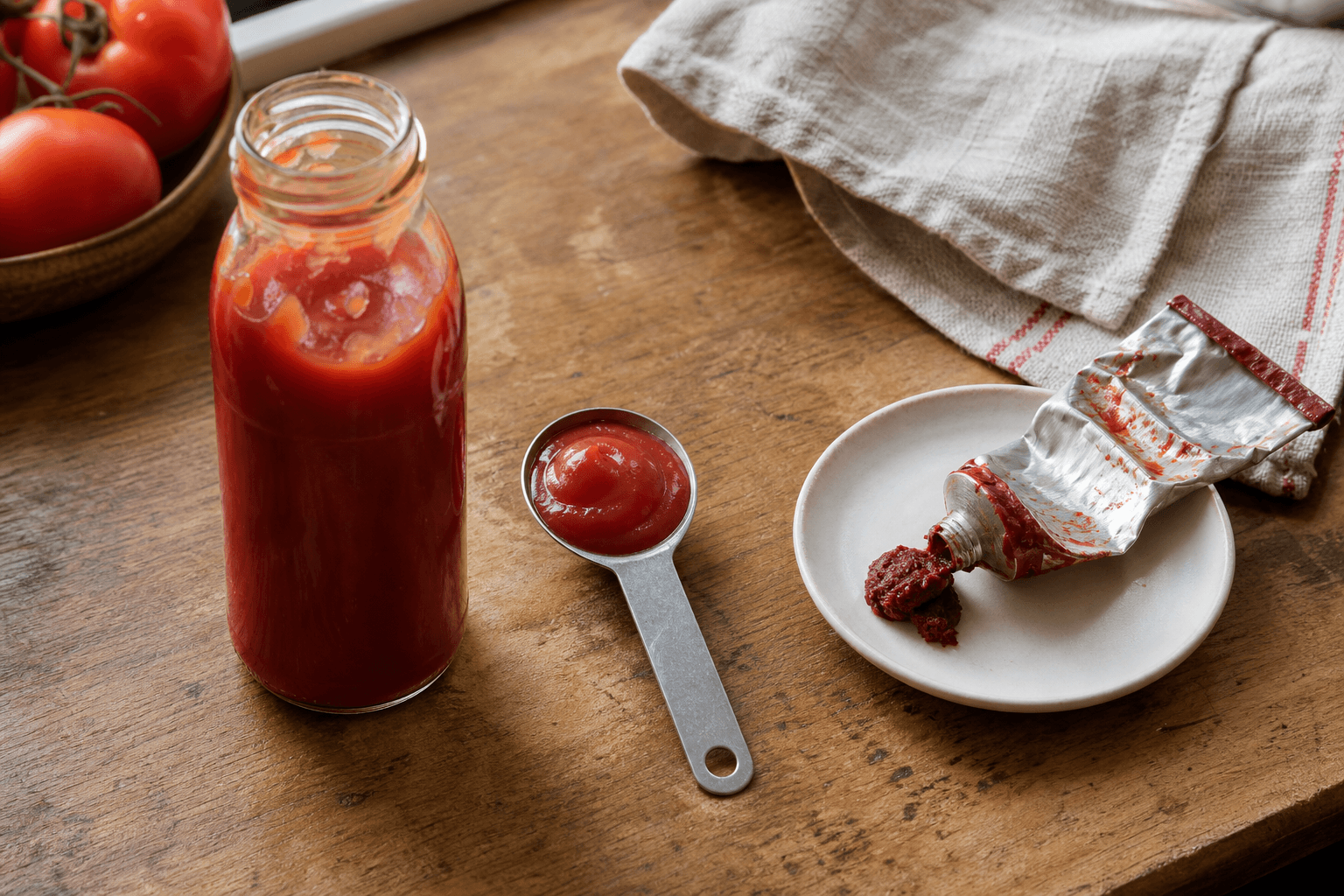
Yes. Use ketchup one for one, 1 tablespoon of ketchup for every 1 tablespoon of tomato paste. Ketchup is thinner, sweeter and more acidic than paste, so let it bubble in the pan for a minute before the other liquids go in, then pull back on the sugar and vinegar the recipe calls for.
That 1:1 number comes from cooking sources, not from an extension office. The Kitchn and Tasting Table both print it. No university extension publishes a ketchup-for-paste conversion at all; they only print the reverse, how to build ketchup out of tomato sauce. So use 1:1 as your working ratio and taste as you go.
Ketchup and the other tomato paste substitutes, at a glance
| Substitute | Ratio | Best for | Watch out |
|---|---|---|---|
| Ketchup, straight swap | 1:1 (1 Tbsp ketchup per 1 Tbsp paste) | Chili, meatloaf, sloppy joes, braises, stews | Thinner and sweeter than paste, so cook it down before other liquid goes in |
| Ketchup with the recipe's sugar cut | 1:1 ketchup, minus up to about 1 1/2 tsp sugar per Tbsp used | Barbecue sauce, baked beans, glazes, anything already sweet | Taste before you remove the full amount |
| Ketchup plus vinegar and spice | 1:1 ketchup, plus a splash of vinegar or a pinch of smoked paprika or garlic powder | Savory dishes where the sweetness is unwelcome | Adds back a savory edge but does not remove the sugar |
| Tomato sauce | 3 Tbsp sauce per 1 Tbsp paste, and take out 2 Tbsp of other liquid | When you want the tomato without added sugar | More water to cook off, so simmer 3 to 5 minutes first if you can |
| Canned tomatoes, strained | 2 Tbsp strained canned tomato per 1 Tbsp paste | Sauces and stews | Reduce the recipe's other liquid to match |
| Fresh tomato | 1 medium tomato per 1 Tbsp paste | Summer, when you have tomatoes and no cans | Needs real time in the pan and still will not match paste's depth |
How to swap ketchup for tomato paste
- Measure it one for one. A recipe asking for 2 tablespoons of paste gets 2 tablespoons of ketchup.
- Put it in where the paste would have gone, usually into hot fat with the aromatics.
- Let it cook down for a minute or two before the stock, water or canned tomatoes arrive. Tasting Table recommends this step to drive off the extra water and mellow the sweetness.
- Hold the sugar. Taste the pot before you add any sweetener the recipe lists, then add only what it still needs.
- Go easy on the vinegar or lemon for the same reason. Ketchup brought its own acid.
- Check salt and spices last. Ketchup is a finished condiment, so every tablespoon also carries salt, onion and garlic powder, and often clove or allspice.
How much sugar are you actually adding? Colorado State University Extension and NDSU Extension both build 1 cup of ketchup from 1 cup of tomato sauce, 1/2 cup of sugar and 2 tablespoons of vinegar. Run that per tablespoon and up to about 1 1/2 teaspoons of sugar and roughly 3/8 teaspoon of vinegar ride along in every spoonful. Those formulas describe homemade ketchup, which is sweeter than most bottled brands. Mississippi State Extension's version uses half as much, 1/4 cup of brown sugar per cup. Treat 1 1/2 teaspoons as a ceiling rather than a fixed subtraction, and taste before you pull sugar out of the recipe.
What changes when you cook with ketchup instead of tomato paste
Body is the part that mostly survives. Ketchup already has the thickness and the strong cooked-tomato flavor that paste brings, which is why the swap works at 1:1 instead of needing a reduction. What you add is sugar, vinegar and seasoning.
In chili, meatloaf, sloppy joes and long braises, that reads as normal. Those dishes usually carry a little sweetness and a little acid anyway, and a tablespoon or two of ketchup disappears into them. In a pot of beans or a barbecue sauce that already has brown sugar and cider vinegar in the ingredient list, the same tablespoon stacks on top of what is there and the sauce turns candy-sweet.
Ketchup also browns differently. Paste fried in oil goes brick red and nutty. Ketchup's sugar starts to catch and burn before it gets there.
When not to use ketchup instead of tomato paste
Skip it when frying the paste is the whole technique. Sofrito, a long ragu, a harissa-style base: those recipes ask you to cook paste in oil until it darkens and caramelizes, and ketchup will scorch before it develops that flavor. Use tomato sauce or strained canned tomatoes there instead.
Skip it in anything already sweet, for the reason above, or use it and pull the recipe's own sugar back to match.
And if you are cooking low sugar, or for someone who is watching blood sugar, this swap puts sugar into a dish that had none. Reduced tomato sauce is the better answer, 3 tablespoons per tablespoon of paste with 2 tablespoons of other liquid removed.
More pantry swaps beyond tomato paste
Ketchup is rarely the only gap in a recipe. A few more conversions worth having on hand:
- Fresh, frozen and canned substitution ratios covers what to do when the recipe wants fresh and you have a can or a bag.
- The printable ingredient substitution chart collects the common ones in one page for the fridge door.
- Worcestershire sauce substitutes and oyster sauce substitutes handle the other two bottles people run out of mid-recipe.
Let your kitchen list track the tomato paste
Well Stockd tracks what is in your fridge, freezer and pantry, and its substitution engine suggests swaps from what you already own when a recipe calls for something you are out of. Frozen and canned forms count, and you can reject any suggestion you do not want to see again. If you are tired of finding out about the empty tomato paste tube mid-recipe, start with an app that tracks what you have and when it expires.
Questions about using ketchup instead of tomato paste
How much sugar does ketchup add compared with tomato paste?
A meaningful amount. NDSU Extension and Colorado State University Extension both build a cup of ketchup from a cup of tomato sauce plus half a cup of sugar and 2 tablespoons of vinegar, which works out to roughly 1 1/2 teaspoons of sugar per tablespoon. Bottled ketchup is generally less sweet than that homemade formula, so taste before you adjust.
Is tomato sauce a better substitute for tomato paste than ketchup?
If you have it, yes. Use 3 tablespoons of tomato sauce per tablespoon of paste and take 2 tablespoons of other liquid out of the recipe, or simmer the sauce 3 to 5 minutes first to reduce it. You get the tomato without the added sugar and vinegar.
Do you need to cook ketchup down before using it instead of tomato paste?
Give it a minute or two in the hot pan before anything else goes in. Ketchup carries more water than paste, and Tasting Table notes that the short simmer both cooks that water off and softens the sweetness.
Sources: The Kitchn, Tasting Table, Tasting Table, Colorado State University Extension Fact Sheet 9.329, NDSU Extension FN198, Mississippi State University Extension.