Substitute for tomato paste in chili: use 3 Tbsp sauce
The best substitute for tomato paste in chili is tomato sauce at 3 tablespoons per tablespoon, with a longer uncovered simmer. Ratios for ketchup, puree, canned tomatoes and grated fresh tomato, plus the sugar and sodium math behind them.
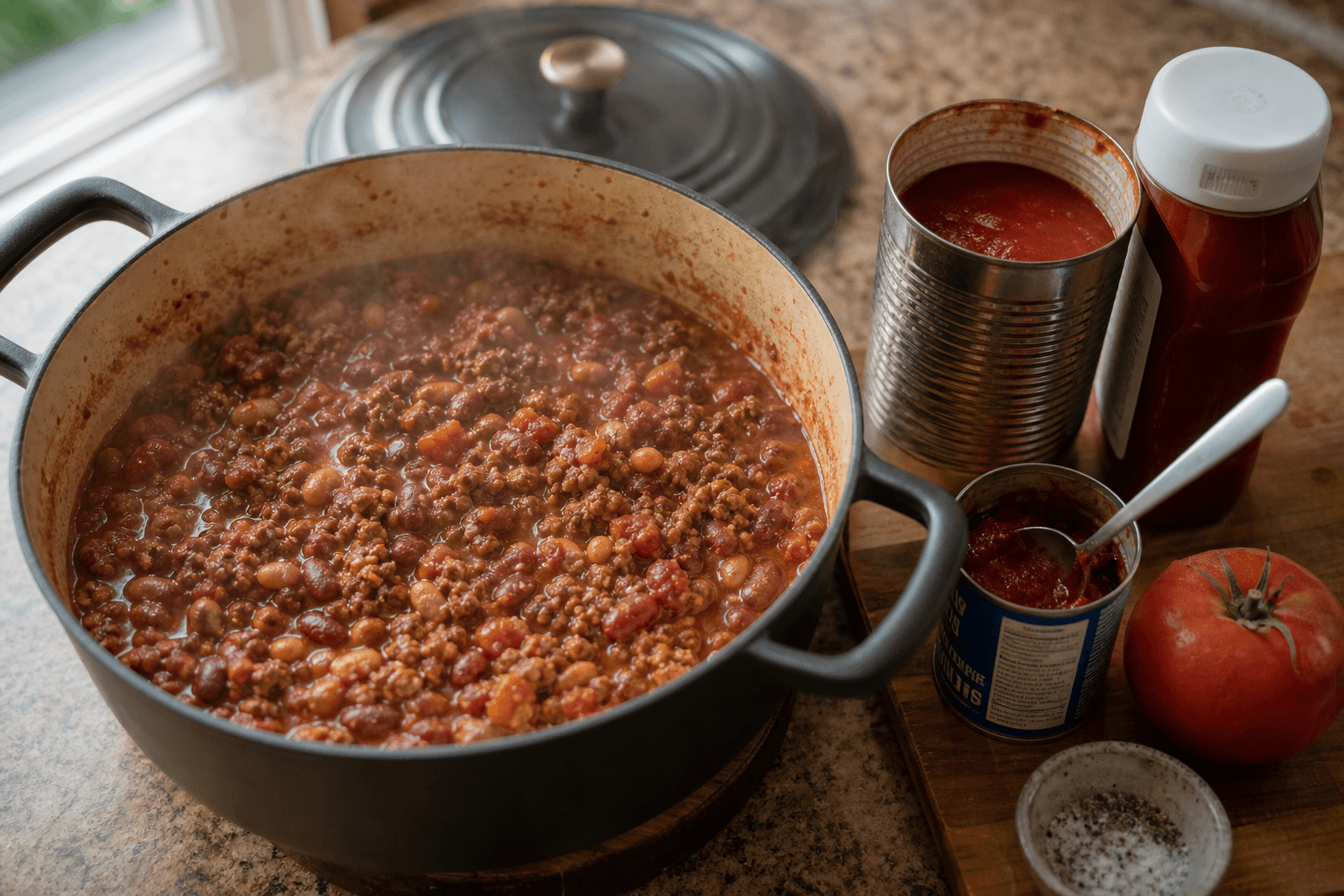
Use 3 tablespoons of tomato sauce for every tablespoon of tomato paste your chili calls for, then simmer the pot uncovered 5 to 10 minutes longer than the recipe says so the extra water cooks off. A whole 6-ounce can of paste comes out to about 2 cups of sauce. Ketchup swaps one for one, but it carries roughly 1 1/2 teaspoons of sugar per tablespoon, so cut any brown sugar the recipe asks for.
Chili is a forgiving place to run out of tomato paste. The pot simmers anyway, so the extra liquid a substitute brings has somewhere to go.
Tomato paste substitutes for chili, with ratios
| Substitute | Ratio | Best for | Watch out |
|---|---|---|---|
| Tomato sauce | 3 Tbsp per 1 Tbsp paste (about 2 cups per 6 oz can) | Any chili | Simmer uncovered 5 to 10 minutes longer |
| Ketchup | 1:1 | Tomato-forward chili | About 1 1/2 tsp sugar and 3/8 tsp vinegar per Tbsp |
| Canned diced or crushed tomatoes, strained | 2 Tbsp strained tomato per 1 Tbsp paste | A can you already opened | Cut the recipe's other liquid to match |
| Tomato puree or passata | 2 to 3 Tbsp per 1 Tbsp paste | Smooth-bodied chili | Thicker than sauce; start at 2 Tbsp |
| Fresh tomato, grated | 1 medium tomato per 1 Tbsp paste | Late-summer chili | Needs 10 minutes or more of frying |
| More chili powder, no tomato | Match what the recipe already uses, then taste | Texas-style chili with no beans | No published ratio; go by taste |
Colorado State University Extension builds 2 cups of sauce from 3/4 cup of paste plus 1 cup of water; NDSU Extension writes it in cans, a 15-ounce can of sauce from a 6-ounce can of paste plus 1 cup of water. The two land near 2 1/3 to 2 2/3 tablespoons per tablespoon. The Kitchn prints a flat 2 tablespoons with 2 tablespoons of liquid pulled from the recipe. For chili I round up to 3 and let the pot do the reducing.
How to swap tomato sauce for tomato paste in chili
- Multiply the paste in the recipe by three. Two tablespoons of paste becomes 6 tablespoons of sauce.
- Add it where the paste would have gone, once the onions, garlic and chili powder have softened in the fat.
- Let it bubble in the fat until it darkens a shade before the broth, beer or canned tomatoes go in. That is as close as you get to the browning real paste gives you.
- Cook the chili as written, then leave the lid off and simmer 5 to 10 minutes past the finish time, stirring the bottom so nothing catches.
- Taste for salt at the end.
What changes when you skip tomato paste in chili
Paste does two jobs in a chili pot. It thickens, and when it fries in the fat before the liquid goes in it caramelizes into a deep roasted-tomato note. Substitutes cover the thickening easily and the browning barely. Your chili will read brighter and less roasted, and it will want more time on the stove to reach the same body.
Texture is the fixable half. Every tomato swap here is mostly water. Beans keep drinking liquid as they sit, so a bean chili catches up on its own. A thin chili with no beans will not, which is the reason for the uncovered simmer.
When not to substitute tomato paste in chili
Ketchup is the wrong pick if the recipe already leans sweet. Brown sugar, molasses, a spoon of barbecue sauce: stack ketchup on any of those and the pot tastes sweet-and-sour instead of savory. Use tomato sauce or strained canned tomatoes instead.
The other bad fit is a pot with no time left. If the chili is thin and dinner is in ten minutes, none of these will thicken it for you.
Caveats for tomato paste substitutes in chili
Canned tomato sauce has about 474 mg of sodium per 100 g per USDA FoodData Central. Trading a 6-ounce can of paste for 2 cups of sauce puts far more salted liquid in the pot than the recipe planned on, so season at the end.
The ketchup sugar figure is extension math. Colorado State and NDSU both rebuild a cup of ketchup as a cup of tomato sauce plus 1/2 cup of sugar and 2 tablespoons of vinegar, which is where the per-tablespoon numbers come from.
Two pieces of ketchup advice get mixed up. Tasting Table recommends up to a cup of ketchup in a 12-serving pot of chili, or about 1/2 cup for a smaller pot or one built on diced tomatoes with their juice. That is a flavor call rather than a paste conversion.
Related tomato paste swaps
How much tomato sauce equals tomato paste covers the conversion outside of chili, and can I use ketchup instead of tomato paste goes deeper on the sugar. Beyond tomatoes, there is the printable ingredient substitution chart and the fresh, frozen and canned substitution ratios.
Let your kitchen pick the tomato paste swap
Well Stockd's substitution engine reads what you already have and suggests a swap when a recipe calls for something you are out of. Frozen and canned forms count, and you can reject a suggestion for good. See also tracking what is in the fridge before it turns and keeping a pantry inventory.
Tomato paste substitute FAQ
What can I use instead of tomato paste in chili?
Tomato sauce, at 3 tablespoons per tablespoon of paste, with the chili simmered uncovered 5 to 10 minutes longer. A whole 6-ounce can of paste equals roughly 2 cups of tomato sauce.
Can I use ketchup instead of tomato paste in chili?
Yes, one for one. Cut any brown sugar or molasses in the recipe first, since extension formulas put about 1 1/2 teaspoons of sugar in every tablespoon of ketchup.
Will my chili be too thin without tomato paste?
Only if you do not simmer it down. Every substitute brings extra water, and leaving the pot uncovered for an extra 5 to 10 minutes evaporates it. Beans and masa also thicken the chili as it sits.
Sources: Colorado State University Extension Fact Sheet 9.329, NDSU Extension FN198, The Kitchn on tomato paste substitutes, Tasting Table on tomato paste substitutes, Tasting Table on ketchup in chili, USDA FoodData Central, canned tomato sauce.