How to cook for one without wasting food
Cooking for one doesn't have to mean wasted food. This is the portion, freeze, and shop method that keeps single servings from going bad, plus a storage chart built for a household of one.
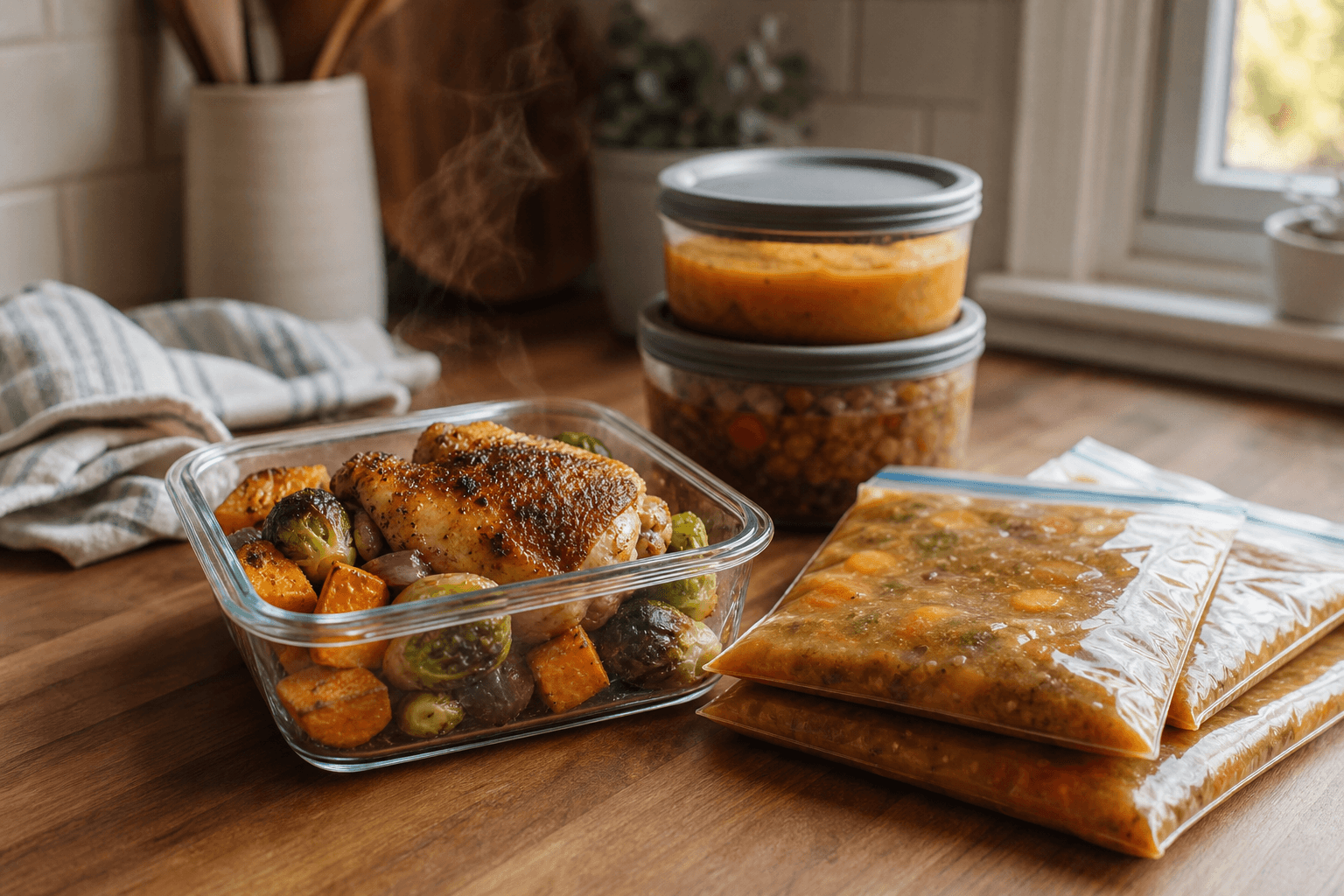
Cooking for one usually goes wrong at the recipe, not at the person. The fastest way to stop wasting food when you cook for one is to portion at the stove, not the table: cook a double batch, freeze half within two hours, and build your grocery list around what's already in the fridge. That single habit prevents most solo food waste.
Why does cooking for one create so much waste?
Most recipes are written for four people, most produce is packaged for a family, and most grocery stores price in bulk. A single-person household often pays a premium for convenience while also throwing more away, because a bag of spinach wilts long before one person can eat it and a rotisserie chicken outlasts anyone's appetite for chicken. The EPA estimates that food waste costs the average American consumer around $728 a year, and cooking alone tends to push that number higher unless you change how you portion, shop, and store food.
The fix isn't eating differently. It's handling food differently at three moments: when you cook, when you shop, and when you put things away. Nail those and the cooking-for-one problem mostly disappears.
What's a simple weekly method for cooking for one?
You don't need a whole new set of recipes. You need a repeatable loop that turns one recipe into three or four meals without anything going bad in between.
- Pick one base recipe per week that's built to scale, like a pot of chili, a tray of roasted chicken thighs, a pan of baked ziti, or a pot of grains and beans. Cook it at full recipe size, even though it "serves four."
- Eat one portion the day you cook it. This is your fresh meal, and it's the only one that needs zero planning.
- Portion the rest immediately, within about two hours of cooking, while it's still warm rather than after it's sat on the counter or in the fridge overnight. Waiting to portion leftovers is the single biggest reason they get forgotten and wasted.
- Split the portions between fridge and freezer. Keep two or three days' worth in the fridge for the week ahead, and freeze anything beyond that right away.
- Label and date everything with a piece of tape and a marker, or log it in a fridge inventory app so you're not guessing what's in the container three weeks from now.
- Build next week's shopping list around what's already in the freezer, not around a new recipe. Rotate through what you have before you add anything new.
Run that loop for a month and you'll usually end up buying less, throwing away less, and spending less time cooking on weeknights, since half your meals are already made.
How do you scale a recipe that's written to serve four?
You mostly don't need to. Scaling a recipe down to one serving means fiddling with fractions of an egg or a third of a can of beans, and that's where waste sneaks back in through the extra ingredient you bought and can't use. It's usually easier to cook the recipe at full size and treat the extra servings as planned leftovers instead of accidental ones.
If you do want to scale down, a few ingredients are worth halving rather than freezing the rest:
- Fresh herbs and delicate greens, which don't hold up well no matter how you store them
- Dairy-based sauces, which can separate after freezing and reheating
- Anything you're only mildly interested in eating twice
For everything else (sturdier proteins, grains, beans, and tomato-based sauces), cook the full batch and freeze the extra. It freezes better than it scales down.
How long do single portions last?
Once something is cooked and portioned, the clock is the same whether you're cooking for one or for six. The difference for a solo cook is that smaller portions cool faster and thaw faster, which works in your favor.
| Food | Fridge | Freezer (best quality) | How to portion it |
|---|---|---|---|
| Cooked leftovers, general | 3 to 4 days | 3 to 4 months | 1 to 2 cup airtight containers |
| Soups and stews | 3 to 4 days | 4 to 6 months | Freeze flat in bags or single-cup jars |
| Cooked rice, pasta, grains | 4 to 6 days | 1 to 2 months | Flatten in a freezer bag, snap off a portion |
| Roasted or cooked vegetables | 3 to 5 days | 2 to 3 months | Freeze on a tray first, then bag |
| Cooked chicken, beef, or pork | 3 to 4 days | 2 to 4 months | Slice and freeze in a single layer |
| Fresh bread | 2 to 3 days at room temp | About 3 months | Slice before freezing, pull one slice at a time |
| Fresh herbs | About 1 week | 4 to 6 months | Chop and freeze in oil in an ice cube tray |
Freezer times above are for best quality, not safety. Food kept at 0 degrees Fahrenheit or below stays safe indefinitely. It just loses moisture and flavor the longer it sits, which is exactly why labeling with a date matters for a household of one. Nobody else is going to remember when you made that chili.
How do you freeze single portions so they don't turn to mush?
Three habits make the difference between a freezer that saves you money and one that becomes a graveyard of mystery bags.
Freeze flat, not deep. A sandwich bag or shallow container pressed flat freezes faster and thaws faster than a tall deli container, and faster freezing means less ice crystal damage to texture.
Portion before you freeze, not after. It's tempting to freeze one big block of soup for later, but then later you have to hack a portion off with a knife, which usually means you thaw more than you need and waste the rest anyway.
Leave room for single portions, not family-sized blocks. A freezer packed with containers sized for a recipe you never scaled down is doing the opposite of its job. A freezer organized around single portions gets used; one full of vague leftovers gets ignored until it's cleaned out and thrown away.
If a fridge full of forgotten containers is a recurring problem for you, our guide on how to stop throwing away food from the fridge walks through the visibility habits that fix it.
How do you shop for one person without overbuying?
Overbuying, not overcooking, is where most solo food waste starts, and a few small adjustments fix most of it.
Buy proteins in bulk, then portion and freeze them the day you get home, before they've had a chance to sit in the fridge unused. A family-sized pack of chicken thighs split into four freezer bags is four dinners, not one dinner and three regrets.
Choose produce that holds its own, like carrots, cabbage, onions, and bell peppers, over produce with a two-day window, like berries and delicate greens, unless you have a specific plan to use the delicate stuff right away.
Shop from your own kitchen first. Check what's already in the fridge and freezer before you write a list, so you're not buying a second onion when you have one going soft in the drawer. This is the exact gap a fridge inventory app is built to close. A tool like Well Stockd tracks what you already have and flags what's about to expire, and that matters more for one person than for a family: there's no one else in the house to notice the spinach going bad.
For the broader shopping habits that prevent this in the first place, see our guide on how to stop wasting groceries before they go bad.
Frequently asked questions
Is cooking for one cheaper than takeout? Cooking is cheaper per meal almost every time, but only if the food gets eaten. A twelve dollar batch of chili that turns into four meals beats a twelve dollar takeout meal that covers one. The math flips the moment half the batch goes in the trash, which is why the freezing and portioning habits above matter more than the recipe itself.
Can you safely freeze half of a recipe you already cooked? Yes, as long as you portion and refrigerate or freeze it within about two hours of cooking. Cool it quickly by spreading it in a shallow container rather than leaving a deep pot to cool slowly on the counter, then freeze once it's no longer steaming.
What size containers work best for one person? One to two cup containers cover most single servings, which is smaller than most kitchens are stocked for by default. A stack of small, flat containers or freezer bags is worth more to a solo cook than any specialty gadget.
If you want the fundamentals behind all of this, our full guide to how to stop wasting food at home covers shopping, storage, and planning for households of any size.
Sources: USDA FSIS, Leftovers and Food Safety, FDA, Refrigerator and Freezer Storage Chart, EPA, Estimating the Cost of Food Waste to American Consumers