The FIFO method at home: how to keep your fridge rotating properly
FIFO means first in, first out: move older food to the front of the fridge and tuck new groceries in behind it, so you use what you already have before it spoils. This guide covers the setup shelf by shelf, plus a storage-time cheat sheet.
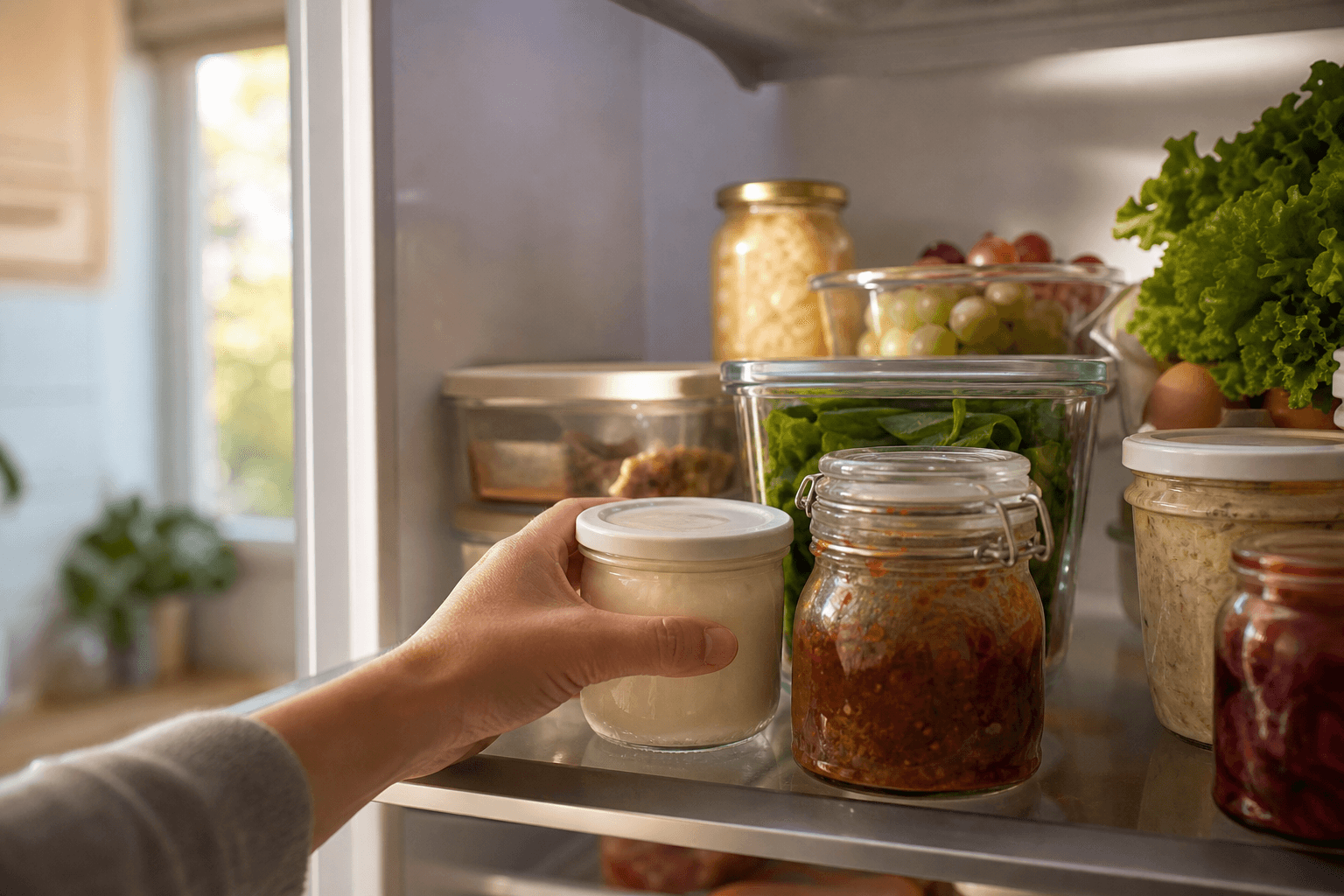
FIFO stands for first in, first out: the oldest food in your fridge goes to the front where you'll see it and grab it, and anything new gets tucked in behind. Do that every time you put groceries away, and you naturally use food before it turns instead of finding it wilted three weeks later.
Restaurant kitchens have run on FIFO for decades because it works without anyone having to remember dates in their head. The system does the remembering for you, so position tells you what to cook next instead of leaving it to guesswork. Bring the same habit home and grocery bills shrink a little, with fewer sad discoveries waiting in the back of the crisper drawer. It also means the fridge ends up planning your next few meals for you, since whatever's up front is what you'll reach for first.
What is the FIFO method, and why does it matter in a fridge?
FIFO is a stock rotation rule. Every time newer food comes in, it goes behind or under whatever is already there, so the oldest items stay in the most visible, most reachable spot. It sounds too simple to matter, but it works: food you can see gets eaten, and food buried behind newer purchases gets forgotten until it's not edible anymore.
At home this matters more than most people expect. A lot of fridge waste isn't caused by buying too much. It's caused by buying a second jar of salsa because the first one slid behind the milk, or restocking spinach on top of last week's bag instead of moving the older one forward. FIFO fixes that by making order do the work that memory usually fails at.
How to set up FIFO in your fridge, step by step
You don't need bins, labels, or a system that takes longer than putting groceries away normally does. Four habits cover almost all of it.
- Unpack to the back. When you get home from the store, push what's already there forward, then slide new stock in behind it. This single habit covers most of what FIFO comes down to.
- Group like with like. Keep dairy together, produce together, leftovers together. You can't judge what's oldest fairly when the yogurt is scattered across three shelves.
- Date what's unclear. A strip of masking tape and a marker handles most leftovers and opened packages. Cooked food should go into the fridge within two hours of cooking, and once it's in there, the clock matters just as much as it does for anything you bought at the store.
- Check the front row before you shop. Scan what's sitting at eye level and closest to the door. Those are your oldest items, and a decent cue for tonight's dinner or this week's menu, not whatever is buried in back.
Where FIFO makes the biggest difference, zone by zone
Main shelves need the most frequent attention: move leftovers and opened jars to the front every time you cook or restock. In the crisper drawers, push older produce to the top or to whichever side you open first, and tuck new bunches underneath. Door shelves are where things linger longest, since condiments can sit for months, so a quick front-to-back sweep once a month catches whatever you forgot about since a recipe you made back in spring. The freezer is the easiest zone to lose track of, because frozen food loses quality slowly instead of spoiling suddenly; stack or file newer items behind or below older ones so you're not still eating a bag from two winters ago. The same front-to-back logic works in the pantry for canned goods, grains, and boxed items, which pairs naturally with a pantry inventory system if you're managing more than a shelf or two.
How long can food sit before FIFO catches it
FIFO is a rotation habit, not a substitute for knowing safe storage windows. Keep your fridge at or below 40°F, and use this as a rough guide for how long common items last once that clock starts.
| Food | Typical fridge life | FIFO cue |
|---|---|---|
| Cooked leftovers | 3 to 4 days | Date when cooked; move to front daily |
| Raw eggs, in shell | 3 to 5 weeks | Keep in carton, oldest carton in front |
| Milk, opened | About 5 to 7 days after opening | Front shelf, not the door |
| Deli meat, opened | 3 to 5 days | Reseal and date at first use |
| Fresh poultry, raw | 1 to 2 days | Bottom shelf, cook or freeze first |
| Opened condiments | Varies by product, often weeks to months | Monthly door rotation catches stragglers |
Source guidance: USDA Food Safety and Inspection Service and FoodSafety.gov cold food storage charts.
A simpler way to run FIFO without relying on memory
FIFO breaks down the moment you can't remember when something went in, and that's the part a habit alone can't always fix, especially across a full fridge, freezer, and pantry. If you want the rotation cue without tracking dates by hand, Well Stockd logs what you have and when it was added, then flags what's aging out so the oldest items surface on their own instead of depending on you spotting them at the front of a shelf. It's a reasonable next step once the physical habit from this guide feels natural, and it's one of several options covered in this roundup of pantry inventory apps if you want to compare approaches.
Frequently asked questions
Does FIFO work for a freezer, or just the fridge? Yes. Frozen food doesn't spoil the way fresh food does, but quality drops the longer something sits, so the same front-to-back or top-to-bottom rotation keeps you eating the oldest frozen items while they're still good, not two years later.
What's the difference between FIFO and FEFO? FIFO rotates by purchase or prep date. FEFO, first expired first out, rotates by the actual expiration or use-by date printed on the package. For most home kitchens FIFO is close enough, but FEFO matters more when items in the same batch have noticeably different shelf lives, like a fresh cut of meat sitting next to a vacuum-sealed one.
How do I start FIFO without reorganizing my whole fridge at once? Start with one shelf, or just the leftovers you already have. Move the oldest items forward, date anything unclear, and carry the same habit into your next grocery unpack. It compounds fast, since every future shop reinforces it.
FIFO is really just one piece of running an organized kitchen. If you want the fuller picture, including how to track what's in your fridge and pantry beyond just rotation, start with this guide to keeping a kitchen inventory, or go deeper on the fridge specifically with how to keep track of food in your fridge.
Sources: USDA Food Safety and Inspection Service, Leftovers and Food Safety; FoodSafety.gov, Cold Food Storage Charts; FDA, Refrigerator and Freezer Storage Chart.