How to organize your fridge to prevent food waste
Most of what gets thrown out from the fridge was still fine to eat, it just got forgotten in the back of a shelf. This is the shelf-by-shelf method for organizing yours by temperature and visibility, so nothing gets lost again.
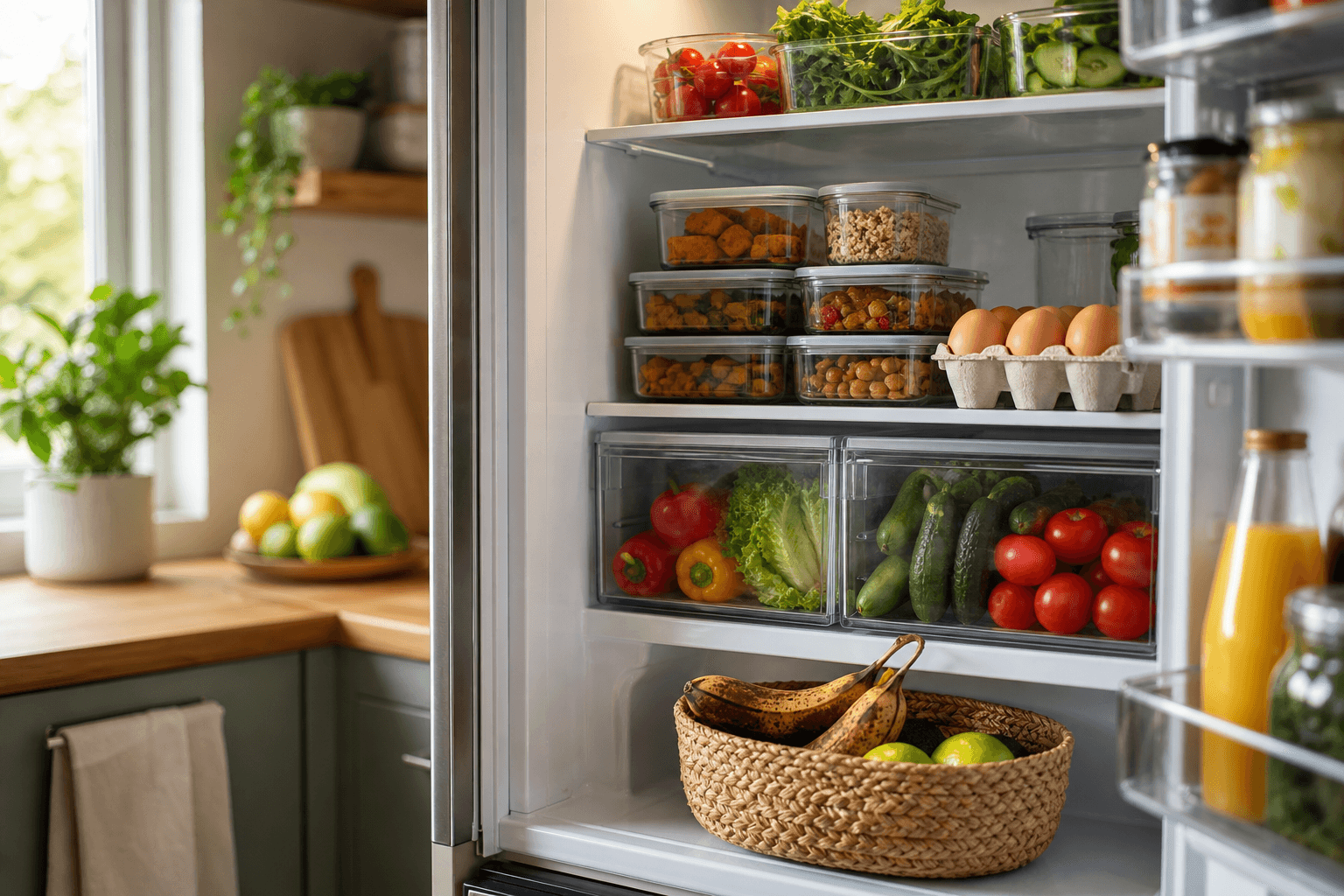
Organize your fridge by cold zone and visibility: raw meat goes on the bottom shelf, ready-to-eat food and anything close to its date sits at eye level in a labeled "eat first" spot, produce goes in the crisper drawers set to the right humidity, and the whole fridge stays at 40°F or below. Most food waste happens because food gets buried, not because it goes bad.
Why fridge organization is a food waste fix, not just a tidiness project
The USDA estimates that 30 to 40 percent of the food supply in the United States goes to waste, and households are responsible for the largest single share of it. A lot of that food never had the chance to genuinely spoil. It got pushed to the back of a shelf, forgotten behind a jar of pickles, and rediscovered three weeks later with regret. The USDA puts the cost of that waste at roughly $1,500 a year for a family of four.
A well-organized fridge fixes the actual problem: food you can't see is food you don't eat. If you want the bigger picture on cutting waste across your whole kitchen, our guide on how to stop wasting food at home is the place to start. This article zooms in on the one appliance that causes the most silent losses.
What temperature keeps food safe and lasting longer?
Set your fridge to 40°F (4°C) or below and your freezer to 0°F (-18°C). The FDA calls the range between 40°F and 140°F the "danger zone," because bacteria that cause foodborne illness can double in as little as 20 minutes in that window. A fridge running warmer than 40°F, even by a few degrees, shortens how long everything inside stays safe to eat, which means more of it ends up in the trash sooner than it should.
Most fridge dials don't show an actual temperature, just a number on a scale, so a cheap appliance thermometer is worth the five dollars. Check it once a month. If your fridge is packed too tightly for air to circulate, or the door gets opened and left open a lot, the temperature can drift into unsafe territory without anything looking wrong.
How do you organize a fridge shelf by shelf?
Work from top to bottom, coldest to warmest, and let temperature dictate what goes where.
- Top shelf: ready-to-eat and eye-level. This is the warmest spot in the main compartment and the one you see every time you open the door. Put leftovers, opened deli items, and anything close to its use-by date here, front and center.
- Middle shelves: dairy and eggs. These stay at a steady cold temperature, which suits anything that spoils quickly. Keep eggs in their original carton on a middle shelf rather than the door. The carton protects them and the shelf is colder than the door ever gets.
- Bottom shelf: raw meat, poultry, and seafood. This is usually the coldest part of the fridge, and keeping raw proteins here means any drips fall onto the shelf instead of onto food below them. Store them in sealed containers or on a tray, both for food safety and so a leak doesn't force you to toss everything under it.
- Crisper drawers: produce, sorted by humidity. More on this below.
- Door shelves: condiments only. The door is the warmest part of the fridge because it's exposed to room air every time it opens. Reserve it for condiments, juice, and butter, things that don't spoil quickly even with temperature swings.
The same breakdown, as a table:
| Fridge zone | Temperature | Best for | Why it works |
|---|---|---|---|
| Top shelf | Warmest part of the main compartment | Leftovers, ready-to-eat food, items close to their date | It's at eye level, so it gets eaten instead of forgotten |
| Middle shelves | Steady and cold | Dairy, eggs in the carton, yogurt | Consistent temperature protects food that spoils fast |
| Bottom shelf | Coldest shelf in the fridge | Raw meat, poultry, seafood, sealed or on a tray | Drips stay contained and the cold slows bacterial growth |
| High-humidity crisper | Cold and moist | Leafy greens, herbs, broccoli, carrots | Trapped moisture keeps delicate produce from wilting |
| Low-humidity crisper | Cold and dry | Apples, pears, avocados, melons | Escaping ethylene gas keeps nearby food from overripening |
| Door shelves | Warmest zone, swings with every opening | Condiments, juice, butter | Nothing perishable belongs where the temperature isn't stable |
What about the crisper drawers?
Most fridges have two crisper drawers with a small slider that controls humidity, and most people never touch it. It matters more than it looks. Fruits that ripen and rot quickly, or that give off ethylene gas as they age, such as apples, pears, avocados, and melons, do best in the low-humidity drawer, where that gas can escape instead of building up and speeding up decay in whatever sits next to it. Leafy greens, herbs, and other produce that wilts do best in the high-humidity drawer, where trapped moisture keeps them crisp.
Keeping ethylene-producing fruit away from leafy greens and other vegetables matters even within the fridge, not just on the counter. If you've ever pulled out spinach that turned to mush days before it should have, sitting it next to apples in the same low-traffic drawer is a common reason why.
How do you stop forgetting what's already in there?
Organization only prevents waste if it also changes what you notice first. A few habits make that automatic.
- Keep an "eat first" bin. A single labeled bin or tray on the top shelf for anything within a few days of its date does more to cut waste than almost any other single change. When it's the first thing you see, it's the first thing you reach for.
- Practice FIFO: first in, first out. When you unpack groceries, move older items to the front and put new ones behind them, the same way grocery stores stock their shelves.
- Do a five-minute reset once a week. Before your next shopping trip, scan every shelf and drawer for anything that needs to be used, frozen, or tossed. It's much easier to build a shopping list, and a meal plan, around what's already there.
These habits are also the difference between food that spoils because it was genuinely forgotten and food that spoils because nobody looked. Our guide on how to stop throwing away food from the fridge goes deeper on the second category, and if the waste is starting earlier than that, at the grocery store or in the pantry, how to stop wasting groceries before they go bad covers the steps before food even reaches the fridge.
A faster way to see what needs to be eaten
Even a perfectly organized fridge relies on you remembering what's inside it and when it needs to be used, and that's the part that tends to slip during a busy week. Well Stockd tracks what's in your fridge, pantry, and freezer, flags items as they get close to their date, and suggests recipes you can make with what's already on hand instead of what's sitting on a store shelf. If you're weighing whether a tracking app is worth adding to your routine, our breakdown of the best pantry inventory app to reduce food waste walks through what to look for.
Frequently asked questions
Should eggs be stored in the fridge door? No. Keep eggs in their original carton on a middle shelf. The door is the warmest and least stable part of the fridge, and eggs stay fresh longer at a steady cold temperature.
How often should I clean out my fridge? Do a quick five-minute check weekly, before you shop, and a deeper wipe-down monthly. Weekly checks catch food before it spoils, since that's usually the point where something is a few days from its date rather than already gone bad.
Does fridge organization really make a measurable difference? Yes. Since roughly two-thirds of household food waste comes down to food not being used before it goes bad, rather than food that was never edible, simply making items visible and easy to reach addresses the main cause directly.
Sources: FDA, Refrigerator Thermometers - Cold Facts about Food Safety; USDA FSIS, "Danger Zone" (40°F - 140°F); USDA, Food Waste FAQs