Do best by dates really matter?
Best by dates measure quality, not safety. The USDA says only infant formula legally needs a true safety date. Here's how long food stays good past the date, and when to trust the calendar over your fridge thermometer.
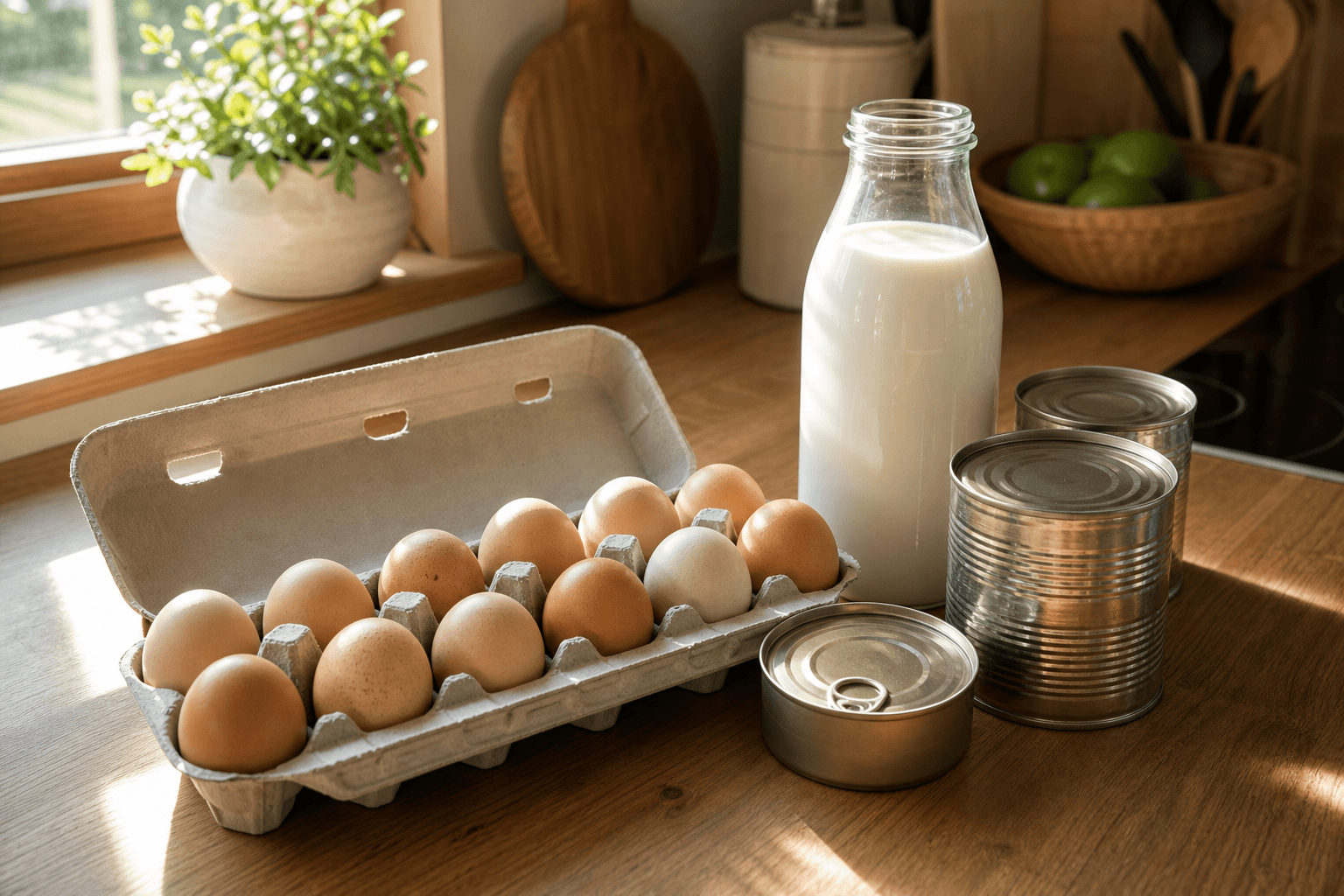
Not for safety, in almost every case. The USDA says a "best if used by" date measures quality. It's not a safety signal, and only infant formula is legally required to carry a true safety date. Eggs stay safe 3 to 5 weeks past their date, and milk holds 5 to 7 days past its date if kept at 40°F or colder.
That surprises a lot of people, because the date on the label looks so official. It's not a countdown to spoilage. It's a manufacturer's best guess at peak flavor and texture, and once you know that, you can stop tossing food that's still perfectly fine to eat.
What do "best by," "sell by," and "use by" dates mean?
There's no single federal standard for date labels on food, and except for infant formula, none of them are safety dates. Each one means something different:
- Best if used by / best by: the date the manufacturer expects the food to taste and look its best.
- Sell by: a stocking cue for the store's inventory. It's not aimed at shoppers, and food is typically still good well past this date.
- Use by: the last date recommended for peak quality. Only on infant formula is this a legal safety cutoff.
The USDA encourages manufacturers to standardize on "Best if Used By" wording because the patchwork of different phrases confuses shoppers and leads to good food getting thrown out. For a full rundown of shelf lives across the fridge, freezer, and pantry, start with our guide to how long food lasts.
How long is food still good after the date?
Once you separate the quality date from safety, what matters is how long a food stays good if you store it properly. These figures come from USDA guidance.
| Food | Date label you'll see | Still good after that date, if stored properly |
|---|---|---|
| Eggs | Sell-by or best-by | 3 to 5 weeks after purchase |
| Milk | Sell-by or use-by | 5 to 7 days past the date, kept at 40°F or colder |
| Deli meat, opened | Best-by | 3 to 5 days after opening |
| Deli meat, unopened | Best-by | Up to 2 weeks in the fridge |
| High-acid canned goods (tomatoes, citrus, pickles) | Best-by | 12 to 18 months unopened |
| Low-acid canned goods (vegetables, soups, canned meat) | Best-by | Safe indefinitely if the can shows no rust, dents, or bulges; best quality within 2 to 5 years |
| Frozen food, any type | Best-by | Safe indefinitely at 0°F; only texture and flavor fade over time |
The same time-and-temperature logic applies to specific foods, including how long raw chicken lasts in the fridge and how long cooked rice lasts in the fridge. In both cases, the safety window depends on how bacteria behave at fridge temperature. The printed date doesn't decide it.
How to tell if food has gone bad
Trust your senses first, then trust the clock. Signs a food has spoiled include:
- A sour, sulfurous, or otherwise off smell
- Sliminess or a sticky film, especially on meat or deli items
- Visible mold or unexpected discoloration
- A can that's bulging, leaking, or badly dented or rusted
- A flat or off flavor on something you were about to serve raw or cold
Some of the bacteria that make people sick, such as Salmonella and Listeria, don't change how food smells, tastes, or looks. That's why the time-and-temperature rule matters more than a sniff test for higher-risk foods like raw meat, poultry, eggs, deli meat, and leftovers. If a perishable food is past its safe storage window, don't taste it to check. Just throw it out.
How to store food so it lasts
The date only matters if the food was stored right up until you check it. A few habits do most of the work:
- Keep your refrigerator at 40°F or below and your freezer at 0°F.
- Store raw meat, poultry, and seafood on the bottom shelf so juices can't drip onto other food.
- Get perishables into the fridge within 2 hours of purchase or cooking, or within 1 hour if it's above 90°F outside.
- Keep pantry staples in a cool, dry spot below 85°F, away from the stove or under the sink.
- Rotate stock so older items get used first, and keep the original date label visible, or copy it onto a piece of tape when you repackage something.
If you're juggling dozens of dates across a full fridge, freezer, and pantry, an app to track food expiration dates can flag what's about to turn before you have to guess.
Can you freeze it before the date hits?
Yes, and it's one of the most useful tricks for cutting food waste. Freezing at 0°F stops the safety clock entirely, so food frozen before its date stays safe to eat indefinitely. Quality is a different story: texture and flavor slowly decline the longer something sits in the freezer, so foods you freeze near their best-by date are still best used within a few months for taste, even though they remain safe well beyond that.
When in doubt, throw it out
This is the USDA's own phrase, and it's the rule that should override a printed date every time. Bacteria multiply fastest between 40°F and 140°F, so throw out perishable food left out longer than 2 hours (or 1 hour above 90°F) even if the best-by date is weeks away. A date on the package can't tell you whether the food sat in a hot car or a warm kitchen for too long. If you're unsure how something was handled or stored, when in doubt, throw it out.
Canned goods are the extreme case — how long canned food is good after the expiration date has the numbers.
Frequently asked questions
Does a "sell by" date mean the food is bad afterward?
No. It's a stocking cue for the store's shelves. It's not meant for shoppers, and most food is still perfectly good after it passes.
Is "use by" the same thing as an expiration date?
Not for most foods. It marks peak quality rather than a safety cutoff. The one exception is infant formula, where federal law requires the date to represent an actual safety limit.
Why do manufacturers print dates that don't mean safety?
They add these dates voluntarily to help you and the retailer judge freshness, since food that's still safe can taste flatter or feel different in texture as it ages.
Sources: Food Product Dating, USDA FSIS, Freezing and Food Safety, USDA FSIS, How long can you keep canned goods?, USDA, How long does lunch meat stay fresh?, USDA, Safe Handling of Take-Out Foods, USDA FSIS