How to scramble eggs so they stay soft
How to scramble eggs step by step for soft, moist curds: whisking, heat, butter and milk, when to take them off the heat, food safety for soft eggs, and common mistakes with their fixes.
To scramble eggs so they stay soft, beat them with a pinch of salt until the yolks and whites are fully blended, cook them in butter over medium-low heat, and push them slowly around the pan so they gather into large, tender curds. Take the pan off the burner as soon as nothing runny is left and the curds are still soft and moist, because the eggs keep cooking on the way to the plate.
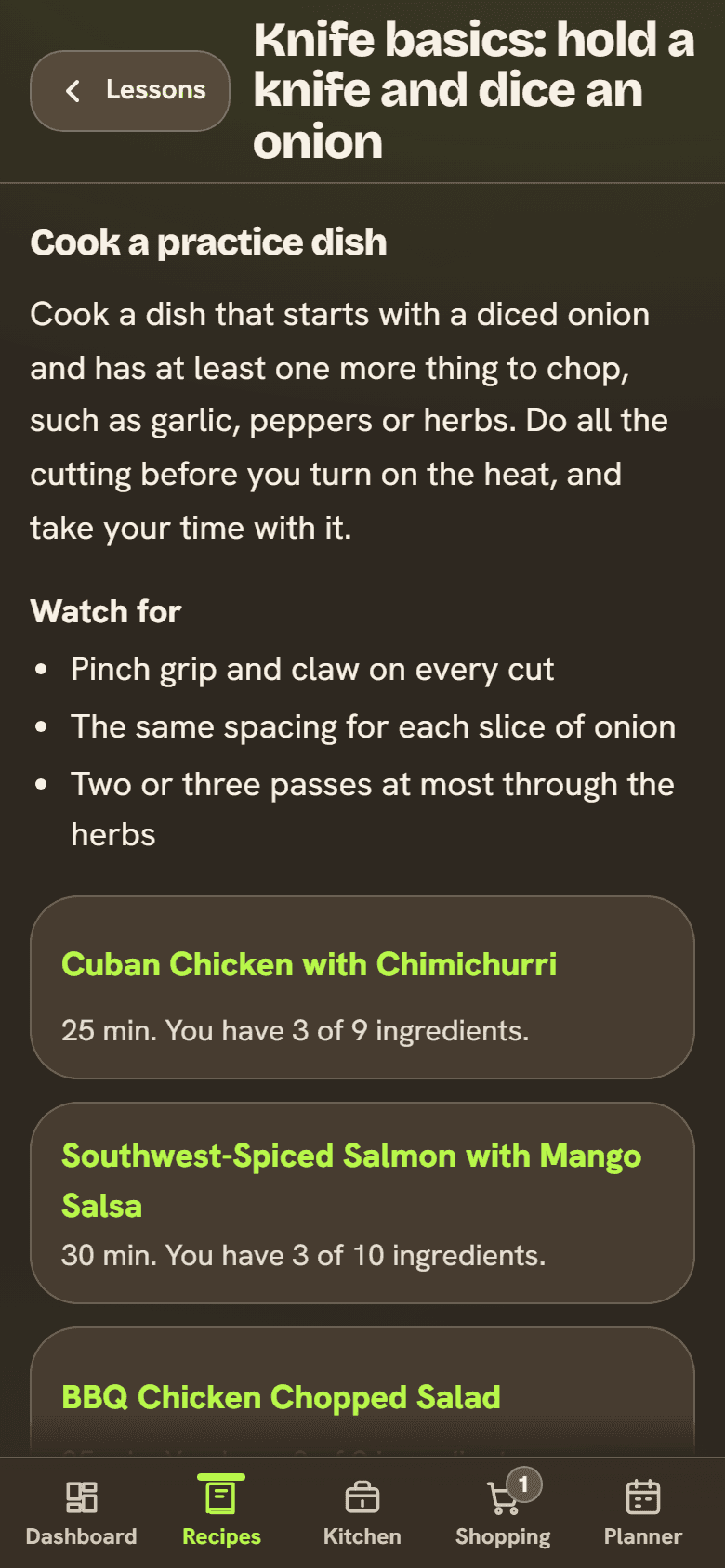
Most rubbery scrambled eggs come from a pan that's too hot. The steps, the three common styles and the mistakes below fix that, and if you'd like to practice with a real breakfast, the eggs lesson in Well Stockd's Cooking School walks you through scrambled, fried and boiled eggs.
How to make scrambled eggs step by step
For two servings you need 4 large eggs, a pinch of salt and 1 tablespoon of butter. A tablespoon or two of milk is optional.
- Break the eggs into a mixing bowl one at a time and pick out any bits of shell.
- Add the salt, and the milk if you're using it. Beat with a fork or whisk for about 30 seconds, until the color is even and there are no clear streaks of white.
- Melt the butter in an 8- or 10-inch nonstick skillet over medium-low heat. It should foam gently without turning brown.
- Pour in the eggs and don't touch them until a thin rim around the edge has set, which takes roughly 20 seconds.
- With a silicone spatula, slowly draw the set egg in from the sides of the pan to the middle, so it forms big folds. Tilt the pan so the runny egg flows into the empty spaces. Repeat every few seconds.
- When most of the egg has set into soft curds and nothing liquid is running across the pan, take it off the burner. Fold the eggs once or twice more off the heat, then serve them right away.
The whole thing takes 3 to 5 minutes. If the butter starts to sizzle loudly or the eggs set the moment they touch the pan, lift the pan away from the burner for a few seconds to let it cool.
What is the best way to scramble eggs?
Low heat and slow stirring give the softest eggs, and the way you stir decides the texture:
| Style | Heat | How you stir | Result |
|---|---|---|---|
| Soft, large curds | Medium-low | Slow pushes from the edge every few seconds | Big, tender, moist folds |
| Creamy, small curds | Low | Constant small stirs | Fine, spoonable curds that take a few minutes longer |
| Firm and fluffy | Medium | Stirred and broken up | Small, drier pieces that hold together in a breakfast burrito or fried rice |
All three work. Soft curds are the easiest place to start, and they're the hardest style to overcook if you keep the heat down.
Should you whisk eggs before scrambling?
Yes. Beating the eggs before they go into the pan blends the yolks and whites, so they set evenly into one soft texture with no rubbery white patches. You can stir eggs together in the pan, but you'll get streaks.
A little milk or cream, up to a tablespoon for every two eggs, makes the curds a little softer and more forgiving. Too much liquid makes them watery, and plain eggs with butter are just as good.
Are soft scrambled eggs safe?
Cook them until no runny egg is left anywhere. The USDA's Food Safety and Inspection Service (FSIS) says scrambled eggs should not be runny, and it advises cooking eggs until both the yolk and white are firm and cooking egg dishes to 160°F. Soft curds should be set all the way through: moist, but with no wet, raw-looking egg left. If any part still looks liquid, give it another 20 to 30 seconds. If you're cooking for someone who is pregnant, a young child, an older adult or a person with a weakened immune system, cook the curds until firm or use pasteurized eggs. Both points are on the FSIS page Shell Eggs from Farm to Table.
The same page explains why scrambled eggs sometimes turn greenish: cooking them at too high a temperature or holding them hot for too long. They're still safe, but cooking them just before you eat avoids it.
Leftover scrambled eggs go into the fridge within 2 hours. FSIS says cooked egg dishes should be used within 3 to 4 days and reheated to 165°F.
How to scramble eggs: mistakes and fixes
| Mistake | What happens | Fix |
|---|---|---|
| Heat too high | Rubbery, dry eggs with brown patches | Medium-low heat, and lift the pan off the burner if it sizzles hard |
| Constant fast stirring over high heat | Tiny, grainy curds | Slow pushes from the edge |
| Under-beaten eggs | White streaks through the curds | Beat until the color is even |
| Cooking until they look done in the pan | Dry eggs by the time they reach the plate | Pull the pan off the burner once nothing runny is left, while the curds are still soft |
| Too much milk | Watery eggs that leak onto the plate | No more than a tablespoon or two for four eggs |
| Adding cheese too early | Greasy, stringy eggs stuck to the pan | Stir in cheese off the heat at the end |
| Not enough butter in a sticky pan | Eggs stick and tear | Use a nonstick pan, or a well-seasoned one with enough butter to coat it |
Use your eggs while they're good
Eggs often outlast the date on the carton. Before you toss a dozen, read how long eggs are good after the expiration date and how to tell if eggs are still good.
Scrambled eggs are best made fresh. If you want eggs ready in the fridge for busy mornings, boiled eggs travel and keep better: see how long hard-boiled eggs last in the fridge, and our guides to boiling eggs and frying an egg for the other two classics.
Practice eggs in the Cooking School
The course gives eggs a full lesson, Eggs: scrambled, fried and boiled. After you read it and answer three quick questions, Well Stockd suggests practice dishes from what's in your kitchen. You cook one step by step, then answer a short checklist about how it went, such as whether any liquid egg was left in the pan or the eggs browned where you didn't want them, and each answer tells you what to keep or change.
That lesson is part of Pro, which covers lessons 2 to 10. Lesson 1, Knife basics, is free for everyone, and the Cooking School page lists all ten.