How long does gravy last in the fridge? Plus how to reheat it
How long homemade, jarred and packet gravy last in the fridge, freezer and pantry, using USDA's figures: homemade gravy keeps 3 to 4 days in the refrigerator and 2 to 3 months frozen. Includes a day-by-day table, signs gravy has gone bad, how to reheat it to a rolling boil, how to freeze it, and the 3:2:1 rule.
Homemade gravy lasts 3 to 4 days in the refrigerator, according to USDA's Food Safety and Inspection Service (FSIS), and 2 to 3 months in the freezer for best quality. Gravy from an opened jar or made from a mix has less time: 1 to 2 days in the fridge, according to USDA's FoodKeeper.
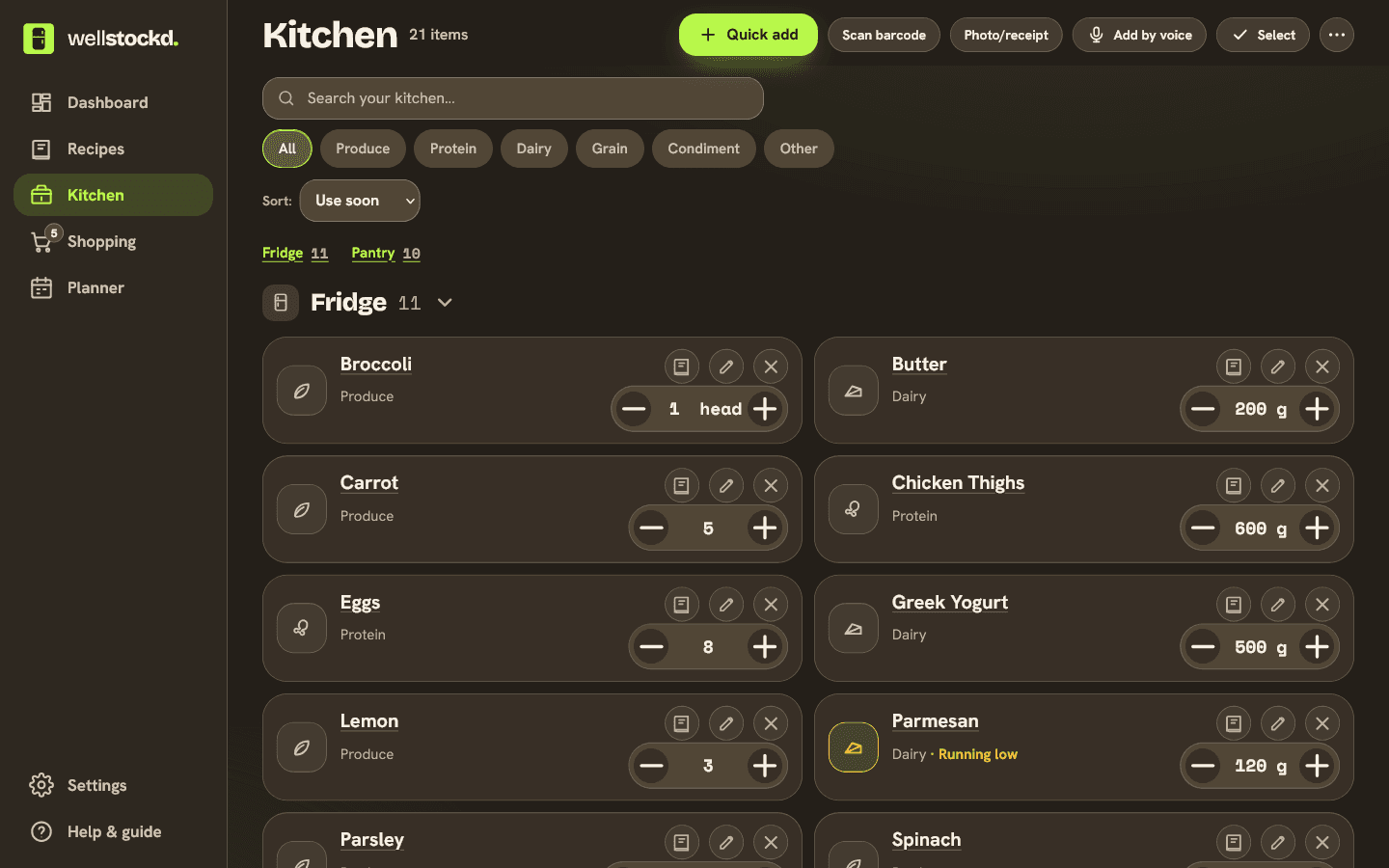
Reheat any leftover gravy by bringing it to a rolling boil, which FSIS asks for with all sauces, soups and gravies. If you're keeping track of several holiday leftovers at once, Well Stockd's expiration date tracker can hold the gravy's date and remind you the day before.
How long does gravy last? Fridge, freezer and pantry times
| Gravy | Refrigerator | Freezer (best quality) |
|---|---|---|
| Homemade gravy from drippings or broth | 3 to 4 days | 2 to 3 months |
| Gravy from a jar or can, opened | 1 to 2 days | 2 to 3 months |
| Gravy made from a dry mix | 1 to 2 days | 2 to 3 months |
All three go into the fridge within 2 hours of cooking or heating. Unopened, gravy in a jar or can keeps 2 to 5 years in the pantry and dry gravy mix keeps 2 years.
The homemade gravy times come from FSIS's Turkey from Farm to Table guide. The jar and mix times come from FoodKeeper. The freezer time for all three is FSIS's figure for meat and poultry gravy in its freezing chart; frozen gravy stays safe indefinitely at 0°F, but its quality fades after that.
FoodKeeper lists opened canned gravy in two places, once at 1 to 2 days and once, in a general entry for low-acid canned foods, at 3 to 4 days. This post uses the shorter one.
Leftover gravy, day by day
For gravy made or opened with Thanksgiving dinner on a Thursday:
| Gravy | Last day in the fridge | Freeze it by |
|---|---|---|
| Homemade | Sunday or Monday (3 to 4 days) | Sunday |
| From a jar or a mix | Friday or Saturday (1 to 2 days) | Friday |
Reheat only the portion you need each day, and bring it to a rolling boil each time.
Does gravy go bad in the refrigerator?
Yes. After 3 to 4 days for homemade gravy, or 1 to 2 days for gravy from a jar or a mix, throw it out. Reheating doesn't reset the clock, which starts the day the gravy was made or the jar was opened.
Gravy that sat out for more than 2 hours, or more than 1 hour in a room above 90°F, should be thrown out before it ever reaches the fridge. FoodSafety.gov's power outage chart lists gravy, stuffing and broth among the foods to discard after 2 hours above 40°F.
How to tell if gravy is bad?
Spoiled gravy may smell off, change color, turn slimy or grow mold, the signs of spoilage FSIS describes in How Temperatures Affect Food. The bacteria that cause illness are another matter: FSIS's safe temperature chart notes that you can't see, smell or taste them, so gravy that looks and smells fine on day 6 can still make someone sick. Go by the date.
Two changes are normal. Cold gravy sets into a soft jelly, and a layer of fat often rises and turns white on top. Both melt back in when the gravy is reheated.
How to reheat gravy
- Scrape off the fat layer if you'd like a lighter gravy, or leave it to melt back in.
- Heat the gravy in a saucepan over medium heat, whisking as it loosens. Add a splash of broth or water if it's too thick.
- Bring it to a rolling boil, as FSIS asks in its leftovers guide.
- Keep it at 140°F or above until it's served, according to FSIS's danger zone guidance. A preheated slow cooker can hold it, as long as the gravy goes in already hot and stays at 140°F or above.
In the microwave, heat the gravy in a covered dish, stopping to stir every 30 seconds or so, until it bubbles hard all the way through.
Reheat only what you'll use. Is it safe to reheat leftovers twice? covers what to do with the rest.
Can you freeze gravy?
Yes. Gravy keeps its best quality for 2 to 3 months in the freezer, and FSIS says food kept at 0°F stays safe indefinitely. Cool it quickly, freeze it in portions in freezer bags or small containers, and write the date on each one. An ice cube tray makes small portions for a single sandwich or a bowl of mashed potatoes.
Gravy thickened with flour can look grainy or separated after thawing. Whisk it as it heats and it usually comes back together. FSIS lists cream sauces among the foods that don't freeze well, so a gravy made with milk or cream may not recover as well as one made with broth.
Thaw frozen gravy in the fridge, or heat it straight from frozen in a saucepan. Either way, bring it to a rolling boil before serving.
What is the 3:2:1 rule for gravy?
The 3:2:1 rule is a ratio for making gravy: 3 tablespoons of flour, 2 tablespoons of fat and 1 cup of hot liquid, as the University of Wyoming Extension explains. Cook the flour in the fat for a minute or two, then whisk in the hot broth or drippings and simmer until it thickens. Scale it up by keeping the same ratio: 6 tablespoons of flour and 4 of fat for 2 cups of liquid.
Keep the gravy's date in sight
Gravy is easy to lose at the back of the fridge behind bigger containers. For the rest of the holiday food, see how long leftovers last in the fridge and the full leftovers storage chart.
Well Stockd's expiration date tracker lists your fridge, freezer and pantry with the soonest dates first. Type the gravy's last day, and once your email is confirmed you get a reminder at 8 AM the day before, which you can move earlier or turn off.
Sources: USDA FSIS, Turkey from Farm to Table; FSIS, Leftovers and Food Safety; FSIS, Freezing and Food Safety; FSIS, Danger Zone; FSIS, How Temperatures Affect Food; FSIS, Safe Temperature Chart; USDA FoodKeeper and the power outage chart on FoodSafety.gov; University of Wyoming Extension.