Meal planning for someone who hates cooking
If cooking feels like a chore, the fix is fewer decisions, not more recipes. Here's a five-formula assembly method, a short grocery list, and a sample week that needs almost no real cooking.
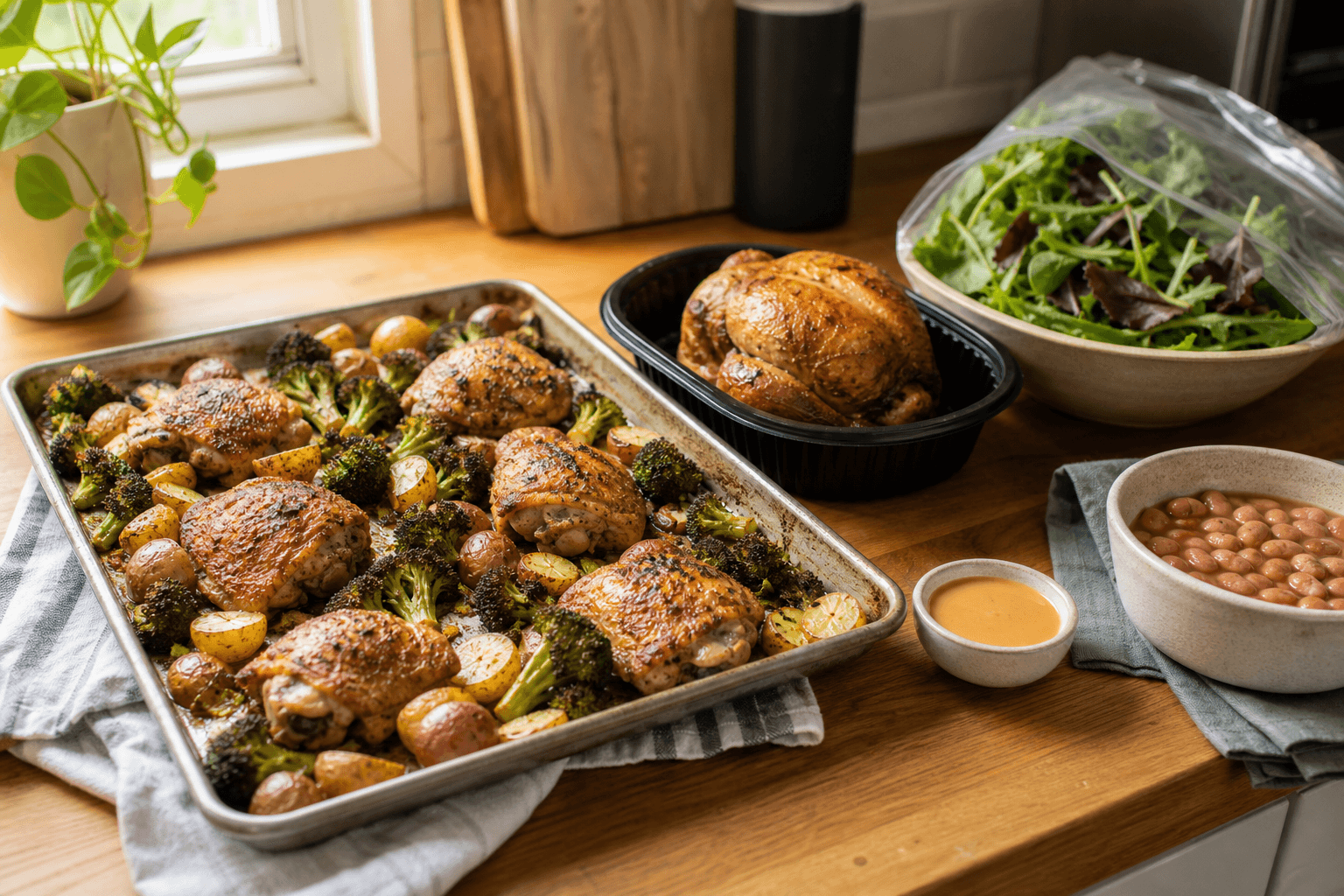
Meal planning for someone who hates cooking means planning formulas, not recipes. Pick four or five repeatable, low-effort meal types, such as sheet pan, rotisserie remix, one-pot, no-cook, and a frozen backup, build one short grocery list around them, and reuse that same skeleton every week.
Why does meal planning feel so hard when you hate cooking?
Most meal planning advice is written by people who like being in the kitchen. It tells you to try new recipes, build a spice collection, and treat Sunday prep like a hobby. If cooking already feels like a chore, that advice adds more decisions on top of a task you were trying to avoid in the first place.
The actual problem usually is not time. Government time-use data puts the average American at around 37 minutes a day on food prep and cleanup combined, across all meals. That is not a lot. What eats people alive is the decision fatigue: what to buy, what to make, whether it will turn out edible, and what to do with the leftovers.
A meal plan that works for someone who hates cooking has to remove decisions, not add steps. That is the whole point of the method below.
What is the assembly method for meal planning?
The core idea is assembly, not recipes. Instead of picking a new dish for every night, you pick a small number of formulas you can repeat with different ingredients, so dinner becomes a fill-in-the-blank problem instead of a fresh decision every day.
- Choose four or five formulas. Sheet pan, rotisserie remix, one-pot, no-cook, and one frozen backup covers most weeks. You will see these broken down in the table below.
- Build one grocery list and reuse it. Pick five to eight core items you know you will eat: a protein, pre-washed greens, a couple of frozen vegetables, a grain, canned beans, and a sauce or dressing you like. Buy the same list most weeks and swap one or two items for variety.
- Batch the annoying part once. If chopping vegetables or cooking a pot of rice is the step you dread, do it once when you get home from the store, not fresh every night.
- Keep three backups you are allowed to use without guilt. A frozen meal, a can of soup, and a rotisserie chicken are tools, not failures. The night you have nothing left, that is exactly what they are for.
- Plan for ten minutes, not an hour. Once you have your formulas and your core list, planning the week is really just assigning formulas to days. If you want a printable version of this, our meal planning for beginners template gives you a blank skeleton to copy.
If you are new to meal planning in general and want the slower, from-scratch version of this process, start with weekly meal planning for beginners. For the full rundown on building out an entire week, see our guide to how to meal plan for the week.
What are the easiest meal formulas to rotate?
These five formulas cover almost any weeknight without asking you to "cook" in the way that feels like work.
| Formula | What it involves | Example | Active time |
|---|---|---|---|
| Sheet pan | One pan, oven does the work | Chicken thighs, frozen broccoli, and potatoes tossed in oil and salt | About 10 minutes |
| Rotisserie remix | One store-bought chicken, three meals | Tacos, a rice bowl, and a quick soup from the same bird | 5 to 15 minutes each |
| One-pot | Everything simmers together | Canned beans, rice, salsa, and shredded cheese in one pot | About 15 minutes |
| No-cook | Nothing gets turned on | Deli meat, cheese, bread, and pre-cut fruit or a big salad | Under 5 minutes |
| Frozen backup | Someone else already cooked it | A frozen meal or canned soup, dressed up with fresh greens or bread | Under 10 minutes |
What does a no-stress week look like?
Here is one example week built entirely from the formulas above, without a single new recipe.
| Day | Formula | What you do |
|---|---|---|
| Monday | Sheet pan | Roast chicken thighs, frozen veggies, and potatoes |
| Tuesday | Rotisserie remix | Buy a rotisserie chicken, shred half for tacos |
| Wednesday | One-pot | Beans, rice, salsa, and cheese, all in one pot |
| Thursday | Rotisserie remix | Use the rest of the chicken in a rice bowl |
| Friday | No-cook | Big salad with deli meat and cheese, bread on the side |
| Saturday | Frozen backup | Whatever is in the freezer, plus a bag salad |
| Sunday | Sheet pan | Repeat Monday's formula with a different protein |
Notice that only two of the seven nights involve turning on the oven for something new. The rest lean on what you already bought or already cooked.
How long can backup meals sit in the fridge or freezer?
This is where a lot of people quietly waste food, or worse, eat something they shouldn't. According to USDA food safety guidance, cooked leftovers are safe in the refrigerator for 3 to 4 days and can be frozen for 3 to 4 months. Get food into the fridge within 2 hours of cooking, and cover or seal leftovers in airtight containers so bacteria stays out and food does not pick up odors from other items in the fridge.
In practice, that means the extra chicken from Tuesday is still fine on Thursday, and a double batch of the one-pot meal can go straight into the freezer for a night when even the sheet pan feels like too much.
Can an app make this easier without turning you into a "meal prep person"?
The part of this method most people drop is the grocery list and the backup shelf, mostly because it is hard to remember what is already in the fridge, freezer, and pantry before you shop. That is the specific gap a pantry-aware meal planning app is built to close: it tracks what you already have, flags what is about to expire, and can suggest meals you can make with what is on hand instead of a recipe that assumes an empty kitchen. If tracking your own pantry and freezer by memory is the part that keeps derailing your plan, our piece on a meal planning app with pantry inventory walks through how that piece fits into the rest of this method.
Frequently asked questions
Do I have to cook every night if I meal plan? No. The whole point of the assembly method is that most nights should not require real cooking. Two or three nights of actual stove or oven time, with the rest built from remixes, no-cook meals, and backups, is a realistic and sustainable week.
What if I only want to cook once a week? That works too. Cook one large batch, such as a pot of chili, a tray of roasted chicken, or a big pan of rice and vegetables, on your one cooking day, then split it across three or four meals using the storage guidance above. Fill in the remaining nights with no-cook or frozen backup formulas.
Is meal planning worth it if I mostly eat the same five meals? Yes. Repeating the same five meals is usually the goal, not a failure of meal planning. A short, repeatable rotation cuts decision fatigue and keeps your grocery list predictable, which is exactly what someone who dislikes cooking needs most.
Sources: USDA FSIS: Leftovers and Food Safety, USDA Economic Research Service: Americans Spend an Average of 37 Minutes a Day Preparing and Serving Food and Cleaning Up