Meal planning without eating the same thing every day
The fix for repetitive dinners is the mix-and-match method: cross a handful of proteins with a few flavor profiles to build two weeks of real variety without inventing new recipes.
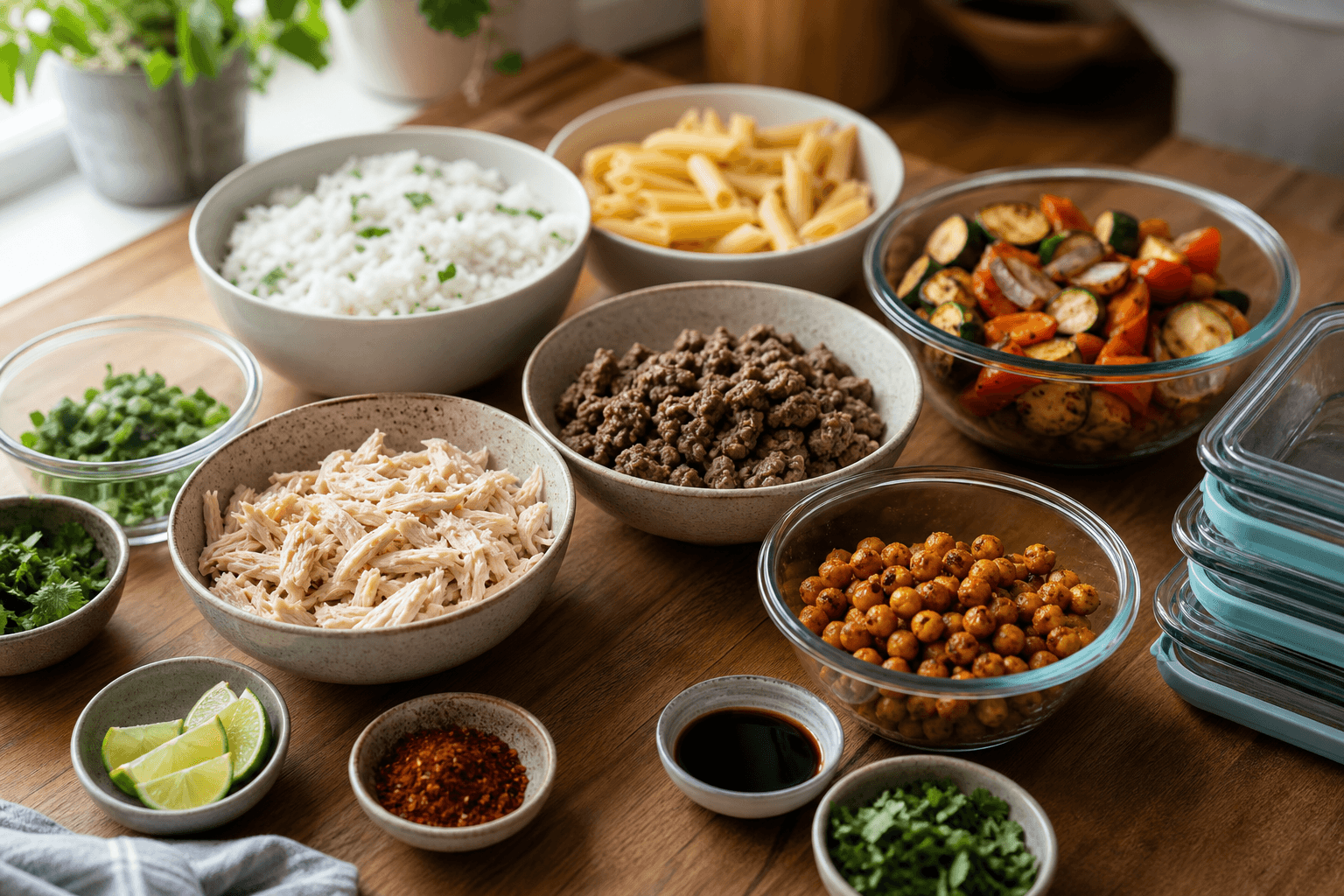
The fix is to plan by formula, not by finished dish: pick four to six proteins, three or four flavor profiles you enjoy cooking, and cross them into a grid. That single move turns five proteins into twenty realistic dinners, so a two-week list never repeats without you having to invent new recipes from scratch.
Why meal plans start feeling repetitive
Most repetition comes down to decision fatigue, not a lack of imagination. By Tuesday night, tired and hungry, you default to the four or five dinners you can cook without thinking, and those same dinners quietly become the whole week. A rotating meal plan breaks that pattern by doing the deciding once, in advance, when you have the energy to actually choose. If you have not built a weekly system yet, our guide on how to meal plan for the week covers the basic framework this method builds on.
What is the mix and match method
Instead of planning seven separate meals, you plan three ingredient categories and let them combine on their own: protein (chicken thighs, ground beef, chickpeas, salmon, pork, tofu), flavor profile (Mexican-inspired, Italian-inspired, Asian-inspired, Mediterranean), and starch and vegetable (rice, pasta, couscous, tortillas, plus whatever produce is in season or already in your fridge). If ground pork is on your list, see ground pork dinner ideas.
A sauce, spice blend, or cooking method changes the meal. The same shredded chicken becomes fajita filling with cumin and lime, or a piccata sauce over pasta with capers and lemon, or a stir-fry with soy and ginger. Across the week, that's really one protein cooked three different ways, not three separate proteins each night.
How do you build a two-week rotation
- List four to six proteins you already buy regularly, so shopping stays simple.
- Pick three or four flavor profiles you enjoy and already have the spices for.
- Cross proteins with flavor profiles to generate a grid of combinations. This step alone usually produces more meal ideas than you need.
- Assign a starch and a vegetable to each combination, favoring what is already sitting in your pantry or freezer.
- Write out fourteen actual dinners from the grid, then set the list aside.
- A month later, reuse the same grid but swap one or two flavor profiles or proteins so the rotation still feels fresh.
If you would rather start from a ready-made structure than build a grid from scratch, our meal planning for beginners template gives you a fill-in-the-blank version of this exact approach.
Example: five proteins, four flavor profiles, twenty dinners
This is what one grid looks like in practice. Pick a row and a column, and you have a meal.
| Protein | Mexican-inspired | Italian-inspired | Asian-inspired | Mediterranean |
|---|---|---|---|---|
| Chicken thighs | Chicken fajita bowls | Chicken piccata over pasta | Sesame ginger chicken stir-fry | Lemon herb chicken with couscous |
| Ground beef | Beef and bean tacos | Beef ragu over rice or pasta | Beef and broccoli | Beef kofta with rice pilaf |
| Chickpeas | Chickpea tinga tostadas | Chickpea and spinach pasta | Chickpea stir-fry with peanut sauce | Chickpea shawarma bowls |
| Salmon | Salmon tacos | Salmon with lemon butter and orzo | Miso glazed salmon with rice | Salmon with tomatoes and couscous |
| Pork | Pork carnitas bowls | Pork ragu with pappardelle | Pork lettuce wraps | Pork souvlaki with rice |
Twenty combinations from five proteins and four flavor profiles. Rotate through eight or ten of these over two weeks and nothing repeats, even though your grocery list barely changes.
How flavor profiles do the heavy lifting
This method works because flavor, not the ingredient itself, is what makes a meal feel different. A pantry stocked with a few workhorse items covers most of it:
- Cumin, chili powder, and lime for Mexican-inspired meals
- Garlic, oregano, and canned tomatoes for Italian-inspired meals
- Soy sauce, ginger, and sesame oil for Asian-inspired meals
- Lemon, olive oil, and oregano for Mediterranean meals
Keep small amounts of each on hand and you can flip a plain protein and starch into four distinct dinners without buying anything new. If you are still working out the basics of a weekly system before layering on flavor profiles, weekly meal planning for beginners is a good place to start.
What role does your kitchen inventory play
A rotation grid only works if you know what's in your fridge, freezer, and pantry. Otherwise you end up buying a fourth jar of cumin you did not need or planning a recipe around chicken thighs that expired last week. This is the piece that trips up most home rotations: the plan is good, but nobody checked the shelves before writing the grocery list.
This is the one place Well Stockd genuinely helps. The app tracks what you already have, matches it against a catalog of more than 3,900 recipes, and shows you what you can make right now, so your rotation draws on real variety instead of the same five dinners you can remember off the top of your head. It also flags what is close to expiring, so ingredients get used before they force a repeat trip to the store. You can see how the pantry-aware planning works on the meal planning app with pantry inventory page.
Frequently asked questions
How many meals do I need in a rotation to avoid repetition?
Ten to fourteen dinners is enough for most households to go two full weeks without repeating a meal. Fewer than eight tends to feel repetitive again within a month.
Is it okay to repeat some meals every week?
Yes. One or two reliable, low-effort dinners each week, like a sheet-pan meal, a big salad, or breakfast for dinner, keep the rest of the rotation sustainable rather than count against it.
How often should I refresh the rotation?
Swap one protein or one flavor profile every four to six weeks. A full overhaul is rarely necessary since the grid format already generates new combinations from the same short ingredient list.
Updated July 2026.